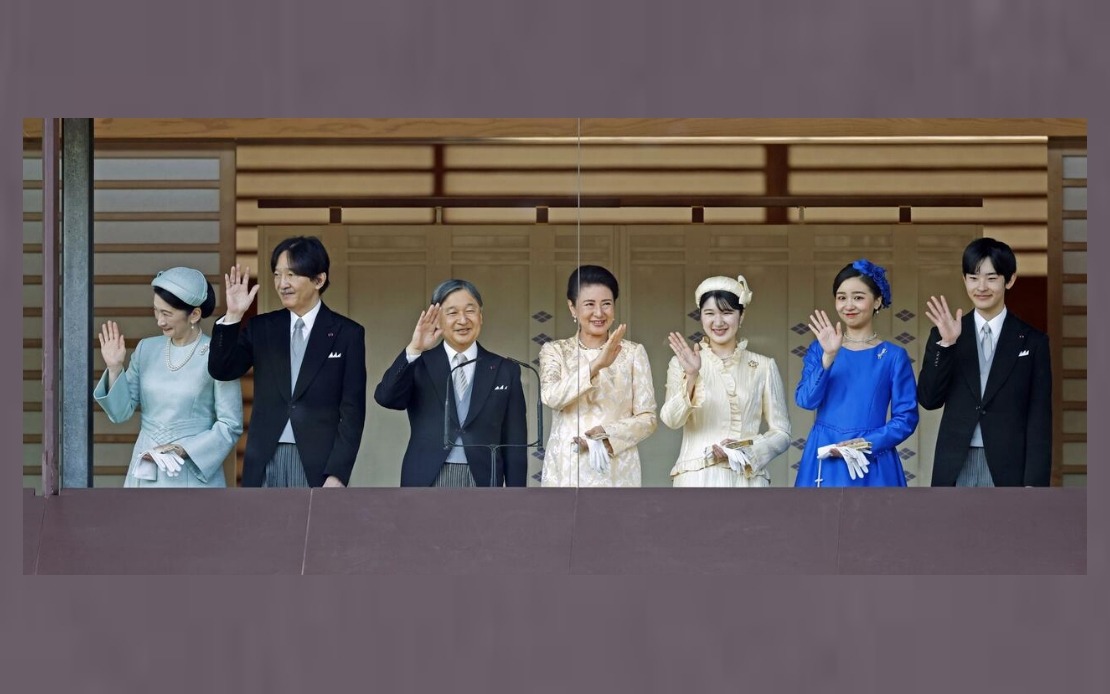
Japan's Imperial Household Agency and support staff face mounting uncertainty as the country implements sweeping changes to its imperial succession framework, the first major overhaul of the 1947 Imperial House Law. The revised legislation, enacted by parliament on Friday, aims to address a pressing demographic crisis within the world's oldest hereditary monarchy—the imperial family has shrunk to just 16 members, a historically low number that threatens institutional continuity. Yet the reform has fractured public consensus, pitting government conservatives seeking to preserve male-line succession against broader societal expectations for modernisation.
Prime Minister Sanae Takaichi championed the revision as essential to securing a sustainable imperial institution, a cornerstone of conservative governance in Japan. The law permits men aged 15 and above from eleven former imperial branch families—lineages that lost royal status in 1947—to be adopted back into the imperial fold. The revision also grants princesses the right to maintain their royal standing if they marry commoners, a previously impossible scenario under traditional protocols. These provisions represent genuine liberalisation on paper, and many Imperial Household Agency officials acknowledge the tactical necessity of such changes for the institution's survival.
Yet scepticism permeates the corridors of power. Asahiro Kuni, the 81-year-old third son of the Kuninomiya branch and an eligible candidate for adoption, expressed profound doubts about the law's practical utility. "I wonder if anyone would actually step forward to be adopted. It doesn't seem very realistic," he told reporters, capturing a sentiment likely shared among other potential candidates who may be reluctant to uproot their established lives and enter the peculiar constraints of imperial service. This reluctance signals that demographic problems may persist despite legal frameworks permitting solutions.
Institutional anxieties run deeper than recruitment prospects. Senior Imperial Household Agency officials worry that adoptees may lack the cultural and philosophical grounding to understand their role as symbols of the state under Japan's constitutional framework. Emperor Naruhito, who acceded in 2019, and Empress Masako, a former diplomat, have set contemporary expectations through their visible engagement with communities—visiting disaster zones including Fukushima after the 2011 earthquake and tsunami, and conducting international outreach. Whether outsiders, however qualified, could authentically embody this symbolic function remains contested. One agency official articulated this anxiety starkly: "Whether adoptees will understand the nature of the symbolic imperial system and be able to properly carry on the wishes is my worry."
The treatment of female imperial family members reveals the law's contradictions. Princess Aiko, the only daughter of Emperor Naruhito, remains ineligible for succession despite her direct descent—a constitutional prohibition that persists despite public opinion trending toward female leadership. The revised law grants her and four other unmarried female imperial members the choice to retain their status if marrying outside the family, but this concession masks a deeper structural problem. If these women exercise that right, their spouses and children would remain commoners, creating what one aide described as "strange having different statuses within the same family." This arrangement effectively discourages such marriages, leaving female imperial members in a bind: surrender royal status to marry normally, or remain single to preserve their position.
Agency insiders perceive the law as deliberately engineered to foreclose female succession permanently. "I sense the government intends to rule out female emperors or emperors from the matrilineal line," one aide observed, interpreting the adoption mechanism as a strategy to perpetuate male-line continuity without explicitly reversing female incorporation. This maneuver frustrates younger staff members who recognise the disconnect between legal architecture and demographic reality. Five unmarried female members currently face agonising decisions; as one senior official noted, leaving the imperial family now represents "a rather harsh choice" given public expectations and institutional expectations.
Public opinion has fractured visibly along generational and ideological lines. Older citizens like Shinichi Kokubun, 76, who met Emperor Naruhito and Princess Aiko during their April visit to disaster-affected Futaba in Fukushima Prefecture, express conditional acceptance: adoptees could work if they demonstrate genuine commitment to serving the people as the emperor does. However, younger Japanese voice frustration at both the government's unilateral decision-making and their own lack of engagement with fundamental constitutional questions. Miyu Nakao, 22, from Hiroshima, pointed directly to opinion polls showing strong majority support for female emperors, then criticised the government for disregarding this sentiment while proceeding with reforms that perpetuate male exclusivity.
Educational gaps compound the legitimacy crisis. A 20-year-old college student from Osaka admitted unfamiliarity with the Imperial House Law itself, highlighting how centralised decision-making on constitutional matters has bypassed meaningful public deliberation. He explicitly called for greater government outreach and public discussion, a sentiment echoing across younger cohorts who feel excluded from debates shaping the nation's foundational institutions. The reform demonstrates how technical legal changes can mask deeper philosophical disagreements about tradition, gender equity, and democratic participation in constitutional governance.
The ramifications extend throughout Southeast Asia's broader institutional landscape. Japan's imperial succession remains symbolically significant across the region, where several nations maintain monarchies navigating modernisation pressures and generational change. Japan's approach—technological solutions to demographic decline while preserving patrilineal structures—offers a cautionary model of how institutions can appear reformed while maintaining exclusionary foundations. The public alienation evident in Japanese responses suggests that constitutional modernisation requires more than legislative change; it demands authentic engagement with evolving social expectations about gender, inheritance, and the purposes of hereditary institutions in contemporary democracies.
As implementation proceeds, the Imperial Household Agency faces the paradox of administering a law that satisfies neither traditionalists seeking true restoration of male privilege nor modernisers demanding substantive female inclusion. The coming months will reveal whether former imperial families produce adoption candidates, whether female members embrace or reject their ambiguous new status, and whether public sentiment continues shifting toward female succession. These developments will ultimately determine whether the revised law genuinely stabilises the imperial institution or merely delays the constitutional reckoning Japan's monarchy cannot indefinitely evade.

