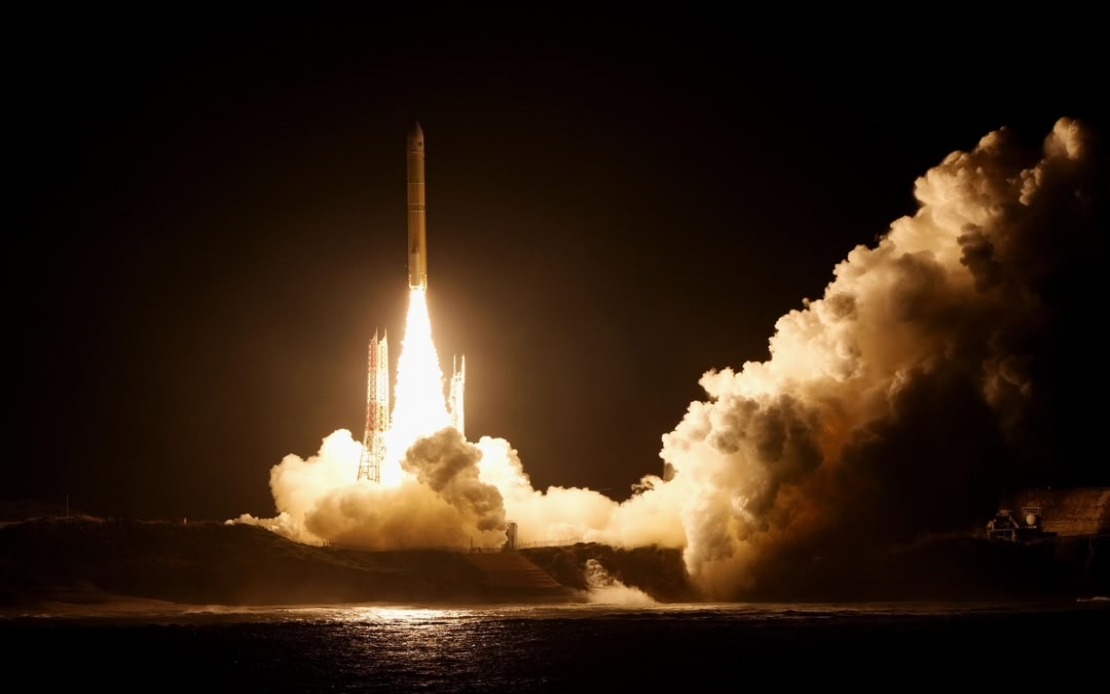
Japan's space programme notched another victory this week when the Japan Aerospace Exploration Agency successfully launched its H3 rocket from Tanegashima Space Centre, sending the Michibiki No. 7 positioning satellite into orbit. The lift-off from the island facility in southwestern Japan represented a significant milestone in the recovery trajectory of the nation's next-generation launch vehicle, which had stumbled badly in December but has now achieved two successful consecutive missions.
The Michibiki No. 7 satellite, which finally reached its intended destination following multiple schedule adjustments, forms part of Japan's Quasi-Zenith Satellite System—a homegrown navigation network that delivers positioning data to smartphones, vehicle navigation systems, and other terrestrial applications across the country. This particular satellite launch had experienced a serpentine path to success, with original scheduling pushed back first by a typhoon approaching the launch site on Friday, then by additional adverse weather conditions that forced a further postponement into Tuesday.
Japan's decision to invest in an independent positioning system reflects the strategic imperative facing nations seeking technological autonomy in critical infrastructure. The Quasi-Zenith system, when fully operational with seven satellites, will enable Japan to provide comprehensive positioning services without dependence on foreign systems such as the American GPS or European Galileo networks. Currently, five Michibiki satellites are already operational and delivering positioning services, with the latest addition bringing the constellation closer to full deployment.
The H3 rocket represents Japan's ambitious attempt to build a successor to the highly dependable H2A launch vehicle, which served as the nation's workhorse for more than twenty years and accumulated an impressive reliability record. The transition to a new flagship system carries inherent risks, particularly as development programmes attempt to incorporate advanced capabilities whilst maintaining the operational dependability that governments and commercial operators demand. This reality underscored the December setback, when the H3 No. 8 rocket, carrying the Michibiki No. 5 satellite, failed to achieve proper orbital insertion, necessitating an unscheduled delay to the No. 7 mission that had originally been targeted for February.
The ramifications of the December failure rippled through Japan's space calendar, obliging the agency to conduct urgent diagnostics and implement corrective measures before committing another satellite to flight. Those remedial efforts appeared successful when a subsequent H3 launch in June demonstrated renewed capability, deploying multiple miniature satellites into proper orbits and signalling that the underlying technical problems had been identified and resolved. Tuesday's successful deployment of Michibiki No. 7 further reinforces this assessment, establishing a pattern of operational competence that should provide stakeholder confidence as the programme advances.
For regional observers in Southeast Asia, Japan's investment in independent space infrastructure carries broader significance beyond mere national capability. As competition for technological supremacy intensifies across the Asia-Pacific, Japan's commitment to developing sovereign launch and positioning systems demonstrates the strategic premium placed on reducing reliance on foreign powers for critical services. Nations throughout the region, including Malaysia, remain heavily dependent on international systems for navigation and telecommunications, creating vulnerabilities that Japan's approach seeks to mitigate through technological self-sufficiency.
The mixed track record of the H3 programme—encompassing both the recent successes and the December failure—reflects the sobering realities of space technology development. Even nations with decades of space experience and substantial resources encounter setbacks when pioneering new systems. Yet Japan's demonstrated ability to diagnose failures, implement corrections, and return to successful operations demonstrates institutional competence and engineering discipline that underpins long-term programme sustainability. These qualities matter immensely in civilian space programmes competing for sustained government funding and commercial confidence.
The completion of the Quasi-Zenith constellation carries practical implications that extend beyond Japan's borders. Enhanced precision positioning across the region could benefit regional commerce, disaster response coordination, and agricultural applications. Moreover, the existence of multiple independent positioning systems reduces global dependency on any single provider, a consideration that becomes increasingly important as geopolitical tensions periodically threaten the open sharing of satellite services. The vision of seven Michibiki satellites providing seamless coverage represents a modest but meaningful contribution to technological pluralism in critical infrastructure.
Looking forward, the H3 programme faces the dual challenge of maintaining reliability while demonstrating sufficient operational tempo to justify continued investment. Space budgets everywhere face pressure, and programmes must eventually transition from developmental demonstrations to routine operations that deliver consistent value. Japan's space agency must sustain the momentum generated by these recent successes whilst completing the full Michibiki constellation and potentially leveraging H3 capability for commercial and international missions. The trajectory established by this week's launch suggests that trajectory is achievable, provided technical discipline and funding commitment remain steady.

