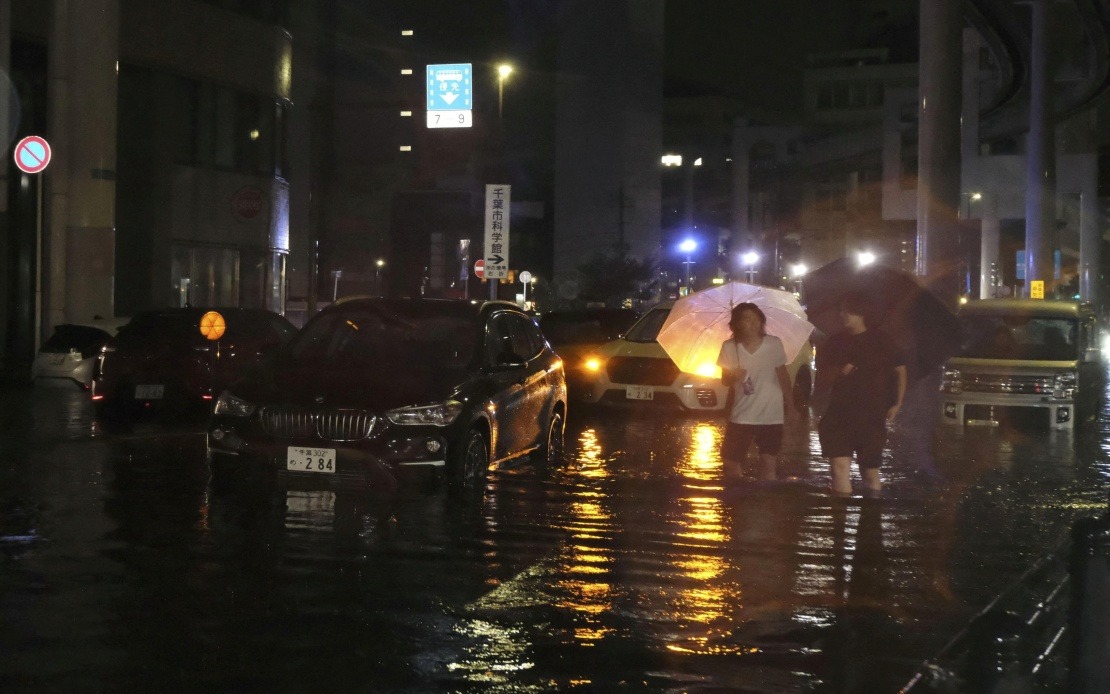
Japan's Chiba Prefecture experienced a catastrophic weather event on Thursday and into Friday as relentless downpours brought death and destruction to one of the country's most densely populated regions near Tokyo. The Japan Meteorological Agency declared the highest possible alert level—Level 5—for extreme rainfall across more than one-third of municipalities in the prefecture, while four people lost their lives and another remained unresponsive as the deluge intensified. The unprecedented nature of this weather system underscores the increasingly severe climate challenges facing Japan and the broader East Asian region, with implications for disaster preparedness and infrastructure resilience across Southeast Asia.
The meteorological circumstances behind the disaster reveal a volatile combination of atmospheric elements that created what scientists describe as extremely unstable conditions. Warm, moisture-laden air flowing into eastern Japan collided with cold air masses positioned above, generating the energy needed to sustain the torrential precipitation that characterized the event. This type of collision between contrasting air masses has become a recurring pattern in recent years, suggesting that the region must prepare for more frequent episodes of intense, localized rainfall rather than treating them as anomalies.
The scale of the evacuation response demonstrated both the severity of the threat and the vulnerability of Japan's urban and suburban populations. At the height of the crisis, the Fire and Disaster Management Agency ordered more than 400,000 people from Chiba and neighbouring Ibaraki prefectures to leave their homes and seek shelter. By Friday morning, authorities maintained evacuation orders for approximately 126,000 residents across both prefectures, indicating that while conditions had begun to improve, significant danger persisted. Such mass displacement of population reveals the thin margin between normalcy and catastrophe in densely settled areas, a reality that resonates with urbanization challenges throughout Southeast Asia.
The Japan Meteorological Agency also issued a Level 5 landslide warning for multiple municipalities, including Chiba and adjacent Ichihara, highlighting the multi-faceted hazards posed by prolonged heavy rainfall. Landslides represent a secondary but equally lethal consequence of extreme precipitation events, particularly in regions with steep terrain or areas where development has compromised natural drainage systems. Though these warnings were downgraded by Friday morning as conditions began to stabilize, they underscored the interconnected nature of weather-related disasters and the complexity of emergency response operations.
Physical manifestations of the disaster were evident across Chiba Prefecture's urban landscape. Road networks flooded extensively, creating impassable barriers that disrupted transportation and hindered evacuation efforts. In the prefecture's main city and in Ichikawa, municipal authorities issued urgent appeals for residents to implement immediate protective measures. Water erupted from underground infrastructure, with dramatic imagery showing fountains of water gushing from street-level manholes in central Chiba. Residents navigated streets filled with knee-high water, rushing to reach home or safety before conditions deteriorated further, illustrating the chaos that accompanies rapid-onset flooding in urban areas.
Measurements of rainfall intensity provided objective evidence of the storm's extraordinary character. In Chiba's Chuo Ward, the hourly precipitation rate reached 115 millimetres on Thursday night—equivalent to the region's entire typical August monthly rainfall in just sixty minutes. This concentration of water delivery created immediate overwhelm of drainage infrastructure designed for normal seasonal patterns. Such extreme ratios between actual and normal precipitation are becoming more common globally, suggesting that infrastructure designed around historical precipitation averages may no longer provide adequate protection.
The infrastructure strain extended to electrical systems serving the region. Tokyo Electric Power Company Holdings Inc., through a subsidiary, reported that approximately 45,000 homes lost power at the event's peak, compounding the hardship faced by residents already displaced by flooding. Power outages in modern urban environments create cascading disruptions to communication systems, heating and cooling, refrigeration, and medical equipment, making them particularly hazardous during emergency situations when such services are most needed.
Emergency management agencies established evacuation centres across multiple prefectures to accommodate the displaced population. The Cabinet Office coordinated the opening of over 200 such facilities spread across Chiba, Ibaraki, Saitama, and Gunma prefectures, representing an enormous mobilization of resources and personnel. In Chiba city, approximately 1,800 stranded commuters took refuge in the prefectural government building itself, which authorities opened to accommodate those unable to reach homes cut off by flooding. These improvised sheltering arrangements highlight both the capacity of government institutions to respond flexibly during crises and the sheer magnitude of displacement that modern weather disasters can generate.
The incident carries significant implications for disaster planning throughout the Asia-Pacific region. Japan maintains among the world's most advanced early warning systems and emergency response capabilities, yet the speed and intensity of this event still produced fatalities and mass disruption. For Southeast Asian nations with less developed infrastructure and disaster management capacity, the Chiba experience offers cautionary lessons about the limits of preparedness in the face of increasingly extreme weather phenomena. The combination of rapid urbanization, climate change, and aging infrastructure creates a particularly vulnerable situation in major Asian cities.
The downgrade of all weather warnings on Friday morning signalled an end to the acute phase of the disaster, though recovery operations would extend far longer. Heavy rain was forecast to continue through Friday in Chiba and adjacent areas, meaning that while the worst had passed, conditions remained unsettled. The transition from emergency response to recovery and reconstruction would occupy public attention and resources for weeks or months, as damaged infrastructure was repaired, displaced residents returned home, and communities processed the collective trauma of the experience.
The broader context of Japan's vulnerability to extreme weather has become increasingly apparent over recent years. The nation sits on the Pacific Ring of Fire and lies in typhoon and monsoon pathways, making it inherently exposed to severe meteorological events. Climate projections suggest that such intense rainfall episodes may increase in frequency and severity, necessitating adaptive responses in urban planning, infrastructure design, and emergency management protocols. For Malaysia and other Southeast Asian neighbours, Japan's experience provides relevant data about the trajectories facing the entire region.
As rescue and recovery operations continued, the human cost remained the central tragedy. Four confirmed deaths and one person in unresponsive condition represented families shattered and communities bereaved by a weather event that, while dramatic, was largely beyond individual control. The incident reinforced the reality that even in highly developed nations with sophisticated warning systems and emergency response infrastructure, natural disasters retain the capacity to cause loss of life and widespread disruption. This sobering lesson extends across national borders and economic divides, affecting the vulnerability calculations of every nation in the Asia-Pacific region.

