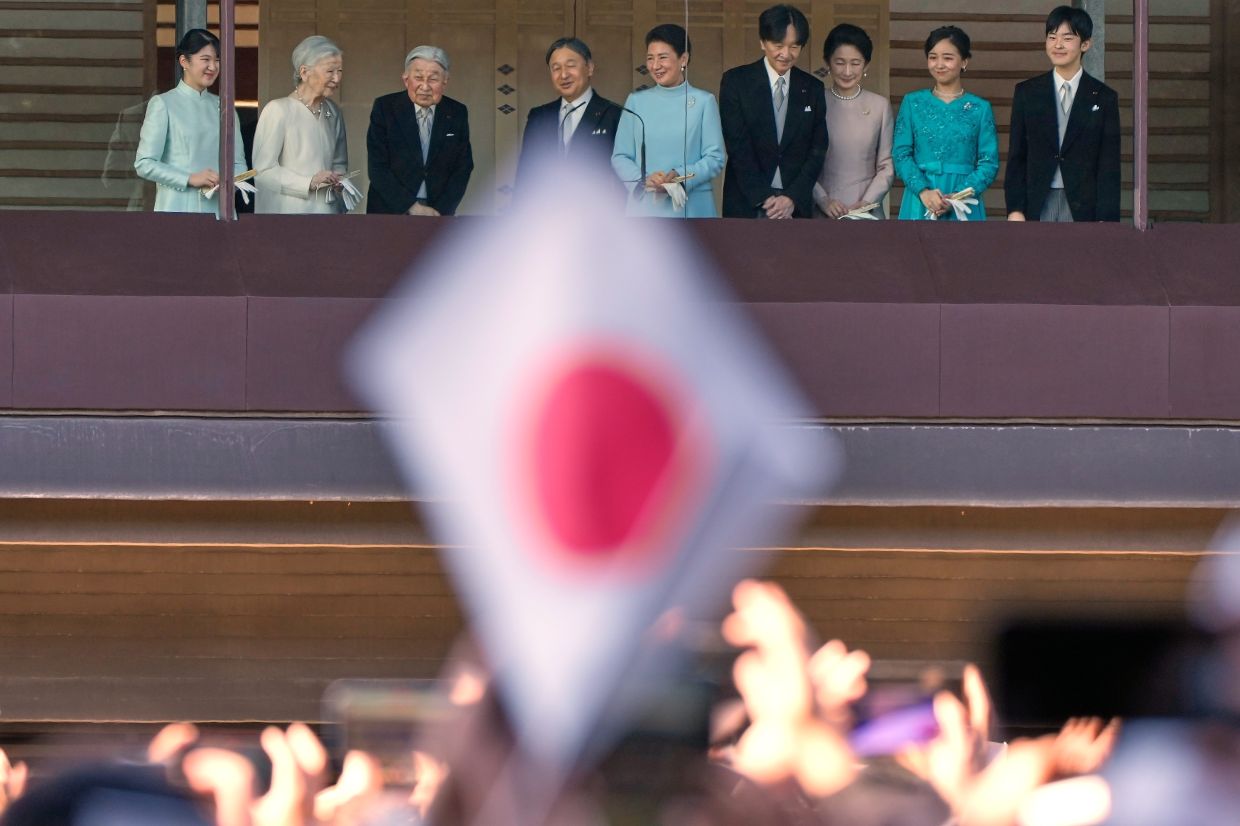
Japan's parliament solidified restrictions on imperial succession on Friday by passing legislation that addresses looming questions about the monarchy's future while deliberately excluding women from the throne. The upper house enacted the reform package by substantial majority, cementing the male-only succession principle that has governed the imperial system since its postwar codification in 1947. The move represents a carefully calibrated response to demographic anxieties about the imperial line, yet it consciously disregards widespread public appetite for constitutional change that would permit female succession.
The legislative impasse centres on a succession crisis that threatens Japan's oldest continuous institution. With Emperor Naruhito, now 66 years old, having only one son, the throne's future depends almost entirely on Prince Hisahito, the emperor's 19-year-old nephew who has barely begun adult life. The young prince is currently unmarried and absorbed in university studies of biology and entomology, pursuits far removed from the ceremonial and symbolic demands of monarchy. If Hisahito fails to produce a male heir, the imperial succession will rupture for the first time in recorded history, severing a dynasty that Japanese cultural mythology traces back to the Shinto sun goddess Amaterasu.
The legislation introduces modest mechanisms designed to stave off this succession emergency. Most significantly, it permits the adoption of male relatives from the 11 imperial branch families that were severed from the imperial register following World War II. These provisions allow men over age 15 to rejoin the imperial system, provided they remain unmarried at the moment of adoption. The reform also grants women already within the imperial family the right to retain royal status following marriage to commoners, a privilege previously denied to female royals while extended routinely to male family members. Despite these incremental adjustments, the reform package explicitly preserves the constitutional prohibition on female succession, effectively closing off the pathway that many reformers and a commanding majority of Japanese citizens view as the most pragmatic solution.
The stubborn refusal to permit female emperors stands in sharp contrast to demonstrated public sentiment. An Asahi Shimbun opinion poll conducted in May revealed that 72 percent of Japanese respondents support constitutional reform enabling women to ascend the Chrysanthemum Throne. This overwhelming backing reflects broader social evolution within Japan, where women increasingly occupy leadership positions in business, academia, and public administration. Yet the political establishment has resisted translating this popular consensus into constitutional amendment, instead constructing elaborate workarounds that preserve patrilineal privilege while appearing to address practical concerns.
The legislative struggle exposed fractures within Japan's conservative political establishment, particularly within the ruling Liberal Democratic Party that has governed throughout the postwar period. Prime Minister Sanae Takaichi, herself Japan's first woman to hold the position, emerged as a prominent opponent of female succession, a stance that underscored the complex dynamics surrounding gender and imperial tradition. Her resistance, despite her own historical breakthrough, illustrated how deeply embedded patrilineal assumptions remain within conservative Japanese political ideology. Within LDP ranks, dissenting voices emerged, including veteran legislator Seiichiro Murakami, who publicly denounced the parliament's decision to exclude Princess Aiko, the emperor's accomplished 24-year-old daughter, from succession consideration as utterly outrageous.
The proposal to adopt distant male relatives has drawn sharp criticism from former imperial family members with intimate knowledge of palace life and its constraining traditions. Asahiro Kuni, an 81-year-old who departed the imperial register when the branch families were stripped of their status in 1945, directly challenged the legislative premise. Kuni emphasized that individuals raised in ordinary civilian society would struggle profoundly with the isolation, ceremonial obligations, and profound restrictions that characterise imperial existence. He observed pointedly that adolescents and young adults who have spent their formative years enjoying basic freedoms would find adaptation to palace life psychologically difficult, if not impossible. Kuni predicted that few eligible candidates would willingly exchange normal life for imperial servitude, rendering the adoption mechanism largely theoretical.
Kuni's critique extended to the psychological and social dimensions of imperial service that legislation cannot adequately address. He argued that prospective adoptees, if they genuinely understood the hardships intrinsic to royal membership, would almost certainly decline the honour regardless of constitutional eligibility. This perspective from within the imperial tradition itself suggested that the government's preferred solution relied on assumptions about willing candidates that reality would likely frustrate. The commentary revealed tension between theoretical mechanisms and practical implementation, between what legislation permitted and what actual imperial families might accept.
Even Japan's leading conservative media outlet, the top-selling Yomiuri Shimbun newspaper, departed from reflexive support for the ruling party's approach. The newspaper's editorial pages criticised the government's handling of succession reform, suggesting that even stalwart LDP allies recognised the legislative package's inadequacy. This media criticism, emerging from Japan's most establishment-friendly press institution, indicated that consensus regarding the imperial succession had fractured significantly, with voices across the political and journalistic spectrum questioning whether male-only succession represented a sustainable or defensible policy framework.
The imperial household currently comprises 16 individuals, including only five men of direct succession importance: retired Emperor Akihito at 92, his 90-year-old brother, the reigning Emperor Naruhito at 66, Naruhito's younger brother, and Prince Hisahito. This demographic structure underscores the biological precariousness of the current system. With no secondary source of male heirs beyond Hisahito and his future reproductive potential, the imperial line faces genuine vulnerability to accidents of biology and personal circumstance. The succession legislation implicitly acknowledges this peril while refusing to acknowledge the most obvious solution that public opinion clearly favours.
For Southeast Asian observers and Malaysia's multi-ethnic, multi-faith society accustomed to constitutional flexibility and pragmatic governance, Japan's rigid adherence to patrilineal succession despite contrary public opinion and practical difficulties offers an instructive case study. The Japanese experience demonstrates how institutional conservatism and ideological tradition can persist even when democratic majorities support change and practical necessity demands reform. The imperial succession question illuminates how profoundly deeply embedded cultural assumptions about gender and heredity can constrain even modern democracies, and how reluctance to revisit foundational assumptions can create governance challenges that technical workarounds ultimately fail to resolve.

