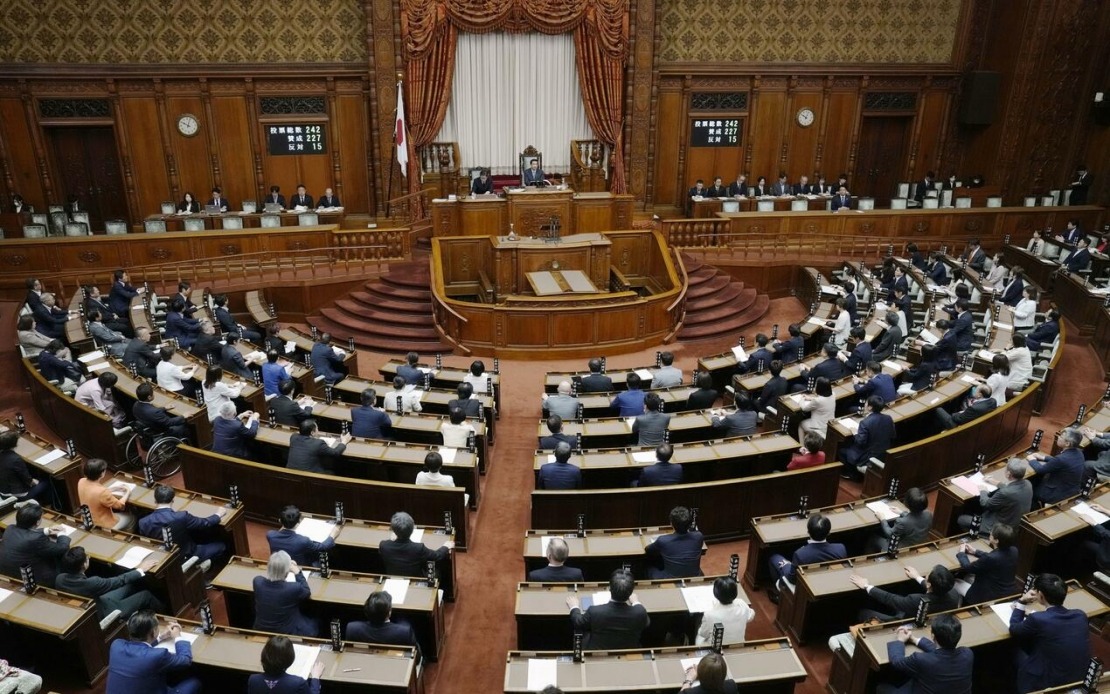
Japan has taken a significant strategic step by enacting parliamentary legislation to restructure its military air arm and explicitly incorporate space defence into its institutional framework. The measure, approved by the House of Councillors on Friday, represents a deliberate recalibration of Japan's defence posture in response to an increasingly complex security landscape across the Indo-Pacific region. The reformed entity, to be operationalised during the fiscal year concluding in March 2027, will formally integrate space operations into Japan's Self-Defence Forces command structure, signalling Tokyo's recognition that orbital and satellite systems have become integral to modern military capabilities and national security strategy.
Central to this reorganisation is the establishment of a dedicated space operations group that will operate under the direction of a lieutenant general, a senior command position reflecting the importance Tokyo assigns to this domain. This new unit will focus on enhancing Japan's ability to maintain awareness of activities in space and strengthen its satellite surveillance infrastructure, capabilities that have become increasingly vital as multiple regional powers develop and deploy advanced space-based reconnaissance systems. The timing of this initiative reflects broader anxieties in Tokyo about China's expanding military capabilities and assertiveness in the surrounding seas, where Beijing has demonstrated willingness to employ advanced technology for strategic advantage.
Defence Minister Shinjiro Koizumi underscored during a media briefing that space has transcended its traditional association with national security and now permeates everyday civilian existence. The minister highlighted how ordinary Japanese citizens depend on orbital infrastructure for fundamental services—satellite navigation systems guide motorists and delivery personnel, smartphone mapping applications rely on space-based positioning data, and weather forecasting capabilities that protect public safety depend entirely on meteorological satellites. This framing demonstrates a deliberate effort by Japan's defence establishment to build public understanding that space modernisation serves broader societal interests beyond narrow military concerns, a communication strategy designed to build consensus for sustained defence spending increases.
The legislation also authorises the appointment of an additional senior vice defence minister, a move that reveals underlying concerns about institutional capacity and crisis management. Japanese policymakers have concluded that the existing structure concentrates excessive responsibility in a single senior vice ministerial position, potentially creating vulnerabilities during emergencies or international contingencies requiring high-level diplomatic and defence coordination. The extra appointment, expected to materialise as early as summer 2024, will distribute workload and enable more comprehensive oversight during major natural disasters—a persistent threat in Japan's earthquake and tsunami-prone archipelago—while facilitating expanded defence exchanges with the United States and other security partners integral to Japan's alliance network.
Japan's Self-Defence Forces have confronted mounting challenges in personnel recruitment and retention, issues that have grown more acute as the force competes against a shrinking working-age population and expanding civilian employment opportunities in technology and other sectors. The legislation addresses this structural challenge by enhancing post-retirement benefits for SDF members, whose mandatory departure ages have traditionally been considerably earlier than standard civil service positions. This pension and benefits enhancement represents an acknowledgment that military service involves unique demands and risks, and that competitive compensation packages become increasingly necessary to attract capable personnel during periods of labour market tightness.
Simultaneously, Japan is reinforcing its defensive posture in its southwestern region, where strategic vulnerabilities have become increasingly apparent. The 15th Brigade, stationed in Naha within Okinawa Prefecture, will be elevated to divisional status—a significant organisational upgrade that increases its command authority, resource allocation, and operational capacity. This enhancement directly responds to China's demonstrated maritime assertiveness across the broader region, including activities near disputed territories and increased naval operations that Tokyo views as challenging Japan's sphere of influence. The Okinawa-based division will serve as a forward-deployed deterrent and rapid-response capability protecting Japan's southwestern maritime approaches.
For Southeast Asian nations and regional observers, Japan's military reorganisation carries significant implications. Japan remains a crucial security anchor for broader Indo-Pacific stability, and its modernisation efforts—particularly in space domain awareness and satellite surveillance—enhance collective regional capacity to monitor maritime activities and maintain transparency in shared waters. The elevation of space operations reflects a fundamental shift in how advanced militaries conceptualise defence, moving beyond traditional air, sea, and ground domains to encompass orbital superiority and information dominance. Countries throughout Southeast Asia, many of whom maintain their own territorial interests and maritime disputes, will benefit from Japan's enhanced surveillance capabilities through intelligence-sharing arrangements and alliance coordination.
The institutional changes also underscore Japan's determination to deepen its security partnership with the United States, a relationship that has deepened considerably over the past decade as China's military capabilities have expanded. Enhanced defence exchanges facilitated by the additional senior vice ministerial position will strengthen interoperability between Japanese and American forces across all domains, including the emerging space realm where coordination remains relatively nascent compared to traditional military operations. This alignment serves broader regional interests by reinforcing the rules-based international order and deterring unilateral action that could destabilise the region.
Japan's legislative moves reflect a broader recalibration of East Asian security dynamics and Tokyo's assessment that incremental adjustments to existing defence structures have become insufficient. The explicit incorporation of space into the military organisation acknowledges that twenty-first-century conflicts, should they occur, will be decided not merely by traditional military platforms but by dominance across all operational domains. For Malaysia and other ASEAN nations observing these developments, Japan's evolution serves as a reminder that regional security challenges have grown more complex and technologically demanding, with implications extending far beyond Japan's territorial waters into the broader maritime commons that Southeast Asia depends upon for trade and prosperity.

