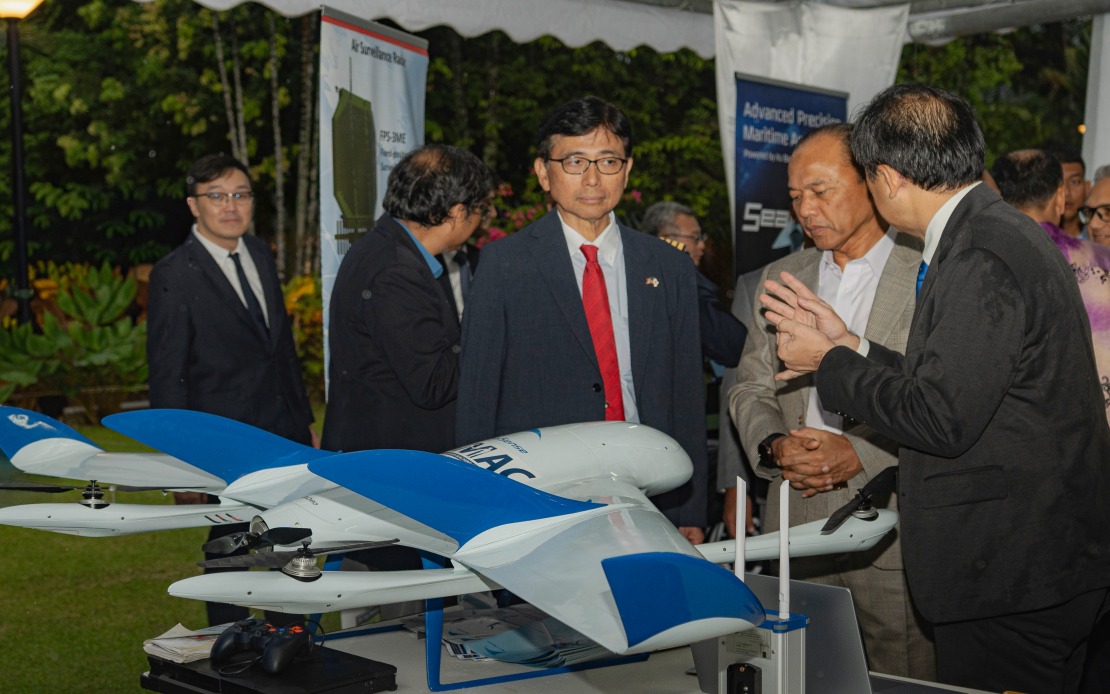
Japan is moving to significantly deepen its defence and security partnership with Malaysia, according to Ambassador Noriyuki Shikata, who outlined an expanding framework of bilateral cooperation during the 72nd Japan Self-Defence Forces Day Reception in Kuala Lumpur. The ambassador's remarks come on the heels of Prime Minister Datuk Seri Anwar Ibrahim's recent visit to Japan, where he and Japanese Prime Minister Sanae Takaichi reaffirmed their commitment to elevating strategic ties at a moment when geopolitical tensions across the Indo-Pacific region continue to intensify. Shikata emphasized that Japan sees Malaysia as a critical partner for maintaining stability and prosperity in one of the world's most strategically vital waterways, with defence cooperation serving as the cornerstone of this expanding relationship.
The elevation of Japan-Malaysia relations to a Comprehensive Strategic Partnership in 2023 marked a watershed moment for bilateral ties, but the recent diplomatic momentum suggests Tokyo is now pursuing even more concrete security arrangements. Shikata indicated that as the two nations approach the 70th anniversary of their formal diplomatic relationship next year, Japan intends to leverage this milestone to advance cooperation across multiple domains, with particular emphasis on military and defence collaboration. This forward-looking posture reflects Japan's strategic calculations about regional security, where traditional concerns about maritime freedom of navigation intersect with broader worries about power competition between major Asian powers.
Central to the deepening security partnership are regular joint military exercises, particularly the MALPAN bilateral exercise conducted in the South China Sea and Strait of Malacca. These exercises, which traditionally involved the Japan Maritime Self-Defence Force and the Royal Malaysian Navy, expanded in April to include the Royal Malaysian Air Force, signalling a deliberate broadening of cooperation across maritime and aerial domains. Such exercises serve multiple purposes for both nations: they build institutional familiarity and trust between military personnel, enhance interoperability of equipment and procedures, and send a subtle but unmistakable message to other regional actors about the seriousness of their security commitment. For Malaysia, participation in these exercises with a technologically advanced military power like Japan provides valuable experience and demonstrates its alignment with like-minded partners concerned about maintaining open and secure sea lanes.
Beyond traditional military-to-military engagement, Japan has introduced new mechanisms for security assistance that reflect evolving regional needs. The Official Security Assistance programme, launched in 2023, represents a shift in how Tokyo delivers defence support to regional partners. Malaysia was among the earliest beneficiaries, receiving unmanned aerial vehicles and rescue boats in the initial phase. Under the OSA 2025 framework, Japan has expanded its contributions to include ceasefire monitoring equipment supplied to the ASEAN Observer Team and a diving support vessel destined for the Royal Malaysian Navy. These tangible deliveries represent more than symbolic gestures; they equip Malaysian forces with capabilities that enhance their operational effectiveness in maritime surveillance and humanitarian response—functions increasingly critical in a region prone to maritime incidents and natural disasters.
The decision to strengthen security ties with Malaysia also reflects Japan's broader strategy of operationalizing its Free and Open Indo-Pacific (FOIP) vision in concert with ASEAN's own Outlook on the Indo-Pacific. Rather than imposing a unilateral framework, Japan has positioned FOIP as complementary to ASEAN initiatives, creating space for regional consensus-building on security principles. This diplomatic choreography is significant because it acknowledges that Malaysia and other Southeast Asian nations must balance relationships with multiple great powers, including China. By framing cooperation around shared principles like international law and freedom of navigation rather than explicit containment strategies, Japan makes partnership more palatable to nations like Malaysia that prioritize strategic autonomy.
Defence industry cooperation represents another layer of the expanding partnership, with Japanese companies increasingly integrating themselves into Malaysia's defence procurement ecosystem. The participation of 10 Japanese defence firms at Defence Services Asia 2026 in Kuala Lumpur indicates sustained commercial interest, while the signing of a Terms of Reference to establish a bilateral defence industry dialogue opens pathways for technology transfer, joint development projects, and long-term industrial partnerships. This development is particularly significant for Malaysia's defence modernization aspirations, as Japanese technology and manufacturing expertise could contribute to building domestic capabilities while strengthening economic ties through defence-related investment and employment.
The timing of this security pivot deserves close examination. The ambassador's statements arrive during a period of heightened strategic competition in the Indo-Pacific, with multiple flashpoints commanding international attention. For Malaysia specifically, the South China Sea remains a zone of competing claims and military presence, while broader regional dynamics involving major power competition create an environment where security partnerships with reliable, technologically advanced nations like Japan offer valuable strategic insurance. Anwar's government has been notably active in articulating a balanced foreign policy that maintains relationships across the great power spectrum while advancing Malaysian interests, and closer security ties with Japan fit squarely within this diplomatic strategy.
From a Southeast Asian perspective, Japan's courtship of Malaysia signals confidence that the region remains open to partnerships grounded in shared democratic values and commitment to rules-based international order. Unlike security relationships premised on formal alliances or exclusive arrangements, Japan's approach with Malaysia emphasizes flexibility, reciprocal benefit, and respect for autonomy. This model may offer lessons for how traditional powers can maintain influence and advance their interests in a multipolar region without forcing states into zero-sum choices between competing great powers. For Malaysia, maintaining this balance while deepening security cooperation with Japan represents a calculated strategy to enhance deterrence capacity and regional influence without unnecessarily antagonizing other significant powers.
The trajectory of Japan-Malaysia security cooperation over the coming years will likely depend on several factors, including the evolution of regional security challenges, the effectiveness of joint military exercises in building institutional capacity, and the success of defence industry dialogue in producing concrete collaboration. Armed Forces chief General Tan Sri Malek Razak Sulaiman's attendance at the reception underscores the Malaysian military's own commitment to these initiatives. As the region navigates an increasingly complex security environment where traditional maritime threats intersect with transnational challenges like terrorism and disaster response, partnerships like Japan-Malaysia become instrumental tools for building a regional architecture capable of managing multiple security threats simultaneously.

