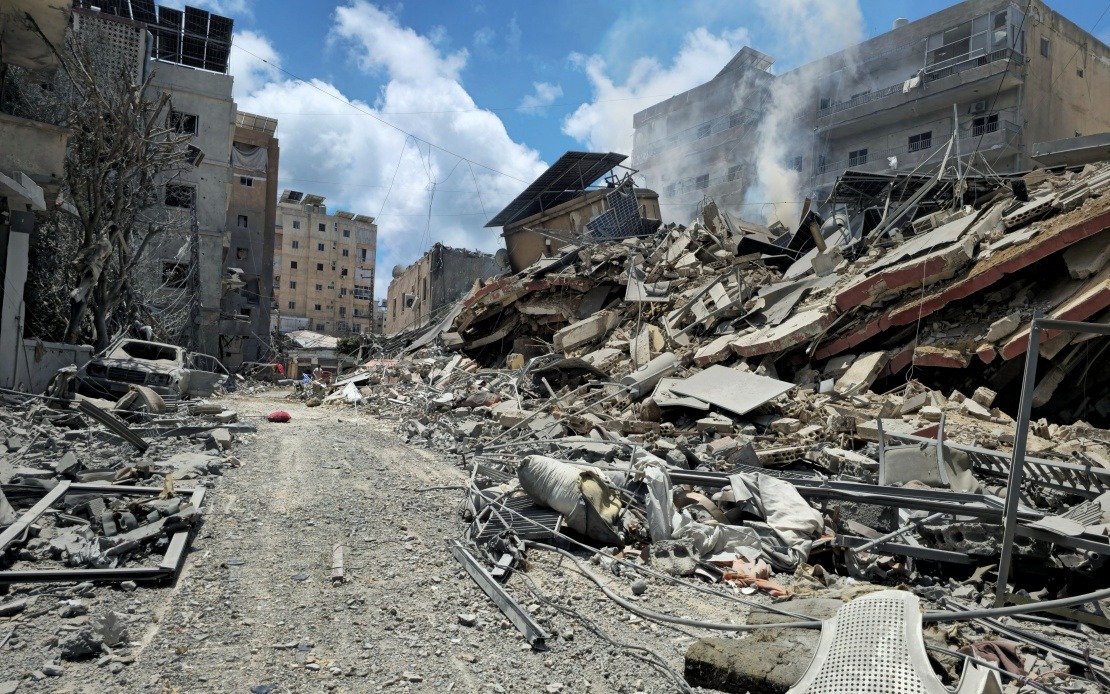
Japan has committed US$15 million in emergency humanitarian assistance to address critical humanitarian emergencies across West Asia, Foreign Minister Toshimitsu Motegi announced on Friday. The announcement represents Tokyo's response to mounting humanitarian challenges in a region of considerable strategic importance to Japanese interests and regional stability. The allocation reflects Japan's policy prioritisation of supporting vulnerable populations affected by conflict and economic hardship in the Middle East.
The largest share of the assistance, approximately US$10 million, will be directed towards Iran, which continues to grapple with the consequences of prolonged conflict and economic constraints. An additional US$4 million has been earmarked for Lebanon, a country facing severe economic and political crisis that has crippled its ability to provide basic services to its population. The remaining US$1 million will support Palestinians in the West Bank, where humanitarian conditions have deteriorated amid ongoing tensions. All funding will be channelled through established international organisations, ensuring the aid reaches intended beneficiaries through trusted mechanisms.
The humanitarian packages will encompass essential provisions including food supplies, medical equipment and medicines, and other critical necessities for vulnerable populations. These categories represent the most pressing needs identified by international humanitarian organisations operating in these regions. The strategic selection of assistance types underscores Japan's understanding of the immediate challenges faced by civilians in these areas, particularly those most marginalised by ongoing conflicts and economic dislocation. Such targeted support addresses gaps that national governments struggle to fill given resource constraints and administrative challenges.
Motegi's statement emphasising that "peace and stability in the Middle East are of vital importance to Japan" reflects Tokyo's recognition that regional instability carries direct implications for Japanese economic interests and global supply chain security. Japan's energy security depends substantially on Middle Eastern oil and gas supplies, making regional peace a national priority. Furthermore, Japanese companies maintain significant commercial operations throughout the region, and political volatility threatens these investments and employment for Japanese nationals. The humanitarian assistance therefore serves both moral imperatives and strategic national interests.
For Southeast Asian observers, Japan's commitment signals the continued engagement of major developed economies in Middle Eastern affairs despite competing global priorities. The region faces competing claims for international attention and resources, with humanitarian crises in Africa, Eastern Europe, and Asia competing for donor funding. Japan's decision to sustain meaningful assistance despite these competing demands suggests confidence in the international community's ability to address multiple humanitarian emergencies simultaneously. This approach contrasts with zero-sum framings that suggest crises must compete for scarce resources.
The delivery mechanism through international organisations deserves particular attention, as it reflects lessons learned from decades of humanitarian operations. Direct government-to-government aid transfers can become entangled in political complications and face obstacles to equitable distribution. International organisations bring neutrality, established logistics networks, and technical expertise that enhance aid effectiveness. This methodology has proven particularly valuable in complex emergencies where security concerns limit direct access and where multiple stakeholder groups must be served impartially. Japan's preference for this approach demonstrates sophisticated understanding of humanitarian operations in challenging environments.
Lebanon's inclusion underscores the country's escalating humanitarian catastrophe, often overshadowed by more visible Middle Eastern conflicts. The Lebanese pound's collapse has devastated purchasing power, fuel shortages have crippled hospitals and electricity generation, and childhood malnutrition has emerged as a serious health indicator. Japan's commitment provides much-needed supplementary resources to international humanitarian agencies operating under severe constraints. The crisis represents a cautionary tale of how state collapse can rapidly transform middle-income countries into humanitarian emergencies, a lesson with relevance for Southeast Asian policymakers concerned with institutional resilience.
Palestinian humanitarian needs in the West Bank have intensified due to movement restrictions, economic hardship, and limited access to services. Japan's allocation, while modest in absolute terms, demonstrates commitment to this often-neglected humanitarian dimension of the Israeli-Palestinian conflict. International attention frequently focuses on political negotiations while overlooking the daily humanitarian realities of civilian populations. Japan's inclusion of Palestinian assistance affirms that humanitarian aid should transcend political positions on contentious disputes, focusing instead on alleviation of civilian suffering regardless of political alignments.
Motegi's commitment to continued coordination with relevant governments and international bodies indicates Japan's intent to embed this assistance within broader diplomatic engagement. The Middle East's complexity demands sustained engagement rather than episodic interventions. Japan's diplomatic presence across the region, combined with its reputation as a non-aligned nation without colonial history in the area, positions Tokyo uniquely to facilitate dialogue and mediation. The humanitarian assistance serves as one component of a broader relationship-building strategy that may create opportunities for future constructive contributions to regional stability.
The timing of this announcement reflects Japan's recognition that humanitarian needs cannot await perfect political conditions for resolution. While diplomatic efforts toward peace and stability remain essential, vulnerable populations require immediate assistance regardless of political progress. This dual-track approach separates urgent humanitarian response from long-term political settlement efforts, allowing each to proceed according to its own logic and timeline. For regional stakeholders, Japan's example demonstrates that humanitarian assistance and political strategy need not conflict.
Looking forward, this commitment may strengthen Japan's humanitarian credentials within international forums and potentially enhance its voice in discussions regarding Middle Eastern stability. Countries that maintain consistent humanitarian engagement build relationships and trust that translate into diplomatic influence. Southeast Asian nations observing this pattern may consider similar approaches to balancing humanitarian concerns with strategic interests in regions of importance to their own development and security.
Japan's announcement ultimately reflects a pragmatic approach to international responsibility: acknowledging that wealthy nations possess capacity to alleviate preventable suffering, while recognising that sustainable peace requires attention to both immediate humanitarian needs and long-term political settlement. For West Asian populations and the international humanitarian community, the commitment provides tangible relief from an important donor whose involvement signals continued global attention to crises that might otherwise fade from international consciousness.

