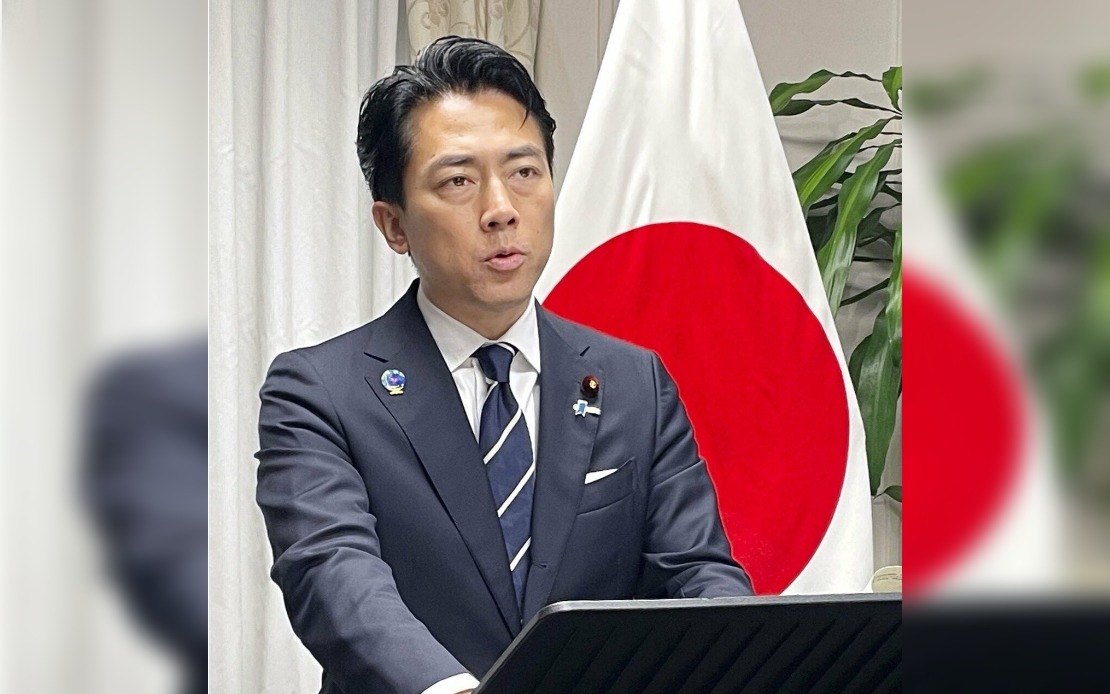
Defence Minister Shinjiro Koizumi has signalled that Japan should engage in open discussion about nuclear weapons, marking a significant departure from the nation's long-standing taboo on the subject. Speaking in an online programme released on Friday, Koizumi argued that Japan cannot shy away from examining this sensitive topic as the regional security landscape becomes increasingly unstable and traditional allies recalibrate their defence postures.
The timing of Koizumi's remarks is closely tied to the government's broader strategic reassessment scheduled for completion by year-end. Prime Minister Sanae Takaichi's administration is undertaking a comprehensive revision of three foundational national security documents, a process that will shape Japan's defence policy trajectory for the coming years. Against this backdrop, Koizumi's statement reflects internal deliberations about whether Japan's traditional security framework remains adequate for contemporary challenges.
Koizumi pointed specifically to policy developments among Western nations, particularly France and Finland, as evidence that the international security environment is shifting dramatically. Finland's parliament approved legislation in June that would permit nuclear weapons to be transported into the country—a stunning reversal for a nation historically committed to non-alignment. French President Emmanuel Macron similarly announced in March that Paris would expand its nuclear arsenal. These European developments underscore a broader trend among NATO members to strengthen nuclear deterrence capabilities in response to Russian aggression and broader geopolitical tensions.
Japan's current position stands in stark contrast to these moves. The nation maintains three foundational principles: it will not produce nuclear weapons, will not possess them, and will not allow them on its territory. This framework, established during Japan's post-war reconstruction and reinforced through decades of consistent policy, reflects both constitutional pacifism and the trauma of being the sole nation to experience atomic bombing in warfare. Hiroshima and Nagasaki remain potent symbols of the horrors of nuclear weapons, deeply embedded in Japan's national consciousness and political culture.
However, Japan's security position relies entirely on the US nuclear umbrella—a guarantee that American nuclear forces will defend Japanese territory. This arrangement, formalized through the bilateral security treaty, has undergone considerable strain. Questions about American commitment have intensified following shifts in US foreign policy under successive administrations, particularly regarding the credibility of extended deterrence in the face of adversaries possessing advanced nuclear capabilities themselves. China's rapid nuclear modernization and North Korea's persistent weapons development programme create genuine strategic dilemmas for Tokyo.
The security environment surrounding Japan has demonstrably deteriorated. China's military assertiveness in the East China Sea, combined with North Korea's accelerating missile and warhead development, presents Tokyo with threats that stretch conventional defence capabilities. Russia's invasion of Ukraine has shattered assumptions about international stability and demonstrated that major powers may resort to force despite possessing nuclear weapons. These developments have emboldened some Japanese defence intellectuals and policymakers to question whether adherence to non-nuclear principles remains strategically sustainable.
Koizumi's characterization of the current situation as one where certain policy topics remain beyond acceptable debate is particularly revealing. He argued that Japan needs to transform a political culture in which discussing nuclear weapons is effectively prohibited by social consensus and political convention. This framing reflects frustration among defence-minded officials who believe taboos around the subject constrain Japan's strategic flexibility. Last December, controversy erupted when a government security policy adviser suggested Japan should consider acquiring nuclear weapons, triggering criticism from opposition parties and diplomatic pushback from neighbouring countries and international partners concerned about regional destabilization.
The previous Defence Minister, Itsunori Onodera, similarly challenged the non-nuclear consensus late last year, advocating for serious deliberation about whether Japan's long-standing principles remain appropriate. These successive statements from senior defence officials suggest a coordinated effort to gradually shift public and political discourse, preparing ground for potential policy changes. For Malaysia and other Southeast Asian nations, such developments carry significant implications, as any Japanese nuclear weapons programme would fundamentally alter regional strategic calculations and potentially trigger security spirals.
Opposition to revising Japan's nuclear stance remains substantial, rooted in historical memory, pacifist constitutional provisions, and recognition that acquisition would provoke diplomatic crises with China and South Korea while potentially violating the Nuclear Non-Proliferation Treaty's spirit if not its letter. Public opinion polling consistently shows majority opposition to nuclear weapons. Nevertheless, the fact that senior defence officials now openly discuss the possibility indicates shifting parameters within Japan's security establishment, even if political reality may preclude immediate policy reversal.
The debate Koizumi proposes would represent Japan's most fundamental strategic reorientation since the post-war settlement. Whether genuine policy change eventually follows remains uncertain, contingent on how regional security threats evolve, how American security guarantees develop, and whether public and political opposition can be overcome. For now, the opening of this previously closed conversation signals that Tokyo's strategic consensus—constructed painfully over seventy years and underpinned by nuclear renunciation—faces unprecedented scrutiny from within Japan's own defence establishment.

