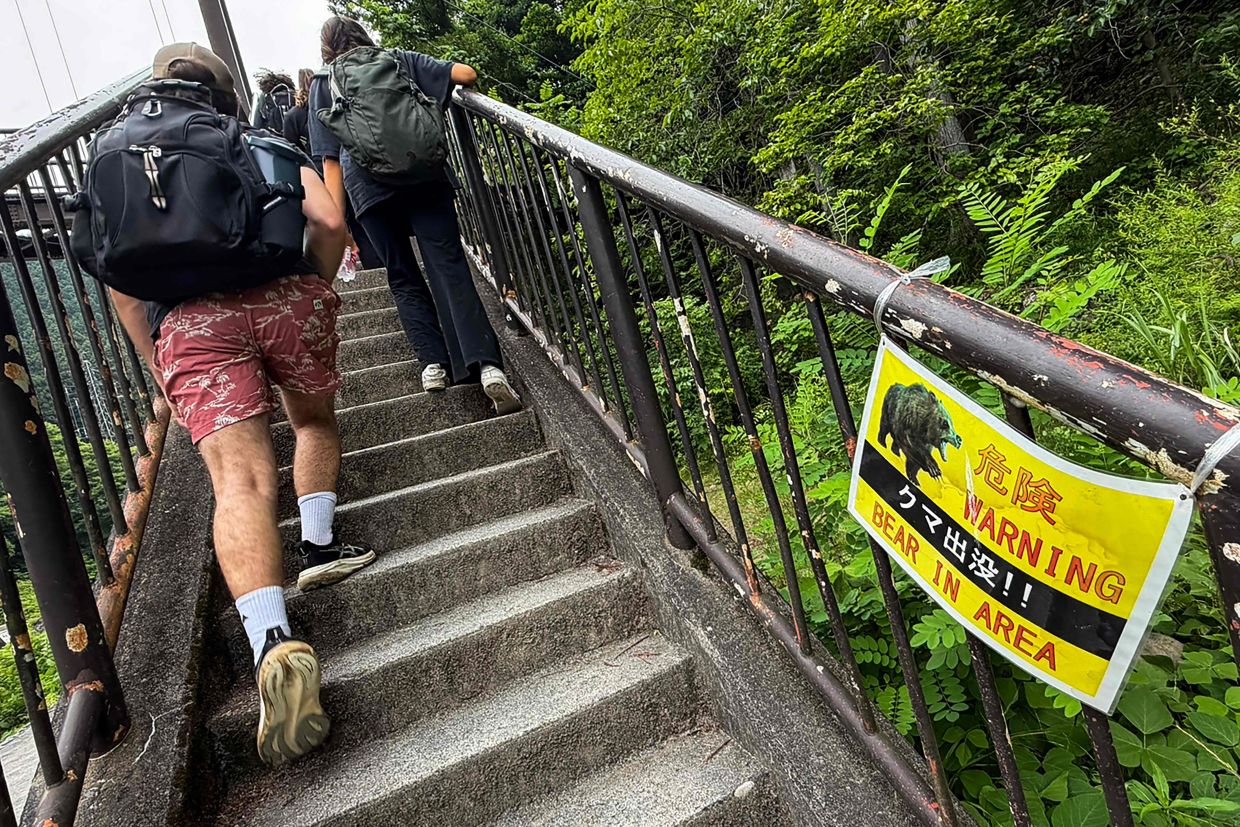
Japan's environment ministry has begun a comprehensive wildlife monitoring operation, installing hundreds of surveillance cameras across its mountainous terrain as part of an urgent response to escalating bear encounters that have claimed lives and rattled public confidence. The deployment comes after a particularly violent season that has left residents in the northern Tohoku region gripped by anxiety and prompted daily news coverage of incidents involving bears entering shopping districts, public parks, and school premises.
The gravity of the situation becomes apparent when examining recent fatality figures. Since the start of April, at least five people have been killed by bears in the Tohoku region alone, building on a troubling trajectory established in the previous fiscal year when 13 fatal maulings were recorded across the entire country—the highest number on record. These statistics have triggered something approaching a public health emergency mentality among local authorities, with government officials now treating bear management as a priority issue requiring coordinated national strategy rather than fragmented local responses.
Environment ministry official Yu Takahashi explained the rationale behind the camera deployment, noting that previous bear population surveys lacked standardisation and consistency. Local governments had been conducting counts independently, each applying different methodologies and conducting assessments at different times, creating an incomplete and fragmented picture of actual bear numbers and movement patterns. The new initiative aims to establish baseline data on six major bear populations initially concentrated in Tohoku, with plans to expand the survey nationally over the following four years. The systematic approach represents a significant shift in how Japanese authorities understand and respond to wildlife populations.
The camera system itself employs an ingenious bait mechanism designed to capture identifying features of individual bears. Jars containing honey mixed with wine are positioned at approximately human-head height along mountain trails and forest edges. When bears stand upright on their hind legs to investigate the sweet-smelling tonic, their distinctive white chest markings become visible to the overhead cameras, allowing researchers to identify and track individual animals over time. This method essentially creates a photographic database of the bear population, enabling more nuanced population management strategies based on actual behavioral and demographic data.
The underlying cause of the surge in bear attacks reflects broader demographic and environmental shifts across rural Japan. Scientists have identified a declining human presence in mountainous areas as a contributing factor to rising bear populations. As young people migrate to urban centers and rural communities depopulate, the natural habitat once maintained by human activity has expanded, reducing the distance between bear territories and residential zones. This encroachment process has accelerated in recent years, fundamentally altering the traditional boundaries between wild and human-settled spaces.
The psychological impact on residents cannot be understated. Tohoku communities now live under what amounts to a persistent threat alert, with local media providing daily updates on bear sightings that extend beyond remote forests into commercial and educational spaces. A June incident in Utsunomiya, located north of Tokyo, exemplifies the scale of urban intrusion: authorities deployed dozens of personnel including police officers, professional hunters, and municipal officials who required four days to successfully capture a single bear that had wandered into the city, forcing widespread school closures and disrupting normal civic operations.
One particularly notable case highlighted the adaptive intelligence of individual bears. A bear that struck the Fukushima region demonstrated remarkable problem-solving abilities, opening windows and manipulating water taps at factory facilities before attacking four workers. The animal evaded capture for days, suggesting that some individuals within the population possess capabilities that challenge standard wildlife management assumptions. Such incidents underscore the complexity of the challenge facing Japanese authorities, who must develop responses accounting for behavioral variation within the species.
Public health incidents have also increased beyond direct animal attacks. A 22-year-old Vietnamese national was arrested on Thursday in Nagoya after accidentally discharging anti-bear aerosol spray inside a postal facility, sending five people to hospitals for treatment. The incident highlighted the widespread adoption of bear deterrent products among the general public and the risks associated with their deployment in confined spaces. These repellent canisters, containing capsaicin—the active ingredient in chili peppers—create burning and irritating sensations intended to repel bears, but their misuse in populated areas creates secondary hazards.
Seasonal patterns have intensified the crisis. Following their emergence from winter hibernation, bears have exhibited increased foraging activity and apparent boldness in approaching human settlements. Mountain environments, which comprise approximately 80 percent of Japan's total land area, provide abundant habitat for expanding bear populations while simultaneously creating numerous potential contact points with human populations. The combination of wildlife recovery, habitat expansion, and human retreat from rural areas has essentially created a collision course in the geographical and temporal overlap between bear activity and human presence.
Government recommendations now include precautions that suggest the severity of the threat. Authorities advise against solitary mountain travel and recommend that anyone venturing into forested areas attach bells to bags to announce human presence—a traditional Japanese safety practice now being reinvigorated. The combination of auditory deterrence and chemical deterrents represents a defensive posture that acknowledges both the increased prevalence of bears in previously safer zones and the unpredictability of individual animal responses.
The camera survey initiative represents only one component of a broader management strategy. The systematic data collection will enable more targeted responses, potentially including habitat modification in areas where bears are increasingly straying into towns and cities. By establishing accurate population figures and movement patterns across Tohoku and subsequently nationwide, Japanese authorities hope to develop interventions that reduce both human fatalities and unnecessary wildlife culling. The four-year timeline reflects the recognition that effective long-term solutions require sustained commitment and comprehensive baseline data rather than reactive crisis management.
For Southeast Asian observers, Japan's escalating human-wildlife conflict offers cautionary lessons about urbanisation, rural depopulation, and wildlife management. As economic development drives similar migration patterns across the region, countries from Indonesia to the Philippines increasingly face comparable challenges of expanding animal populations encroaching on settled areas. Japan's methodical approach to data collection and population monitoring suggests a model that regional authorities might adapt to their own wildlife management challenges, whether involving bears, elephants, tigers, or other species experiencing habitat pressure.

