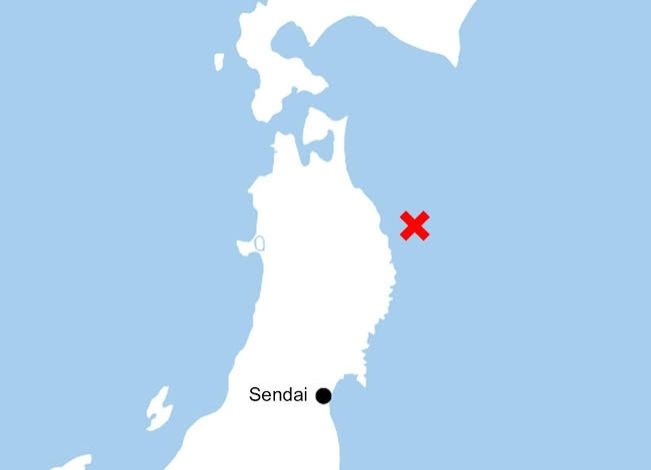
A powerful 7.2-magnitude earthquake jolted northern Japan on Thursday morning, sending saucepans tumbling from kitchen shelves and causing security cameras to sway, yet authorities confirmed no deaths or substantial structural damage in the aftermath. The undersea tremor struck at 7:30 am local time off the coast of Iwate prefecture on the main island of Honshu, with seismic waves detected as far away as Tokyo, hundreds of miles to the south. The Japan Meteorological Agency initially reported the magnitude as 6.9 before revising the figure upward to 7.2, pinpointing the epicentre at a depth of 44 kilometres beneath the seabed. Officials opted against issuing a tsunami alert, a decision that reflected both the depth of the quake and its offshore location.
Reports from the affected region painted a picture of widespread but manageable disruption. Mutsumi Shimohata, a 61-year-old employee of a food processing company working in Hashikami, Aomori prefecture—itself in Japan's northern reaches—described the moment the ground shifted beneath her feet. She recalled receiving a smartphone alert almost instantaneously as the tremor began, with the shaking lasting what felt like an extended duration. Her own home sustained only minor damage: a single picture frame fell from its perch. However, her workplace did not escape so lightly. The company's main office suffered more substantial consequences, with automatic doors ceasing to function and portions of the ceiling giving way. Management instructed all staff to remain at home on standby pending structural assessments.
Telecasts from the region's commercial districts showed the physical toll the earthquake exerted on everyday commerce. Shop shelves had emptied their contents onto floors in chaotic heaps, with kitchen cookware scattered across kitchen surfaces in numerous homes. The shaking proved powerful enough to disrupt public transportation, with several shinkansen bullet train services suspended during the immediate aftermath. A primary school in Hashikami closed temporarily as a precautionary measure, and emergency services fielded approximately four distress calls from the immediate vicinity. Responders dealt with reports of people trapped within a lift and stuck doors at various locations. In one incident, a tanker truck overturned, though specifics regarding any cargo leakage remained unclear.
The intensity of ground shaking in Aomori prefecture registered at the upper end of Japan's seven-point Shindo scale, a measurement system that captures the impact experienced by people and structures rather than merely the energy released by the quake itself. At this intensity level, individuals struggle to maintain their footing without assistance and can be knocked off their feet entirely. Unsecured furniture typically topples, windows frequently shatter, and structural integrity can be compromised. Yet despite these formidable conditions, the combination of robust building codes, earthquake-resistant construction standards, and emergency preparedness protocols established over decades of seismic activity kept casualties and severe damage to a minimum.
Government officials moved quickly to coordinate response efforts. Chief Cabinet Secretary Minoru Kihara issued a statement acknowledging that no confirmed fatalities had occurred while pledging continued monitoring of damage assessments. Prime Minister Sanae Takaichi directed all relevant ministries and government agencies to establish close coordination with prefectural authorities managing the situation on the ground. Through a post on X, the Prime Minister urged residents across heavily shaken districts to brace themselves for the possibility of substantial aftershocks matching the initial quake's intensity, a standard precaution reflecting the unpredictable nature of seismic sequences. The Nuclear Regulation Authority confirmed that no irregularities had been detected at regional nuclear power installations, offering reassurance regarding atomic safety.
Japan's exposure to earthquakes stems from its precarious geographic location atop the convergence of four major tectonic plates that collide along the Pacific Ring of Fire's western boundary. The island nation sits upon one of Earth's most seismically volatile regions, experiencing literally hundreds of tremors annually—contributing approximately 18 per cent of the planet's entire earthquake activity despite containing merely 2 per cent of global population. The vast majority prove inconsequential, yet history demonstrates that position and depth determine whether quakes become catastrophes or curiosities. The 2011 offshore earthquake measuring 9.0 magnitude remains seared into Japan's collective memory, spawning a tsunami that killed or left missing roughly 18,500 people and catastrophically damaged the Fukushima nuclear facility, resulting in consequences still unfolding today.
This week's earthquake arrives amid a broader pattern of increased seismic activity that has kept authorities vigilant. During April of this year, a 7.7-magnitude tremor shook the nation's northern regions, injuring at least ten people and causing alarm throughout Tokyo as tall buildings swayed noticeably. That event prompted seismic experts to release a special advisory warning residents of heightened probability for earthquakes reaching magnitude 8.0 or exceeding it—a rare warning that underscored genuine scientific concern. Authorities maintained this advisory for seven days before determining risk levels had returned to baseline, reflecting the inherent uncertainty in predicting seismic behaviour. The current earthquake, while significant, did not trigger issuance of another such warning.
The response protocols activated Thursday morning showcase Japan's sophisticated approach to earthquake management, honed through countless tremors and punctuated by occasional devastating events. Early warning systems transmitted alerts to mobile devices within seconds of the initial wave's detection, allowing individuals and automated safety systems milliseconds to react—slamming brakes on trains, closing automatic doors, and triggering protective procedures in hospitals and hazardous facilities. Building codes developed and refined over generations ensure that structures can withstand considerable ground motion without catastrophic failure. Public education campaigns teach residents how to respond, where to shelter, and what hazards to anticipate. Yet despite these preparations and the relatively benign outcome this instance, the underlying reality persists: Japan cannot eliminate earthquake risk, only manage it intelligently.

