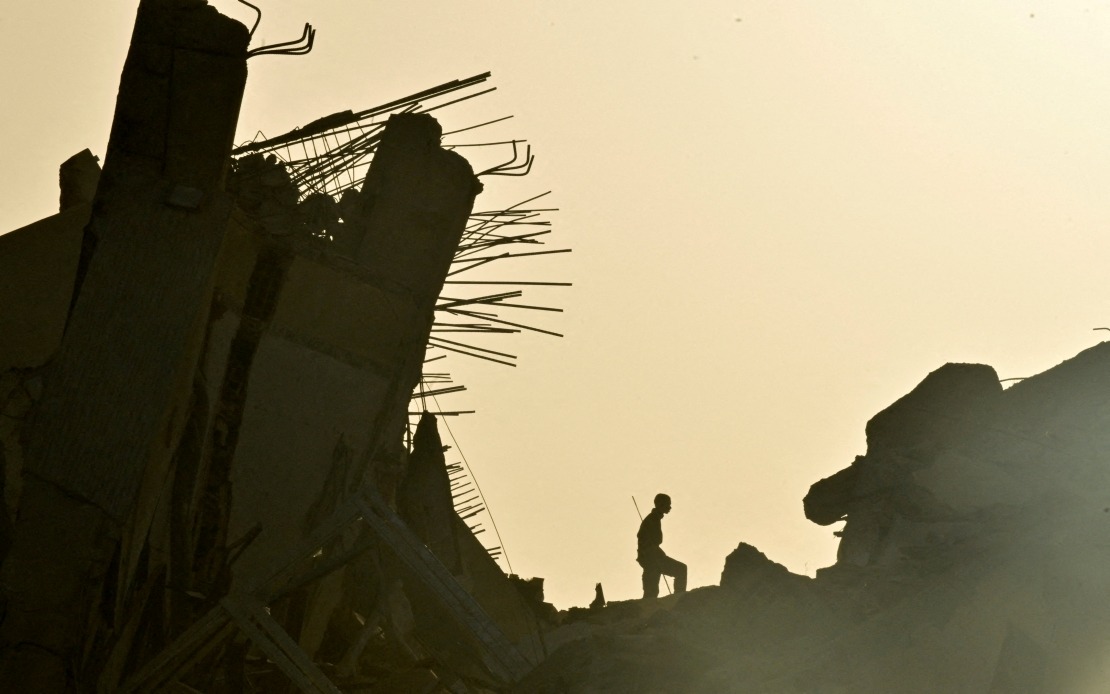
Japan announced a significant humanitarian commitment to Venezuela on Friday, pledging US$3.5 million in emergency grant assistance to support ongoing relief operations following the nation's devastating twin earthquakes. Foreign Minister Toshimitsu Motegi disclosed the funding during a news conference, signalling Tokyo's sustained engagement with the disaster recovery effort despite the geographic distance between the two nations.
The financial contribution represents a substantial commitment from Japan's development and humanitarian budget. Rather than providing direct bilateral assistance, Tokyo will channel the funds through established international organisations, allowing the money to reach affected populations more efficiently and with greater transparency. This approach aligns with Japan's broader humanitarian framework, which emphasises coordination with multilateral partners and experienced non-governmental organisations already operating in the crisis zone.
Distribution of the grant will prioritise essential needs confronting Venezuela's disaster-affected communities. The funds are earmarked for food security, healthcare provision, emergency temporary shelter, and other critical supplies necessary for immediate survival and recovery. Such comprehensive coverage reflects Japan's understanding that earthquake disaster response requires coordinated support across multiple sectors simultaneously, rather than focusing narrowly on single relief categories.
Beyond financial assistance, Japan is deepening its practical involvement by dispatching a second medical relief team to Venezuela. This personnel deployment represents a more direct form of humanitarian engagement, placing Japanese medical professionals and health specialists on the ground to address acute healthcare challenges in devastated areas. The decision to send a second contingent indicates that the initial medical team identified ongoing gaps in capacity and an urgent need for additional clinical support.
The twin earthquakes, which struck on June 24, have proven catastrophic in scale. Official figures indicate that the disaster claimed more than 3,000 lives, with countless others injured and traumatised by the natural disaster. Such casualty numbers overwhelm local healthcare infrastructure, create massive logistical challenges for recovery operations, and generate sustained demand for international assistance that will extend well beyond the initial emergency period.
Tokyo's response demonstrates a measured, multi-phased approach to international disaster relief. The government initiated its engagement on June 30 by arranging emergency relief supplies for dispatch to Venezuela. This was followed on July 1 by the approval and deployment of Japan's first medical relief team. The current announcement of additional financial resources and a second medical contingent signals that Japan views the Venezuelan crisis as requiring sustained rather than fleeting international support.
Japanese disaster relief policy reflects hard-won experience from major earthquakes and tsunamis within Japan itself, as well as extensive international relief operations across Asia and beyond. The country has developed sophisticated frameworks for coordinating with other donors, ensuring that assistance fills genuine gaps rather than duplicating efforts, and maintaining operations across extended timeframes. This expertise positions Japan to make meaningful contributions even to distant crises.
Foreign Minister Motegi's public commitment to continued assistance provides important political reassurance to Venezuela's government and affected populations. By explicitly stating that Japan will provide assistance needed by those impacted by the earthquakes, Tokyo signals that this is not a one-off gesture but rather a commitment extending across the recovery timeline. Such statements also encourage other international partners to maintain their own engagement with the crisis.
Coordination with international organisations and humanitarian partners remains central to Japan's strategy. Rather than attempting to implement relief programs independently, Tokyo emphasises working through established channels with organisations that maintain permanent presence in Venezuela and possess detailed knowledge of local conditions, cultural contexts, and operational realities. This collaborative approach maximises the effectiveness of Japanese assistance and ensures respect for Venezuelan sovereignty and national coordination efforts.
For Malaysian observers, Japan's response carries instructive lessons about how developed Asian nations approach humanitarian challenges in their broader regions and globally. The phased, coordinated, and sustained nature of Japanese assistance contrasts with purely emergency-focused responses and demonstrates how technical expertise and financial resources can be combined effectively. As Southeast Asian nations increasingly face earthquake and tsunami risks, understanding how established donors structure their relief operations provides valuable perspective for strengthening regional disaster response capabilities.
The political dimensions of Japan's Venezuela engagement also merit consideration. Despite geographical distance and limited direct economic ties, Japan maintains a commitment to providing humanitarian assistance to countries experiencing natural disasters. This reflects both Japan's broader values regarding international responsibility and its understanding that credibility in global affairs depends partly on demonstrated willingness to assist distant populations during crises, regardless of strategic advantage calculations.

