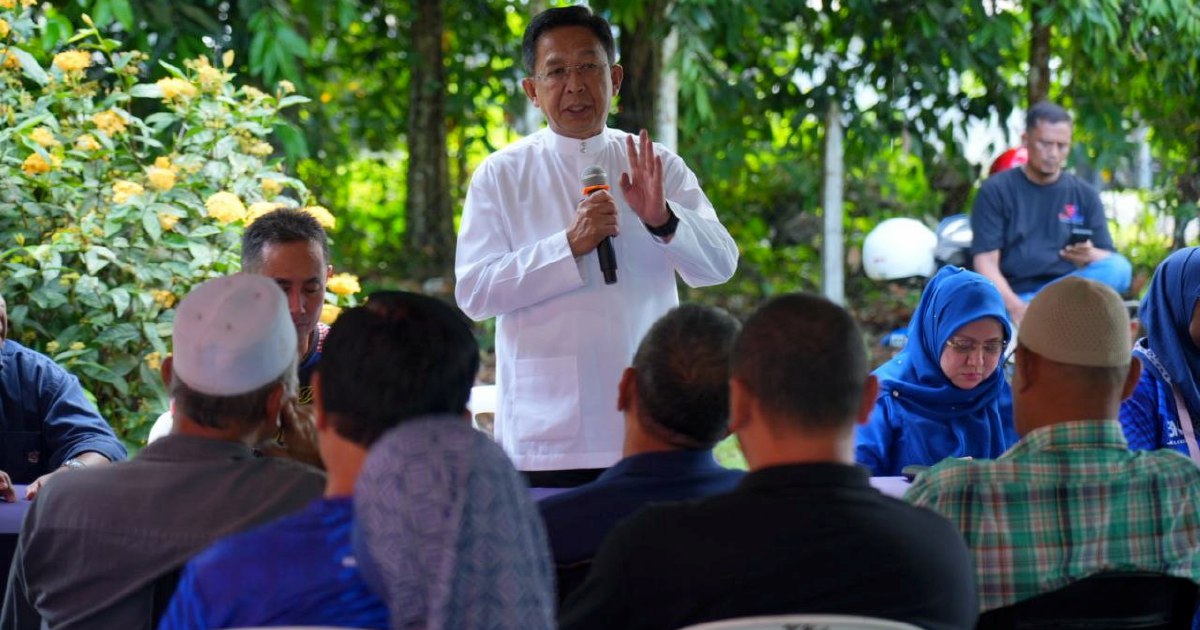
Perikatan Nasional has signalled that Negri Sembilan Umno chairman Datuk Seri Jalaluddin Alias ranks among the frontrunners to become the state's next menteri besar if the opposition coalition's electoral pact with Barisan Nasional succeeds in the August 1 state election, according to remarks from a senior PN leader.
The naming of Jalaluddin as a potential candidate reflects PN's strategic positioning in Negri Sembilan as it prepares for what is shaping up to be a closely contested state election. By publicly acknowledging him as a viable option, the coalition appears to be consolidating support among key constituencies while simultaneously managing internal negotiations with its BN partners over the distribution of top positions in state government.
Negri Sembilan has historically been a stronghold where both major coalitions maintain substantial support, making the menteri besar position highly coveted. The state's electoral dynamics are shaped by its mix of urban and rural constituencies, with significant Malay-Muslim populations that have traditionally responded to Umno messaging. The emergence of Jalaluddin's name as a leading contender underscores the importance PN assigns to maintaining strong Umno representation within its leadership structure.
The PN-BN understanding represents a significant realignment in Malaysian politics, with the two historically rival coalitions coming together to contest state elections. This collaboration requires careful calibration of leadership appointments to satisfy both blocs' expectations and factional interests. The mention of Jalaluddin suggests PN is seeking to demonstrate that the coalition arrangement respects the established hierarchy of state-level party leaders rather than imposing external figures on local political machines.
Jalaluddin's positioning as Negri Sembilan Umno chairman places him at the intersection of state party politics and the broader BN structure, which has given him credibility across multiple levels of the party establishment. His potential elevation to menteri besar would signal continuity with existing state leadership structures while embedding Umno more firmly within PN's electoral narrative for the state. This approach may be designed to reassure grassroots party members and conventional coalition supporters who might harbour reservations about the PN-BN cooperation.
The electoral landscape in Negri Sembilan remains unpredictable, with the incumbent Barisan Nasional facing challenges from PKR-led opposition alliances and independent candidates. The state assembly comprises 36 seats, with no single party commanding an outright majority in recent elections, making coalition mathematics crucial to determining which alliance can form a stable government. The PN-BN agreement is intended to consolidate anti-opposition votes, though its success depends on effective execution at the ground level and voter acceptance of what some may view as an unprecedented political compact.
For Malaysian observers, particularly those in Negri Sembilan, the Jalaluddin option represents continuity within a broader framework of change. Rather than importing a wholesale new political team, the coalition approach suggests an effort to work within existing party structures and relationships. This pragmatic strategy may appeal to local party members who have invested heavily in the state machinery over many years and would otherwise face displacement by external appointees.
The stakes of this election extend beyond Negri Sembilan's borders. State elections increasingly serve as barometers of national political sentiment, and the performance of the PN-BN alliance in Negri Sembilan could influence coalition arrangements in other states and at the federal level. A strong showing for the joint ticket might encourage similar collaborations elsewhere, while a poor result could unravel the arrangement and embolden those within both coalitions who oppose such partnerships on principle.
Jalaluddin's background and standing within Negri Sembilan Umno have presumably been assessed as sufficient to mount a credible challenge for the menteri besar position. His designation as a potential candidate rather than as the confirmed choice suggests PN is keeping options open while gauging responses from BN partners and evaluating campaign conditions as the election draws closer. This flexibility allows the coalition to adjust its candidate strategy if circumstances change or if internal negotiations with BN yield different arrangements.
The August 1 election will test whether the PN-BN cooperation can translate into tangible electoral gains. For Jalaluddin specifically, the coming weeks will likely involve increased visibility and engagement with constituency leaders across Negri Sembilan as PN builds its campaign machinery. His potential elevation to menteri besar depends ultimately on the coalition winning sufficient seats to form government, a threshold that will require strong performance across the state's diverse electoral districts.
Malaysian political observers will closely monitor how the menteri besar question evolves as the election approaches. The naming of credible local candidates like Jalaluddin is part of a broader pattern where both major coalitions are emphasising continuity and established leadership as they compete for voter trust. How this positioning translates into actual electoral outcomes and government formation will provide important insights into the durability of coalition arrangements in contemporary Malaysian politics.

