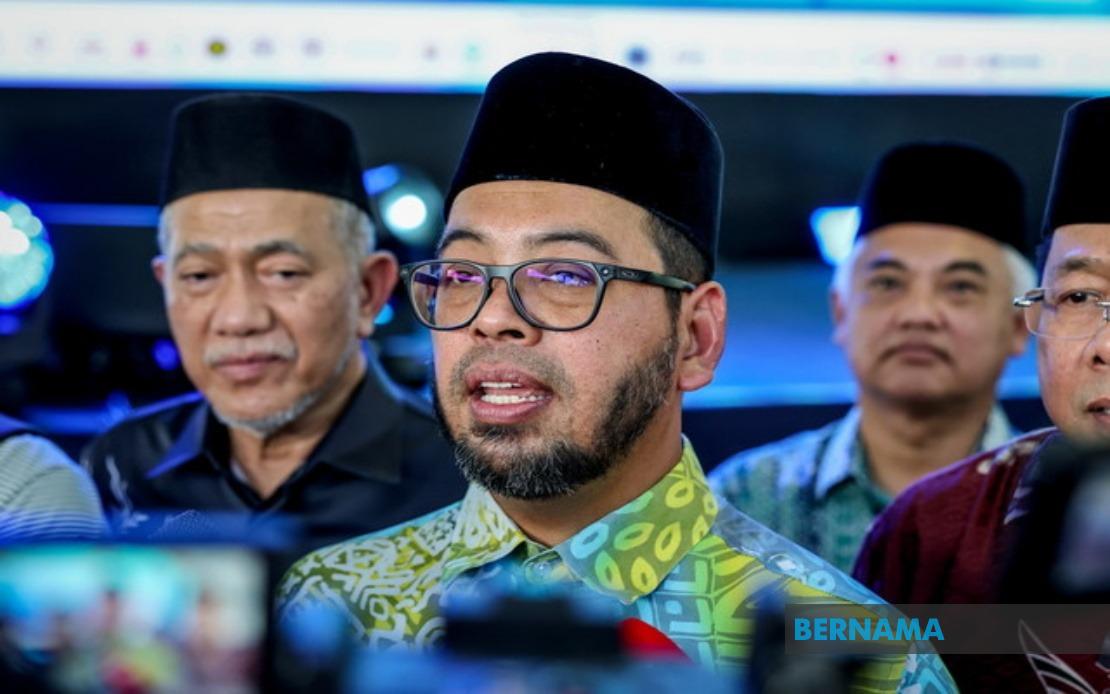
The Department of Islamic Development Malaysia (JAKIM) is moving to establish uniform funeral management standards across the country, prompted by a recent incident that sparked widespread public discussion online. The standardisation initiative represents an effort to create consistency in how Islamic funeral practices are administered while respecting the constitutional autonomy of individual states in matters of Islamic affairs. Minister in the Prime Minister's Department (Religious Affairs) Dr Zulkifli Hasan announced the development during an event in Bukit Mertajam, signalling that JAKIM recognises an urgent need to clarify procedures that have increasingly come under public scrutiny.
The move reflects a broader recognition within Malaysia's Islamic administrative structure that funeral management has become an area requiring clearer protocols. Currently, several states operate their own guidelines shaped by local religious councils and enactments, creating a patchwork of standards that can differ significantly from one jurisdiction to another. While this decentralised approach respects federalism and Islamic law's administration at state level, it has occasionally led to disputes and public confusion when families navigate the funeral process. JAKIM's role as the national coordinating body for Islamic affairs positions it well to develop a framework that other states can adopt, adapt, or use as reference material without overriding their existing legal frameworks.
Dr Zulkifli emphasised that JAKIM is not seeking to override state authority but rather to enhance existing guidelines into a more comprehensive and coherent national standard. He indicated that because many states have already developed foundational guidelines, the work primarily involves refinement and consolidation rather than starting from scratch. This incremental approach means the timeline for completion should be relatively short, provided the necessary coordination between JAKIM and state religious authorities proceeds smoothly. The minister's comments suggest a pragmatic recognition that funeral procedures, while steeped in religious and cultural tradition, must also be administered efficiently and transparently to serve grieving families effectively.
The timing of JAKIM's initiative directly follows a controversial incident in Selangor that generated substantial online discussion. According to the Selangor Islamic Religious Council (MAIS), the incident involved allegations of burial delays at Ukay Perdana Muslim Cemetery in Hulu Kelang. The case centred on coordination between the family of the deceased, Masjid Nurul Hidayah in Kampung Pandan Dalam, the welfare body Badan Kebajikan Salatulrahim (BKS), and the Selangor Islamic Religious Department (JAIS). Rather than allowing the matter to escalate into a broader bureaucratic dispute, MAIS convened an immediate meeting between all stakeholders to address the allegations and identify systemic improvements.
MAIS chairman Datuk Salehuddin Saidin framed the collaborative response as an opportunity to strengthen procedures and prevent recurrence. This approach reflects a preference within Malaysia's Islamic institutional framework for resolution through dialogue and administrative refinement rather than public confrontation. By addressing the specific case through internal coordination while simultaneously using it as a catalyst for nationwide guideline development, Malaysia's religious authorities are attempting to transform a problematic incident into an opportunity for systemic improvement. Such an approach, when executed effectively, can actually build public confidence in Islamic institutions by demonstrating responsiveness to legitimate concerns.
The challenge facing JAKIM and state authorities lies in balancing several competing considerations. Funeral procedures must respect Islamic requirements and family wishes while also meeting public health standards, cemetery management protocols, and administrative efficiency. Delays in burial can cause considerable distress to bereaved families, yet procedures must also ensure proper documentation and coordination between multiple stakeholders. Different states have sometimes emphasised different priorities, creating inconsistency. By developing comprehensive guidelines, JAKIM aims to establish best practices that help all parties—families, mosques, cemeteries, and religious authorities—understand their responsibilities and timelines clearly.
The Malaysian context adds particular complexity to funeral administration because Islamic law operates within a federal constitutional framework where religious authority is distributed between federal and state governments. While JAKIM provides national coordination and policy guidance, actual administration falls to state religious departments and councils. This means any nationwide guidelines must gain acceptance from multiple state authorities with varying administrative capacities and interpretations of Islamic law. The diplomatic skill required to develop guidelines that states will voluntarily adopt—rather than resist as federal overreach—should not be underestimated. Dr Zulkifli's emphasis on consulting with states and respecting existing enactments suggests JAKIM is approaching this sensitively.
The viral nature of the Selangor incident also highlights how funeral disputes can quickly escalate when grieving families feel their concerns are being dismissed or when transparency is perceived as lacking. In an era of social media, administrative missteps in sensitive matters involving death and religious observance can generate rapid reputational damage to institutions. This creates an incentive for religious authorities to address procedural issues proactively. The public's expectation is increasingly that Islamic institutions will operate with the same transparency and efficiency as other government bodies. Guidelines that spell out timelines, responsible parties, and complaint mechanisms can help meet these expectations while also protecting religious authorities from unfounded accusations.
For Malaysian families and communities, clearer funeral guidelines would provide practical benefits. Relatives navigating the funeral process during a time of grief would have access to consistent, transparent information about what to expect, how long procedures should take, and whom to contact if problems arise. This is particularly important in multicultural Malaysia, where many families may be unfamiliar with specific state procedures. Non-Muslim citizens who need to engage with Islamic funeral authorities regarding Muslim family members would also benefit from standardised, easily accessible guidelines. Additionally, mosque committees, cemetery management, and welfare organisations would have clearer protocols to follow, reducing the potential for coordination failures.
The development of these guidelines also reflects an opportunity to incorporate contemporary concerns that traditional procedures may not have fully addressed. Issues such as the role of social media in funeral announcements, the management of large gatherings during pandemic-like situations, the integration of new cemetery management technologies, and the accommodation of increasingly diverse family structures all merit consideration within modern guidelines. JAKIM's comprehensive approach suggests these contemporary elements will be included alongside traditional Islamic requirements, creating guidelines that are both rooted in religious principles and responsive to present-day realities.
Dr Zulkifli's call for calm and unity as the matter unfolds also carries an implicit message about the stakes involved. Funeral administration touches on deeply held religious and cultural values, and disputes in this area can easily become divisive if not handled with sensitivity. By framing guideline development as a collaborative process and urging all stakeholders to work together, he is signalling that the goal is institutional improvement rather than blame assignment. This approach, if successful, could strengthen public confidence in Malaysia's Islamic institutions while also creating a replicable model for resolving other procedural issues that may arise in Islamic affairs administration.

