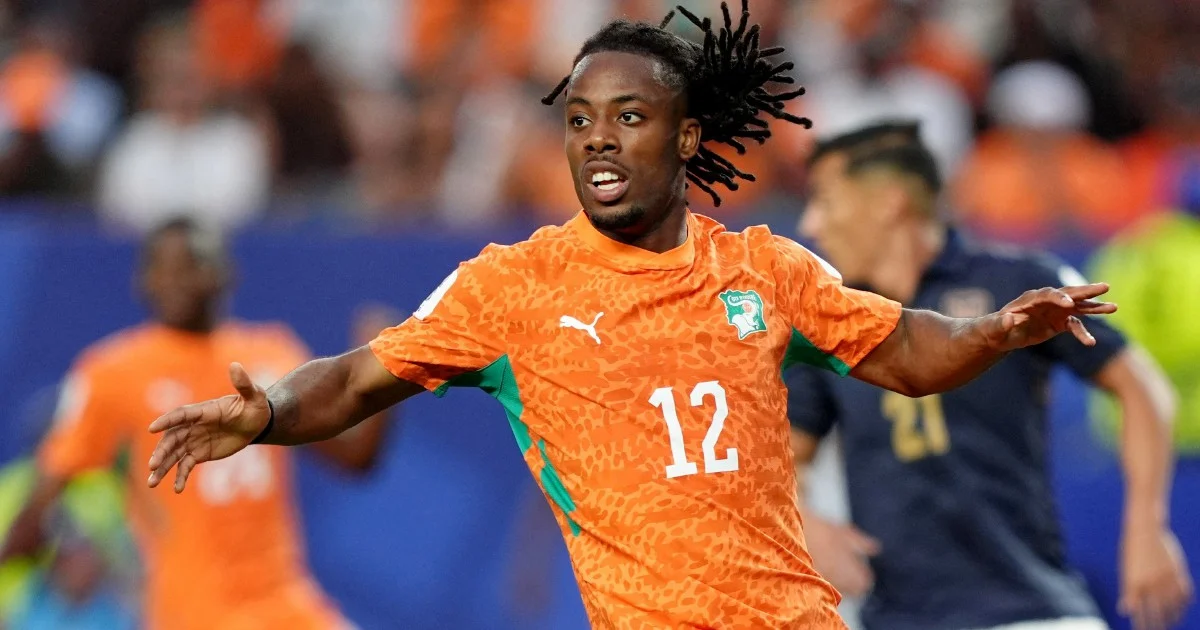
Elye Wahi, the Ivory Coast forward who led the line in his country's recent World Cup triumph over Ecuador, has been caught up in a criminal investigation centring on alleged match-fixing activities in France. The footballer was taken into custody last month as authorities expanded their probe into the manipulation of sporting contests, The Athletic disclosed this week.
Wahi's involvement in the investigation marks a significant development in what appears to be a broader examination of corruption within European football. The arrest occurred amid intensified scrutiny of betting-related irregularities and potential collusion involving players across multiple leagues and competitions. Such investigations have become increasingly common as governing bodies and law enforcement agencies worldwide heighten their vigilance against organised fixing schemes that threaten the integrity of professional sport.
The nature and specifics of the allegations against the forward remain largely unclear at this stage. Spot-fixing investigations typically focus on discrete moments within matches—such as deliberate fouls, own goals, or other predetermined outcomes—rather than attempts to determine overall results. These schemes often involve betting syndicates that profit from detailed knowledge of how specific plays will unfold during competition.
For the Ivory Coast national team, Wahi's involvement in the probe adds an uncomfortable layer to their recent footballing success. His presence in the starting lineup during the World Cup fixture against Ecuador demonstrated his continued importance to coach selections, even as questions about his off-field conduct emerged. National football associations frequently face dilemmas when players become entangled in legal matters, balancing sporting merit against reputational concerns and potential sanctions from international governing bodies.
French authorities have intensified their focus on match-fixing conspiracies in recent years, recognising the sophisticated networks that orchestrate such schemes. The investigation involving Wahi suggests that these networks extend beyond domestic boundaries, potentially implicating players operating in various European championships. This transnational dimension complicates enforcement efforts and raises questions about coordination between national law enforcement agencies and sports regulators.
The timing of Wahi's arrest during the football calendar presents particular complications for his club and national team commitments. Players undergoing investigation or awaiting trial often experience disruption to their careers, with clubs and federations forced to navigate complex legal and contractual considerations. The uncertainty surrounding such matters can impact team selection, squad morale, and long-term career trajectory for those involved.
Investigations of this magnitude typically involve extensive documentation review, financial analysis, and witness interviews. Authorities examine communications, banking records, and betting patterns to construct evidence of coordinated misconduct. The threshold for establishing culpability in fixing cases remains notably high, reflecting the serious nature of charges and their potential to permanently damage athletic careers and reputations.
For Southeast Asian football enthusiasts, the case underscores broader vulnerabilities within professional sport regarding organised corruption. As the region's leagues continue expanding their commercial footprint and international profile, similar risks emerge locally. The involvement of an African international player in European-based investigations serves as a reminder that fixing networks operate without geographical boundaries, targeting talent across continents and competition levels.
The investigation's broader implications extend to sponsorship and broadcast relationships. Major commercial partners and media organisations investing substantial resources in football have legitimate interests in ensuring competition integrity. Revelations about systematic corruption can damage commercial confidence and alter investment calculations for entities considering enhanced engagement with affected leagues or national teams.
Wahi's case also reflects evolving approaches within modern criminal justice systems toward sports-related offences. Prosecutors increasingly recognise fixing schemes as serious criminal enterprises rather than isolated incidents, justifying intensive investigations and resource allocation comparable to other white-collar crime. This represents a meaningful shift in institutional priorities across various European jurisdictions.
The investigation will likely proceed through standard French judicial processes, potentially extending over considerable time before resolution. During this period, uncertainty regarding potential sanctions, bans, or other consequences will persist. The outcome may influence how international football organisations calibrate their own disciplinary responses to corruption allegations involving players from their member associations.
Ultimately, Wahi's detention illuminates the persistent challenge facing modern professional football: reconciling the sport's exponential commercial growth and global reach with fundamental requirements for competitive authenticity. As long as financial incentives for manipulation remain substantial and detection mechanisms face organisational limitations, investigations involving prominent players will likely continue emerging across Europe and beyond.