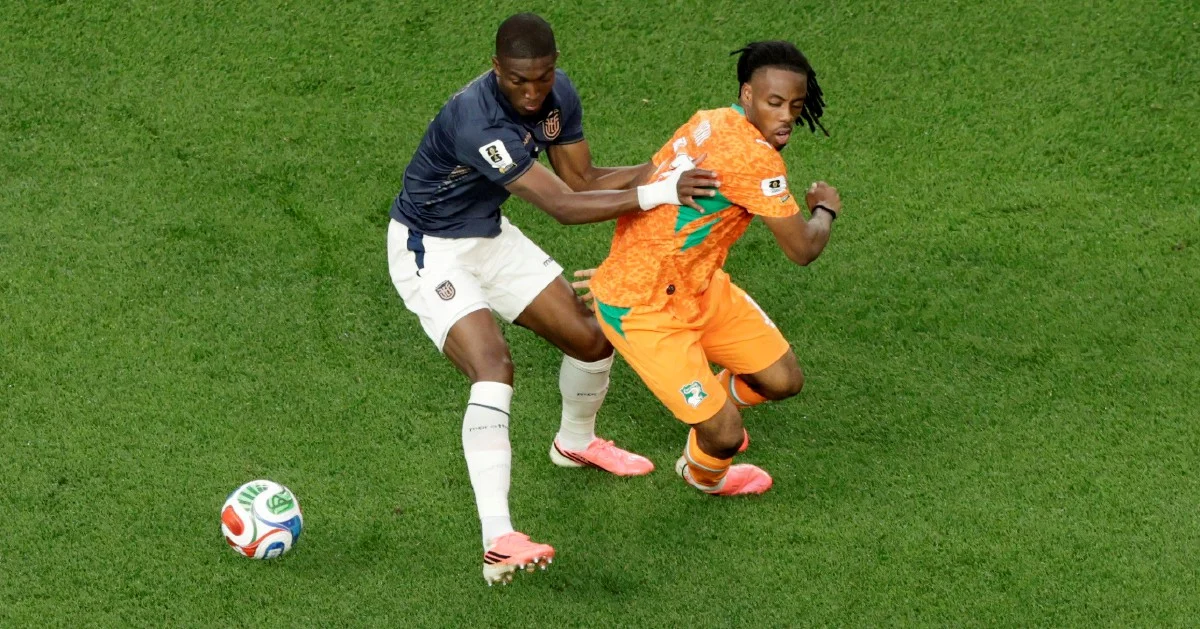
The Ivorian Football Federation made a decisive move on Thursday to protect the integrity of international competition, announcing that striker Elye Wahi will miss this weekend's World Cup encounter with Germany in Canada. The decision comes swiftly after the player became entangled in an investigation centred on alleged match-fixing activities within Ligue 1, France's top professional division—a development that has cast a shadow over not only his immediate playing future but also raised broader questions about corruption in European football.
Wahi's exclusion represents a stern statement by the Ivory Coast authorities about their commitment to ethical sport, even when the cost is considerable. The 22-year-old attacker is a prominent member of the national squad and would ordinarily be expected to feature prominently in such a high-stakes encounter. The decision to sideline him entirely, rather than risk even peripheral involvement, underscores how seriously the federation views the corruption allegations and the need to distance the national team from any taint of impropriety.
The suspected match-fixing investigation itself centres on irregularities in Ligue 1 competition, where French football maintains some of Europe's strictest regulatory oversight. Such inquiries are rare enough to send shockwaves through the sport, particularly when they ensnare players competing at the international level. The involvement of a World Cup participant has amplified concern among stakeholders about the extent to which corrupt practices might have penetrated elite club football and whether they pose a systemic threat to the integrity of the sport.
For Malaysian readers and Southeast Asian football enthusiasts, Wahi's situation illuminates a troubling reality affecting international football governance. While match-fixing scandals have periodically touched Southeast Asian domestic leagues and regional competitions, seeing a corruption investigation touch a World Cup squad highlights that no tier of professional football—not even the pinnacle of international club play—remains immune. The phenomenon serves as a sobering reminder that combating corruption requires constant vigilance across all levels, from grassroots academies to the biggest commercial competitions.
Wahi's removal also carries implications for Ivory Coast's competitive prospects against Germany, a fixture in a major tournament where every squad member matters tactically and psychologically. Germany stands as one of football's traditional powerhouses, and the loss of an attacking option—particularly one at Wahi's level—could fundamentally alter how the Ivorian coaching staff approaches the tactical setup. This substitution effect demonstrates how corruption investigations, even when they target individual players, ultimately damage the sport's competitive balance and fairness.
The timing of the Ligue 1 investigation reveals another troubling aspect: the asynchronous nature of sports corruption inquiries. Allegations emerge unpredictably, often long after suspicious matches have occurred, creating scenarios where players continue representing their nations and clubs whilst under investigative clouds. This temporal lag between suspected misconduct and official action creates uncertainty that destabilizes the sport's credibility, particularly when international fixtures hang in the balance.
French football authorities have historically taken corruption allegations seriously, with several high-profile investigations into match-fixing having occurred in recent years. The involvement of a Ligue 1 player in a fresh probe suggests that despite previous crackdowns, vulnerabilities persist within the competitive structure. Whether these vulnerabilities stem from inadequate monitoring systems, insufficient penalties for offenders, or the economic incentives driving corruption remains an ongoing question for football governance bodies worldwide.
The Ivorian Football Federation's swift response to suspend Wahi demonstrates how national federations, serving as the primary governance structures for their respective football ecosystems, must occasionally act unilaterally to protect their reputations and the sanctity of international competition. This preemptive approach, whilst harsh on the individual player, prioritizes institutional credibility—a judgment call that reflects evolving standards regarding how seriously the sport treats even allegations of impropriety.
Wahi's case also underscores the vulnerability of young, rising players to circumstances beyond their immediate control. At 22 years old, during what should be a peak period for developing his career, the player now faces investigation, exclusion from marquee competition, and potential lasting reputational damage. For aspiring footballers throughout Africa and Southeast Asia, the cautionary tale suggests that success at the elite level carries not only the pressure of performance but also exposure to systemic risks within the professional environment.
Looking forward, the resolution of this investigation will carry significance well beyond Wahi's individual fate. Should authorities substantiate match-fixing allegations, the case may trigger renewed discussions about preventative measures, monitoring technologies, and sanctions frameworks. If the allegations prove baseless, the suspension nonetheless demonstrates how serious investigations are treated and the collateral damage that can occur to reputations during the investigative process itself.
The broader institutional question concerns whether football's governance structures possess adequate tools to deter corruption while maintaining procedural fairness toward accused players. The balance between swift protective action and due process remains perpetually contested, particularly when high-profile tournaments and national pride intersect with investigations into alleged misconduct.

