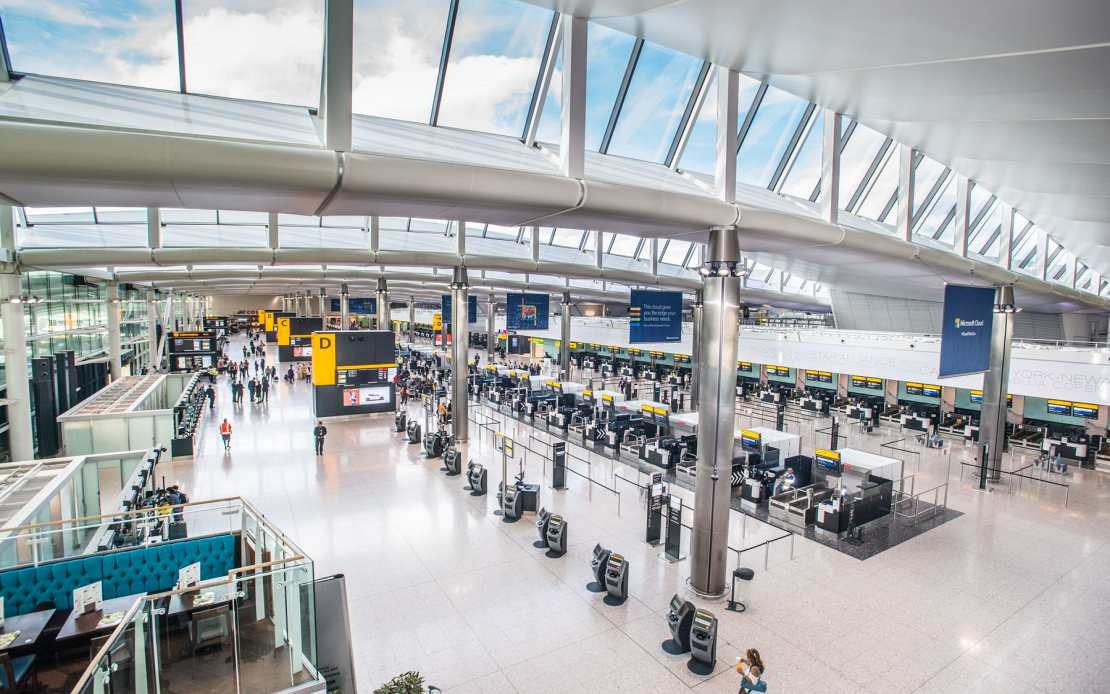
London Heathrow's reign as Europe's premier aviation gateway has ended, with Istanbul airport now claiming the continental crown after recording higher passenger volumes in July. The loss of status comes as geopolitical tensions and shifting travel patterns reshape European air traffic flows, presenting fresh challenges to Britain's economic competitiveness and triggering renewed calls for infrastructure investment in a congested capital.
Passenger data from the two airports reveals the stark reversal in fortunes. Heathrow handled 7.86 million travellers across its four terminals during July, whilst Istanbul Airport processed 8.15 million passengers over the same month. The margin may appear modest, yet it represents a decisive shift in continental aviation dynamics. Heathrow's monthly passenger count actually declined by 1.5 per cent compared to July of the previous year, indicating weakening demand rather than seasonal fluctuation. By contrast, Istanbul expanded its passenger throughput by 2.3 per cent year-on-year, suggesting sustained growth momentum and rising appeal as a transit hub.
Heathrow's diminished performance reflects broader geopolitical upheaval affecting aviation routes. The escalating United States-Iran tensions have materially damaged passenger traffic on routes to West Asia, where Heathrow experienced a severe 20.2 per cent decline in July year-on-year. For a major international hub, such volatility in a significant market segment underscores vulnerability to external shocks and regional instability. Istanbul, by contrast, benefits from geographic positioning that allows it to capture traffic flows between Europe, the Middle East, and Asia with less exposure to specific bilateral conflicts.
Heathrow's loss of Europe's top ranking comes after a remarkable recovery trajectory. The airport had dominated continental aviation for nearly a quarter-century, holding the leading position uninterrupted from 1996 until 2020. The pandemic-induced collapse of international travel temporarily displaced it from the summit, but Heathrow regained its crown in 2023 and maintained it until this July. The reversion to secondary status now raises uncomfortable questions about whether external pressures and capacity constraints are eroding its fundamental competitiveness within the European market.
Currently, Heathrow operates both of its existing runways at maximum practical capacity, leaving no room for organic traffic growth without infrastructure expansion. This operational ceiling fundamentally constrains the airport's ability to respond to market opportunities or seasonal peaks. The airport's assertion that it achieved a record single day on July 19, when 267,000 passengers transited its terminals as summer school holidays commenced, underscores how existing infrastructure is stretched to the limit during peak periods. Such congestion inevitably channels passenger demand toward competing hubs with available capacity, as travellers and airlines seek less constrained alternatives.
Heathrow's ownership and management have accordingly intensified their advocacy for runway expansion, arguing the case has become irrefutable. The proposed third runway would reshape British aviation infrastructure by accommodating 150 million passengers annually, roughly doubling current capacity and positioning the airport to compete aggressively against Istanbul and other growing continental rivals. Management framings emphasise national economic imperatives, contending that expanded Heathrow capacity would generate trade opportunities, attract investment, and support tourism across the United Kingdom.
The UK government has cautiously advanced the expansion agenda. Transport Secretary Heidi Alexander initiated a formal consultation in June on the Heathrow expansion national policy statement, outlining the regulatory pathway and conditions governing any potential approval. Former Chancellor Rachel Reeves had articulated determination to commence construction during the current parliamentary term, with completion targeted for 2035. However, political dynamics have shifted dramatically following recent leadership changes. Prime Minister Andy Burnham, who removed Reeves from office, has previously voiced scepticism toward Heathrow expansion, viewing it as a mechanism that diverts critical infrastructure investment away from economically disadvantaged northern regions whilst concentrating spending in London.
This regional dimension adds substantial complexity to the expansion question, particularly relevant for Malaysian and Southeast Asian business observers tracking British economic policy. Burnham's concerns reflect a genuine policy tension within UK governance: whether major capital expenditure on London aviation capacity serves balanced national development or exacerbates regional inequality. For foreign investors and airlines, such political uncertainty surrounding flagship infrastructure projects creates planning complications and investment hesitation.
Despite these headwinds, Heathrow maintains active engagement with global carriers. Several international airlines commenced operations at the airport during July, including Italy's ITA Airways, United States-based Alaska Airlines, and Saudi Arabia's nascent Riyadh Air. These additions indicate sustained commercial interest from major carriers seeking European access through London despite capacity constraints. Heathrow executives interpret new route launches as vindication of strong underlying demand and the airport's strategic importance as a global connecting point.
Thomas Woldbye, Heathrow's chief executive, articulated the airport's growth aspirations, describing summer performance as commencing strongly but expressing determination to achieve substantially more ambitious expansion. His statements pivot from mere operational commentary to advocacy framing, emphasising how expanded capacity would preserve Britain's position as host to Europe's leading aviation hub whilst generating downstream economic benefits through enhanced international connectivity. For Malaysia's aviation sector and regional businesses, Heathrow's predicament illustrates how critical infrastructure limitations can undermine competitive positioning in global markets, a lesson potentially applicable to Southeast Asian airport development strategies.
The Istanbul overtaking represents a watershed moment in European aviation politics. It validates arguments that London's constrained infrastructure no longer suffices for a hub of global significance and heightens pressure on UK policymakers to resolve expansion questions. Yet it simultaneously demonstrates that political consensus around mega-infrastructure projects remains elusive even when competitive disadvantage becomes evident. For Malaysia and other Southeast Asian economies increasingly engaged with British business and investment, tracking this infrastructure debate offers insights into how developed democracies balance growth imperatives against competing regional priorities and environmental concerns.

