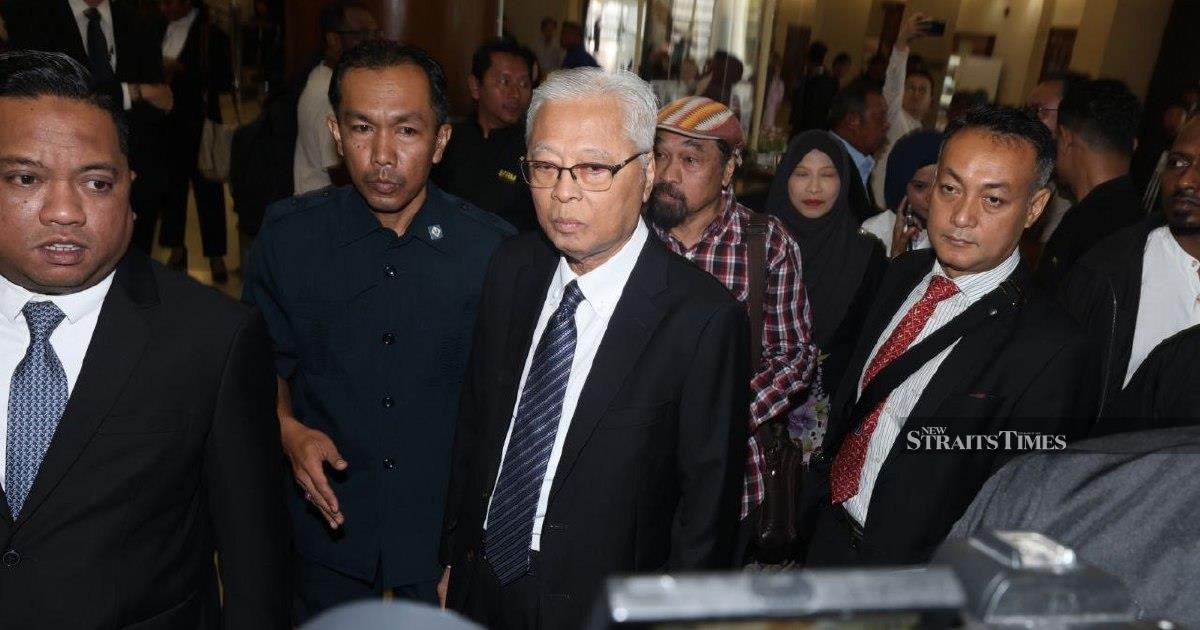
Former prime minister Datuk Seri Ismail Sabri Yaakob has departed the court complex after bail arrangements were secured through his son's contribution, allowing the veteran politician temporary liberty pending further legal proceedings. The posting of RM300,000 bail represents a significant development in the unfolding judicial process involving the politician who served as Malaysia's prime minister from August 2021 to August 2022.
The bail conditions underscore the continuing legal challenges confronting Ismail Sabri, whose tenure as prime minister occurred during a volatile period for Malaysian politics marked by internal coalition pressures and declining public approval ratings. His administration inherited an economy grappling with pandemic-related disruptions and navigated challenges stemming from the internal fracturing of the ruling coalition that ultimately precipitated his government's collapse.
Family involvement in securing bail arrangements has historically carried symbolic weight in Malaysian politics, where personal and familial networks often intertwine with public responsibilities. The decision by Ismail Sabri's son to facilitate the bail posting underscores the personal dimensions of legal proceedings affecting prominent political figures, demonstrating how individual accountability mechanisms extend beyond the public sphere.
The release from court represents a temporary respite rather than resolution, as the former premier remains subject to conditions that will govern his movement and potentially his ability to engage in certain activities. Such bail conditions typically include reporting requirements to law enforcement authorities and geographical restrictions that prevent departure from Malaysian jurisdiction without explicit permission.
For Malaysian readers tracking developments in accountability mechanisms affecting high-ranking officials, this situation illuminates the judicial system's application to individuals regardless of their previous elevated status. The principle that no one operates above the law has become increasingly emphasized in Malaysia's evolving political landscape, particularly following international and domestic pressure for enhanced transparency and governance standards.
Ismail Sabri's legal trajectory carries implications for Malaysia's broader anti-corruption and accountability narrative. His tenure as prime minister, though relatively brief, was characterized by attempts to stabilize an increasingly fractious coalition government while managing widespread expectations for reform and improved governance following the 2020 political realignment that preceded his appointment.
The former premier's predicament also reflects the broader precariousness facing Malaysian political figures once they leave office. The transition from wielding executive authority to facing potential accountability has become an increasingly common pattern in Malaysian politics, signalling evolving expectations regarding ethical governance and transparent conduct in public service.
Regional observers of Malaysian politics note that legal proceedings against former prime ministers and senior officials have become more frequent, suggesting either enhanced enforcement mechanisms or increased scrutiny following high-profile corruption scandals that damaged Malaysia's international reputation. This institutional tendency carries implications for Southeast Asian governance standards, as Malaysia's judicial system processes cases involving former executives who occupied positions of substantial national influence.
The bail posting mechanism itself reflects Malaysia's legal framework, which permits various arrangements for securing temporary release pending trial. The involvement of family members in facilitating such arrangements is legally permissible and commonplace, though it raises broader questions about resource disparities within the justice system affecting individuals with limited financial means.
Moving forward, Ismail Sabri faces the necessity of navigating legal processes while maintaining compliance with bail conditions, a balancing act that will likely constrain his public activities and political engagement prospects. The resolution of these legal matters remains uncertain, contingent upon evidence evaluation and judicial determination regarding allegations that prompted his initial court appearance.
For Malaysian society more broadly, cases involving former prime ministers underscore the judiciary's independence and willingness to pursue accountability regardless of an individual's previous status. This development carries psychological significance for public confidence in institutional mechanisms designed to prevent abuse of power and ensure equitable legal treatment across socioeconomic and political hierarchies.
The unfolding legal narrative surrounding Ismail Sabri will likely continue attracting attention from political analysts, constitutional scholars, and observers monitoring Malaysia's governance trajectory. His eventual legal resolution may carry precedential implications for future accountability frameworks affecting high-ranking officials in Malaysia and potentially influence expectations within the broader Southeast Asian region regarding executive accountability standards.

