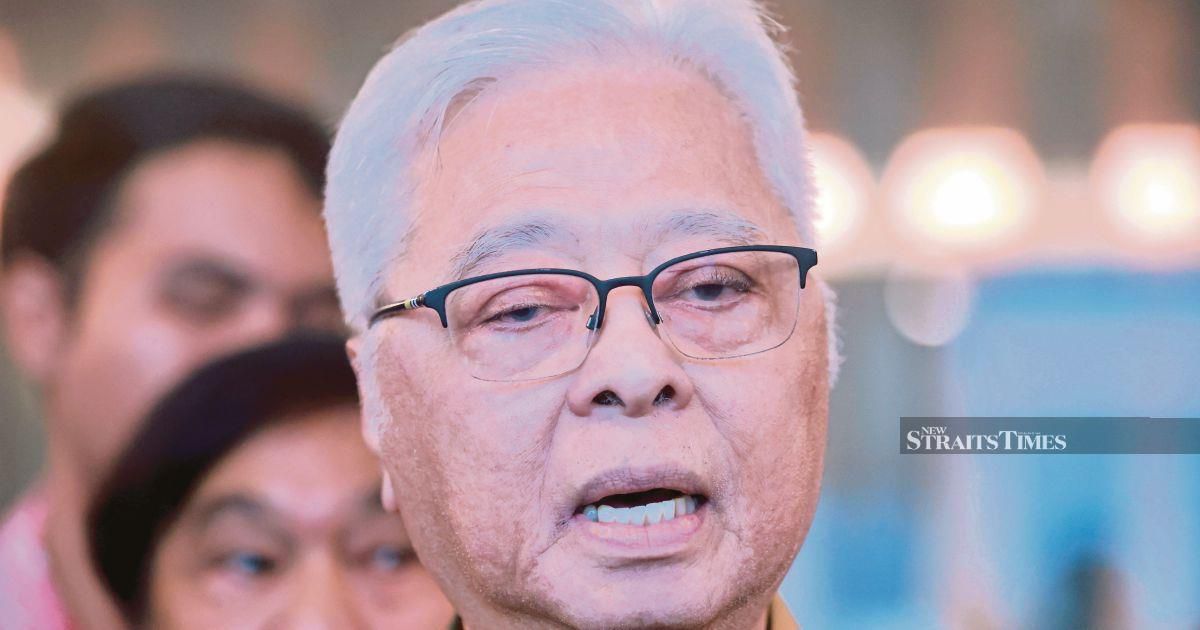
Datuk Seri Ismail Sabri Yaakob appears increasingly likely to face criminal charges, a development that would cement a striking transformation in Malaysia's political landscape where three consecutive former prime ministers now confront the courts. Following the high-profile prosecutions of Datuk Seri Najib Razak and Tan Sri Muhyiddin Yassin, the prospect of charges against Ismail Sabri would mark an extraordinary chapter in the nation's democratic history, reflecting both evolving accountability mechanisms and deepening factional divisions within the ruling establishment.
This sequence of events underscores a fundamental shift in Malaysia's post-2018 political environment, where the electoral victory of Pakatan Harapan created space for investigating alleged misconduct by predecessors. The ousting of Najib's government through the ballot box, followed by the complex political manoeuvres that have reshaped coalitions repeatedly, has created conditions where legal action against former leaders has become an accepted, if controversial, feature of governance. Where such proceedings were once virtually unthinkable against sitting or recently-departed prime ministers, they now appear routine components of Malaysian politics.
Najib Razak, who led the country from 2009 to 2018, has been at the centre of Malaysia's most significant corruption scandal. His legal battles involve allegations concerning the misappropriation of funds at the state development fund 1Malaysia Development Berhad (1MDB), charges that have resulted in multiple convictions despite his consistent protestations of innocence. The scale of the 1MDB controversy, with its ramifications extending into international financial systems and resulting in settlements with foreign governments, established a template for how seriously Malaysian courts and the public would regard allegations against the nation's highest office holders.
Muhyiddin Yassin, who held the premiership for seventeen months between 2020 and 2021, has separately encountered criminal proceedings. His tenure represented a transitional period during which political coalitions realigned significantly, and his subsequent fall from office was followed by investigations into various matters. The willingness of authorities to pursue cases against him demonstrated that no former premier would automatically receive immunity from legal scrutiny, regardless of their position in Malaysia's complex factional hierarchies.
The emerging pattern raises substantive questions about institutional independence, political stability, and the rule of law in Malaysia. On one hand, these prosecutions can be interpreted as evidence of a functioning judicial system capable of holding even the most powerful accountable—a standard that many emerging democracies struggle to achieve. Courts proceeding with cases against former prime ministers signal that no position places anyone permanently beyond legal examination, potentially strengthening democratic norms around accountability.
Conversely, the concentration of charges against three consecutive former premiers from the same broad coalition background invites scrutiny regarding whether legal mechanisms are being weaponised for factional advantage. The Malaysian public remains acutely aware that political fortunes shift rapidly, and opposition figures who currently champion accountability might themselves face similar charges should they return to power. This cyclical risk has prompted commentary among analysts and civil society observers about whether Malaysia is developing genuine institutional accountability or instead institutionalising a pattern of victor's justice.
For Ismail Sabri specifically, the implications extend beyond personal legal jeopardy. His relatively brief tenure as prime minister from August 2021 to November 2022 coincided with significant economic challenges and continued disputes over pandemic-related governance decisions. Any charges would invite comprehensive public examination of his administration's conduct, potentially reopening contentious policy debates and decisions made during his premiership. The matters under investigation, while not yet formally detailed in this context, would likely relate to either administrative conduct or financial dealings undertaken during his period in office.
The broader ramifications for Malaysia's political system warrant careful consideration. Foreign investors and international observers watch these proceedings closely, as they provide insights into the stability and predictability of Malaysia's institutional environment. A pattern where legal systems become vehicles for resolving political disputes rather than enforcing law impartially can undermine confidence in governance frameworks and potentially discourage long-term economic commitment. Conversely, if prosecutions are conducted with genuine impartiality and transparency, they strengthen institutional credibility internationally.
Within Southeast Asia, Malaysia's experience offers a cautionary lesson and potential model for other nations grappling with accountability for previous administrations. Thailand, Philippines, and Indonesia have each confronted comparable questions about how to address alleged misconduct by former leaders. Malaysia's approach—utilising existing legal frameworks and courts rather than establishing special tribunals—represents one model, though one whose effectiveness remains contested among observers and participants.
The political consequences for Ismail Sabri himself remain uncertain. His political standing and party leverage within the broader coalition structures would likely face significant pressures should charges materialise. The United Malays National Organisation (UMNO), his parent party, would confront questions about internal discipline and external positioning. These dynamics could further destabilise coalition arrangements that have proven fragile since 2018.
Moving forward, Malaysian civil society, opposition parties, and international observers will scrutinise how these cases proceed. The speed of investigations, the transparency of evidence presentation, and the outcomes will collectively shape perceptions about whether the legal system operates independently or responds to political calculations. For a nation committed to strengthening democratic institutions, the resolution of these cases carries implications extending far beyond the individuals involved, potentially defining the character of Malaysia's governance for years ahead.

