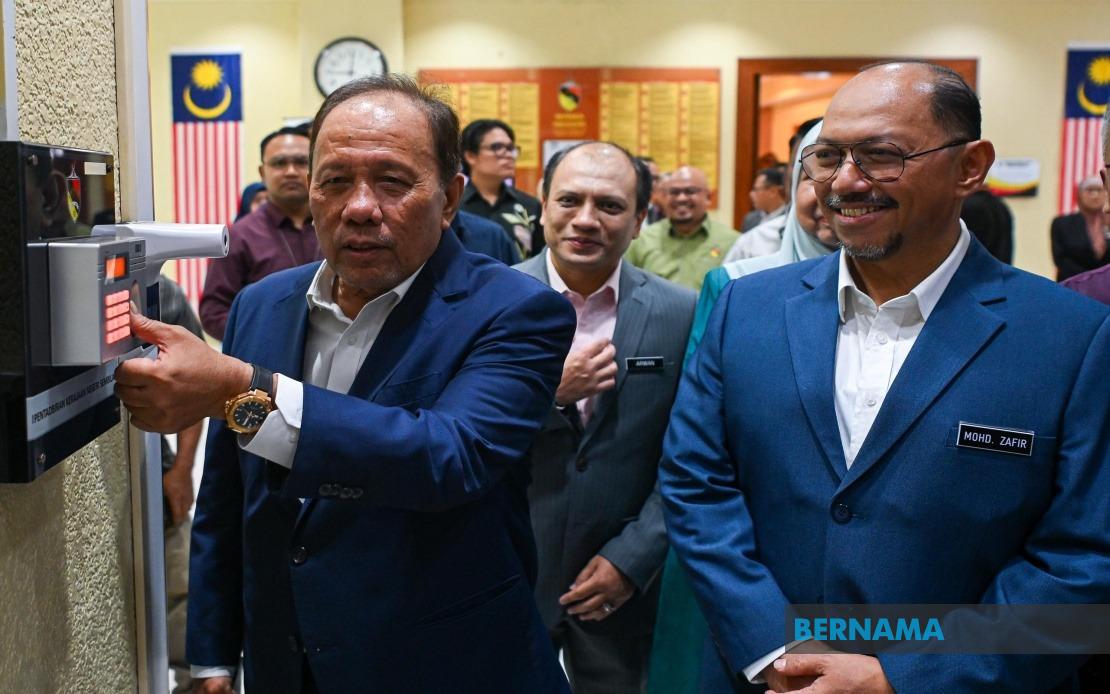
Datuk Ismail Lasim has moved quickly to defend his recent appointment as Negeri Sembilan Menteri Besar, declaring that the selection process adhered strictly to established protocols and constitutional requirements. Speaking to reporters in Seremban on August 4 after commencing his official duties at Wisma Negeri, Ismail expressed confidence that every procedural step had been executed correctly, signalling his intent to quell any lingering doubts about the legitimacy of his elevation to the state's highest executive office.
The newly appointed Menteri Besar's remarks came in direct response to public statements from Tan Sri Rais Yatim, chairman of the Wawasan think tank, who had raised pointed questions about the manner in which Ismail was selected and installed. Rais Yatim's concerns extended beyond mere procedural matters, encompassing allegations that external pressures may have influenced the decision-making process in ways that potentially circumvented Negeri Sembilan's established customs and constitutional conventions. Such criticism, coming from a respected intellectual figure, carried weight within political circles and warranted swift clarification from the state's new chief executive.
Ismail's appointment followed his successful capture of the Juasseh state constituency during the recent Negeri Sembilan state election, cementing his credentials as a popularly elected representative before his elevation to the chief minister's post. His formal swearing-in took place before Yang Dipertuan Besar of Negeri Sembilan Tuanku Muhriz Tuanku Munawir at Istana Besar Seri Menanti the preceding Sunday, an occasion that injected ceremonial weight and constitutional legitimacy into the transition of power. This royal blessing is typically viewed as the ultimate constitutional validation in Malaysian state affairs, lending authority to any successor government.
The political arithmetic underpinning Ismail's administration reflects a fractured state legislature where no single coalition commands absolute dominance. Barisan Nasional emerged from the state election as the single largest bloc, securing 18 of the 36 available seats, while Perikatan Nasional claimed seven seats for itself. Collectively, these two coalitions exceed the two-thirds threshold necessary to form a stable government and pass legislation without opposition support, though this mathematical advantage masks underlying tensions and negotiating positions that typically characterise coalition arrangements at the state level. The distribution of seats underscores the competitive nature of Negeri Sembilan politics and the intricate bargaining that often precedes ministerial appointments in such environments.
For Malaysian political observers, the controversy surrounding Ismail's appointment illuminates broader anxieties about institutional integrity that have periodified regional governance in recent years. When respected figures like Rais Yatim publicly question appointment procedures, they implicitly raise concerns about whether political decisions are being made through transparent, merit-based processes or whether shadow influences are directing outcomes in ways that bypass formal democratic mechanisms. Such questions, whether ultimately substantiated or not, carry political costs and can undermine public confidence in state institutions. Ismail's swift and public rebuttal demonstrates an understanding that early, clear communication about procedural propriety can help stabilise perceptions of legitimacy.
The timing of Rais Yatim's intervention also warrants scrutiny within the context of contemporary Malaysian politics, where think tanks and intellectual figures frequently serve as semi-independent commentators capable of critiquing government actions without bearing direct partisan responsibility. Wawasan's intervention suggests that questions about the appointment had circulated widely enough among informed observers to prompt institutional-level comment, indicating that Ismail faced a credibility challenge that extended beyond routine political opposition. The fact that the newly installed Menteri Besar felt compelled to address these concerns publicly, rather than allowing them to recede through silence, reflects the seriousness with which he regarded potential damage to his administration's perceived legitimacy.
For Negeri Sembilan's governance trajectory, Ismail's defence of his appointment procedures carries implications that will extend well beyond this initial controversy. A chief minister whose legitimacy remains questionable faces headwinds in implementing policy agendas, securing legislative cooperation, and attracting business investment. By front-loading his tenure with emphatic declarations of procedural correctness, Ismail has sought to establish a foundation upon which to build political capital and administrative authority. Whether this early defensive posture will suffice to definitively answer Rais Yatim's concerns remains an open question, however, as actions taken during his stewardship will ultimately determine whether his claims of institutional propriety ring true.
The broader Southeast Asian context adds another layer to understanding this controversy. Regional governments across Malaysia, Indonesia, Thailand, and the Philippines have all grappled in recent years with questions about whether executive appointments reflect authentic democratic will or represent behind-the-scenes power plays. Negeri Sembilan's situation, while essentially a state-level affair, participates in this regional conversation about institutional integrity and governmental legitimacy. Malaysian observers watching these developments will be attuned to whether Ismail's administration sets new standards for transparency or whether it reinforces patterns of opaque decision-making that have plagued regional governance.
Moving forward, Ismail's stewardship will be judged not merely on his assertions about procedural correctness, but on the substance of his governance record. His ability to build consensus among the coalition partners supporting his government, to deliver tangible improvements in state services, and to govern with transparency will ultimately validate or contradict his claims about the probity of his appointment. The first hundred days of his tenure will likely prove critical in establishing whether sceptics like Rais Yatim were justified in their concerns or whether Ismail can emerge as a chief minister whose actions align with his professions of institutional respect.

