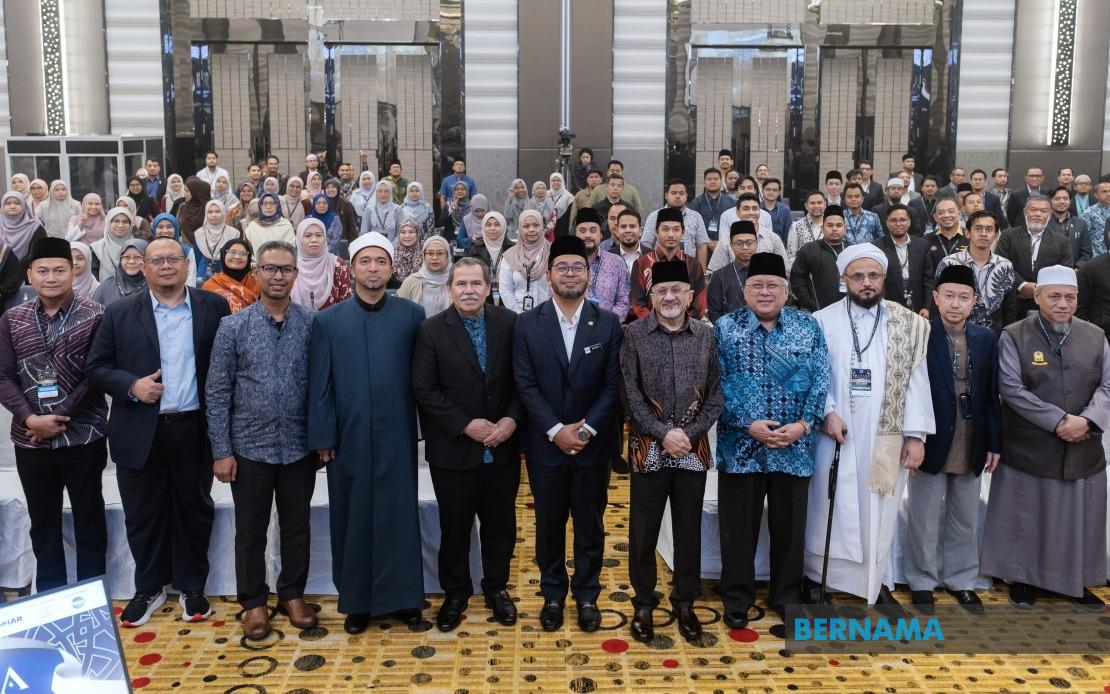
Malaysia's Minister in the Prime Minister's Department (Religious Affairs), Dr Zulkifli Hasan, has positioned Islamic social finance as a critical strategic tool for poverty reduction and economic advancement, signalling the government's commitment to expanding this emerging sector beyond its traditional charitable role. Speaking at the MULTAQA SIDR Islamic Social Finance Conference in Kuala Lumpur on August 12, Zulkifli outlined an ambitious agenda to integrate Islamic social finance mechanisms more thoroughly into Malaysia's broader financial ecosystem, moving away from the conventional model of simple welfare distribution.
The minister's remarks reflect a strategic reorientation within Malaysia's development narrative, where Islamic financial instruments are being reconsidered not merely as religious or charitable vehicles but as legitimate economic drivers with proven capacity to address structural poverty. This positioning carries significant implications for how the government approaches social policy and financial inclusion, particularly for Muslim-majority populations across Malaysia and the region. By elevating Islamic social finance to the level of mainstream financial discourse, policymakers are attempting to bridge the gap between traditional Islamic values and contemporary development economics.
To strengthen institutional capacity within this sector, the government has assigned the Department of Waqf, Zakat and Haj (JAWHAR) as the central coordinating body responsible for enhancing governance standards and professional practices across Islamic organisations, particularly within the non-governmental sector. This administrative restructuring acknowledges that rapid scaling of Islamic social finance initiatives requires robust oversight mechanisms and standardised operational frameworks. The decision to position JAWHAR as the lead agency represents a consolidation of authority that aims to eliminate inconsistencies in how Islamic social finance institutions operate and manage community resources.
Zulkifli emphasised that meaningful progress in this area depends heavily on fostering genuine collaboration between multiple institutional stakeholders. Universities and higher education institutions bring research capacity and technical expertise, while the voluntary sector contributes ground-level understanding of community needs and implementation experience. The private sector's involvement is crucial for mobilising capital and introducing commercial discipline to social finance operations. This tripartite approach seeks to create an ecosystem where Islamic social finance operates with both the moral clarity of voluntary organisations and the operational efficiency expected in commercial contexts.
The governance dimension of this initiative cannot be overstated, particularly given Malaysia's recent institutional challenges. The minister explicitly warned that failures in governance and integrity would reverberate across the entire Islamic institutional landscape, potentially undermining public confidence not only in financial institutions but in Islam itself as perceived by broader society. This concern gained added urgency following parliamentary discussions regarding the Royal Commission of Inquiry report on Tabung Haji, which revealed significant governance weaknesses in one of Malaysia's prominent Islamic financial entities. Zulkifli's caution suggests that the government recognises the reputational stakes involved in scaling up Islamic social finance without simultaneously addressing systemic vulnerabilities.
A significant conceptual shift underpins this initiative: repositioning Islamic social finance from what Zulkifli termed merely consumptive assistance to what he called 'The Third Force'—a model centred on productive community empowerment. Rather than distributing resources to alleviate immediate hardship, this approach envisions Islamic social finance mechanisms creating sustainable pathways out of poverty through skills development, entrepreneurship support, and asset-building programmes. Such reframing suggests that policymakers are moving beyond traditional zakat and waqf models toward more sophisticated poverty-reduction strategies that generate long-term economic mobility.
The launch of Malaysia's Islamic Social Finance Report 2026 during the conference underscores the government's intent to establish evidence-based policy frameworks for this sector. The report documents ecosystem developments, identifies persistent challenges, and maps growth opportunities, functioning as both a diagnostic tool and a strategic reference document for institutions operating across local and regional markets. By producing comprehensive research on Islamic social finance dynamics, Malaysia positions itself as a thought leader within Southeast Asia and the broader Muslim world, potentially attracting international cooperation and expertise.
The diverse institutional representation at the conference—including INCEIF University leadership, the Federal Territories Islamic Religious Council, and the Zakat Collection Centre—illustrates the breadth of stakeholders now engaged in advancing Islamic social finance. This constellation of actors reflects the complexity of scaling operations that must simultaneously satisfy religious requirements, governance standards, operational efficiency, and developmental impact. INCEIF's presence is particularly significant, as the institution specialises in Islamic finance education and research, positioning universities as active participants in sector development rather than mere observers.
For Malaysia specifically, the advancement of Islamic social finance carries substantial implications for financial inclusion strategies. Approximately 70 percent of Malaysia's population identifies as Muslim, and substantial numbers of this cohort remain underserved by conventional financial systems. Islamic social finance mechanisms, when properly structured and governed, can address gaps in microfinance, small business support, and asset accumulation for lower-income households. This is especially relevant in rural areas and among marginalised communities where trust in Islamic institutions often exceeds confidence in secular financial intermediaries.
Regionally, Malaysia's initiatives in Islamic social finance have broader significance for Southeast Asian development. Countries with large Muslim populations, including Indonesia, Philippines, and Brunei, are watching Malaysia's institutional experiments closely. Should Malaysia successfully mainstream Islamic social finance while maintaining rigorous governance standards, the model could be adapted and scaled across the region, potentially reaching hundreds of millions of individuals currently excluded from formal financial systems. This positions Malaysia's current policy decisions as having implications extending far beyond its borders.
The minister's measured response regarding calls for additional investigations into Tabung Haji—declining to comment while simultaneously emphasising governance imperatives—suggests that the government is attempting to calibrate its approach between institutional accountability and sector confidence. Excessive institutional crises could undermine public faith in Islamic finance mechanisms at precisely the moment when the government seeks to scale them. Conversely, inadequate responses to governance failures risk perpetuating the institutional weaknesses that compromise sector credibility.
Moving forward, the success of these initiatives will depend on execution capacity and sustained political commitment. Converting policy statements into functional governance frameworks, establishing interagency coordination mechanisms, and building human capital within Islamic NGOs requires sustained investment and technical expertise. The government's decision to task JAWHAR as the coordinating agency provides institutional clarity, but effectiveness will ultimately depend on whether this agency receives adequate resources and genuine authority to implement standards across the voluntary sector.

