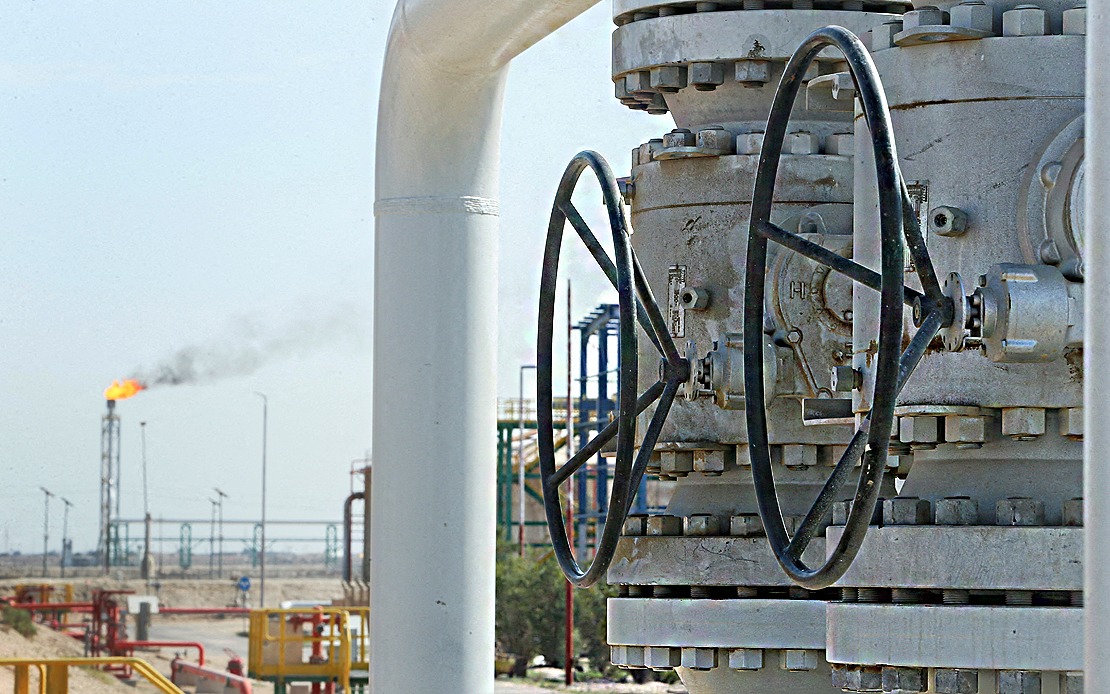
Iraq is moving forward with an ambitious infrastructure project designed to bypass the critical Strait of Hormuz, one of the world's most strategically important waterways. Oil Minister Bassim Khudair confirmed that the government is pursuing a pipeline network that would connect Iraq's major oil-producing regions to Mediterranean export terminals, a shift driven by prolonged disruptions affecting the nation's economic lifeline.
The proposed pipeline system would stretch from Iraq's oil-rich southern region of Basra and the northern Kirkuk fields toward Mediterranean ports at Ceyhan in Turkey and Baniyas in Syria. A feasibility study is currently underway to assess the technical and economic viability of this ambitious undertaking. Baghdad is also exploring the possibility of eventually extending the route southward to Aqaba, Jordan's port on the Red Sea, further diversifying export pathways and reducing geographical concentration of shipping infrastructure.
The strategic importance of this project cannot be overstated for Iraq's fiscal stability. The country's oil revenues typically account for more than 90 percent of government income during normal economic periods. These earnings directly support over 10 million Iraqis who depend on monthly government allocations, encompassing civil service employees, pensioners, and social welfare beneficiaries. Any sustained disruption to oil exports therefore carries immediate consequences for public sector wages and social spending across the nation.
The urgency of developing alternative routes stems from the deteriorating security situation surrounding the Strait of Hormuz. The waterway has remained effectively congested for months due to escalating tensions between Iran and the United States, creating considerable obstacles to maritime commerce. Simultaneously, Iraq's own oil production has contracted during the period of regional hostilities, compounding the revenue challenges facing Baghdad. These dual pressures—reduced output and constrained shipping capacity—have created a critical vulnerability in Iraq's economy.
Government officials in Baghdad have articulated a comprehensive long-term strategy for oil export diversification, signalling political commitment to reducing the country's vulnerability to chokepoint disruptions. This approach reflects lessons learned from decades of geopolitical instability and recognizes that heavy dependence on single shipping corridors exposes the nation to forces beyond its control. The Mediterranean route would provide an alternative that circumvents the Persian Gulf entirely, offering Iraqi oil producers and policymakers greater flexibility.
Nevertheless, the proposed overland pipeline solution presents substantial technical and economic challenges. Transporting crude oil through pipelines across hundreds of kilometres remains considerably more expensive and operationally complex than traditional maritime shipping. Infrastructure costs, maintenance requirements, and energy losses during transport all contribute to reduced margins compared to seaborne logistics. These economic realities mean that even successful completion of a Mediterranean pipeline would likely supplement rather than entirely replace Gulf shipping routes.
A further complication lies in the geopolitical vulnerabilities of the proposed infrastructure itself. Iraqi officials candidly acknowledge that pipelines and associated energy facilities positioned outside the Strait of Hormuz remain susceptible to Iranian military strikes or proxy attacks. This recognition underscores a fundamental paradox: while the Mediterranean route would diversify away from Hormuz, alternative pathways through Turkish and Syrian territory introduce different strategic risks. The success of any such project depends partly on maintaining stable relationships with transit countries and managing potential hostile actions from regional adversaries.
On the immediate export front, Iraq is already utilizing existing infrastructure to circumvent some Hormuz bottlenecks. The government operates an operational pipeline to Turkey that traverses the autonomous Kurdish region, providing a proven alternative channel for crude shipments. More significantly, a second pipeline currently undergoing final testing and validation could enter commercial operation imminently according to Khudair's statements. This pipeline, which bypasses Kurdistan entirely, represents a nearer-term solution to current export constraints and could provide substantial relief before longer-term Mediterranean infrastructure projects come online.
The broader implications for Southeast Asian energy markets deserve consideration. Iraq's export challenges create global supply tightness that eventually influences petroleum costs across Asia-Pacific economies, including Malaysia. Any successful diversification of Iraqi exports would reduce upward pressure on regional fuel prices and improve energy security for importers throughout Southeast Asia. Conversely, protracted reliance on Hormuz creates ongoing vulnerability for the region's energy-dependent economies.
The proposed pipeline strategy also reflects Iraq's attempt to strengthen diplomatic and economic ties with neighbouring Turkey and Syria, despite considerable historical tensions. Infrastructure projects of this magnitude require years of negotiation, technical cooperation, and political coordination between nations. Successfully executing such an initiative would signal Baghdad's capacity to undertake complex regional partnerships focused on mutual economic benefit, potentially reshaping relationships within the Middle East.
Ultimately, Iraq's pursuit of Mediterranean export routes represents a pragmatic recognition that single-point dependencies create unacceptable economic risks in volatile regions. Whether through existing pipelines being brought online or entirely new infrastructure under development, Baghdad appears determined to establish multiple pathways for its petroleum exports, securing the revenue streams essential to state stability and social support programmes.

