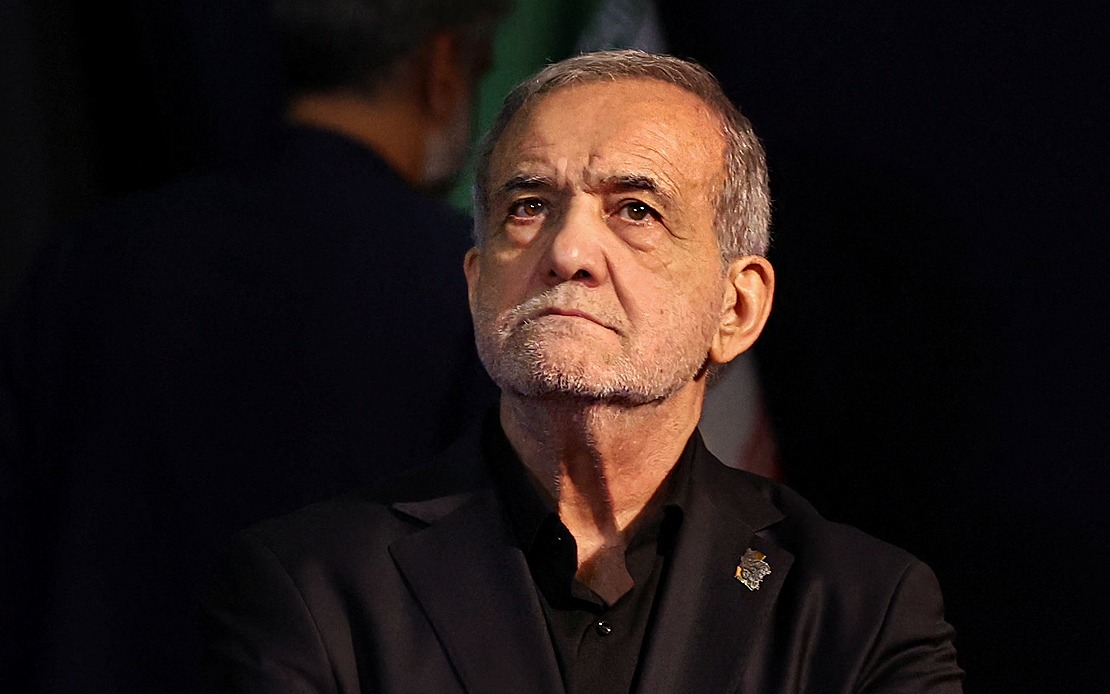
Iranian President Masoud Pezeshkian has escalated diplomatic pressure by calling for formal legal proceedings through international bodies to address the destruction of Iran's transport and logistics networks, which he characterizes as unlawful military aggression against civilian infrastructure. The demand represents Tehran's strategy to shift the conflict from military to legal terrain, seeking to establish an international legal record of alleged violations during recent regional tensions.
During a ministerial inspection at Iran's Roads and Urban Development Ministry on Sunday, Pezeshkian reviewed comprehensive assessments of the nation's transportation systems, including ports, border terminals, rail networks, and air transport facilities. The visit formed part of his broader program to directly monitor government agency operations and evaluate the scale of reconstruction needs across critical infrastructure networks.
Ministry officials provided the president with detailed briefings on the operational status of multiple transport sectors. The presentation encompassed border crossing points, maritime facilities, road and railway connectivity, and the current capacity to distribute essential commodities throughout the country. Roads and Urban Development Minister Farzaneh Sadegh delivered an extensive report documenting the full extent of damage sustained across ports, terminal facilities, bridges, highways, rail lines, and related logistical infrastructure following the military operations.
The extent of infrastructure damage represents a significant challenge to Iran's economic connectivity and regional trade integration. Bridges and roads in southern Iran—critical corridors for domestic commerce and regional transit—sustained notable harm during the almost two-week campaign of air operations. The targeting of transportation networks disrupts Iran's ability to maintain efficient supply chains and underscores the vulnerability of civilian economic infrastructure to military action.
Pezeshkian issued directives to accelerate the restoration of affected transport assets and to implement contingency routing arrangements that would maintain service continuity despite ongoing repairs. His orders also emphasized strengthening the overall resilience of transport networks to withstand future disruptions while guaranteeing uninterrupted service delivery to the Iranian public and commercial sectors. These measures signal Tehran's determination to minimize the long-term economic consequences of the infrastructure campaign.
The president publicly commended ministry staff for preserving transport services despite the challenging circumstances, framing their efforts as essential to national resilience. He characterized the continuation of these services as evidence that external pressure would fail to achieve its objectives, emphasizing that persistent public support combined with government coordination would ultimately overcome attempts to destabilize the country's economic foundations. This rhetoric attempts to transform infrastructure challenges into narratives of national resolve.
The broader context involves recent military escalations in which Iran conducted retaliatory operations against American military assets stationed in the region. These Iranian responses came after a period of intensive air operations that had targeted the country's transportation infrastructure, establishing what analysts describe as a cycle of military action and counter-action between the adversaries. The recent cessation of US operations against Iranian infrastructure followed Tehran's demonstration of military capability through its own strike operations.
For Southeast Asian nations, particularly those with significant maritime trade routes and regional economic interdependencies, the implications are noteworthy. The targeting of transport infrastructure in one Middle Eastern nation raises concerns about potential disruption to international commerce and shipping networks that connect Asian economies to European and African markets. Malaysia, with substantial interests in global trade and regional supply chain networks, faces indirect consequences from infrastructure damage that affects shipping lanes and transit corridors.
Pezeshkian's invocation of international legal mechanisms reflects Iran's broader strategy to internationalize the conflict and seek support from nations sympathetic to principles of sovereignty and protection of civilian infrastructure. Appealing to organizations like the International Court of Justice or the United Nations establishes a parallel arena where Iran can pursue grievances beyond military or diplomatic channels. This approach acknowledges that military deterrence alone has proven insufficient to prevent infrastructure targeting.
The reconstruction timeline and costs associated with repairing damaged transport networks will substantially strain Iran's government budget and development priorities. Resources diverted to infrastructure restoration will inevitably reduce investment in other economic sectors, potentially affecting employment and economic growth. The cumulative burden of repeated infrastructure targeting throughout regional conflicts imposes long-term costs that extend beyond the immediate military phase.
For the international community, including Malaysia and other Southeast Asian governments, the incident underscores broader questions about the applicability of international humanitarian law to modern conflicts and the definition of legitimate military targets. The debate over whether transport infrastructure serving mixed civilian and military functions constitutes a lawful military objective remains contested in international legal circles, and the Iranian case may contribute to evolving interpretations of these principles.
Moving forward, the sustainability of Iran's transport networks depends on both rapid reconstruction and implementation of defensive or protective measures that would reduce vulnerability to future attacks. Whether international legal mechanisms can effectively constrain military operations against infrastructure remains an open question, particularly given the contested nature of international humanitarian law in contemporary conflicts and the reluctance of major powers to submit to binding arbitration on such matters.

