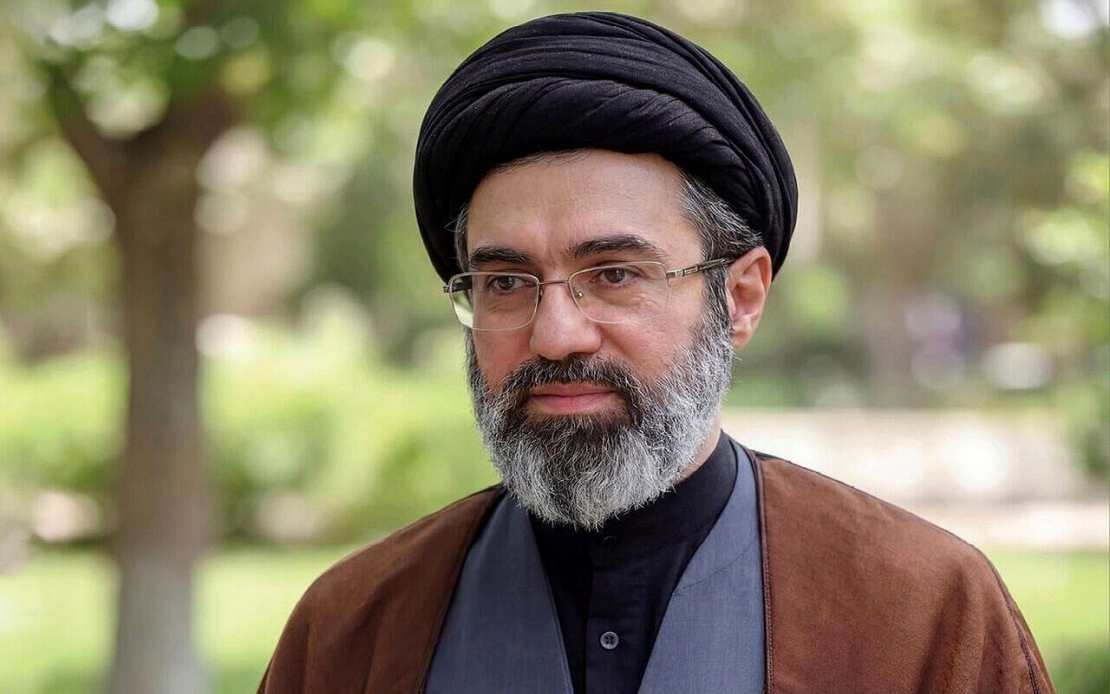
Iranian President Masoud Pezeshkian has publicly declared that Supreme Leader Mojtaba Khamenei remains in perfect health, offering reassurance about the wellbeing of Iran's top leadership in a statement broadcast on state television. The president made the assertion during a televised interview with IRIB TV on Monday, drawing from his recent extensive engagement with the supreme leader.
Pezeshkian provided details of an intensive seven-hour meeting with Khamenei, describing the session as "very good" and highlighting its significance as he entered his third year in office. The extended duration of their discussion underscores the comprehensive nature of policy discussions between Iran's executive and supreme leadership, touching on multiple dimensions of governance and national strategy.
According to the president, national cohesion and solidarity featured prominently in the supreme leader's messaging during the meeting. This emphasis reflects ongoing concerns within Iran's leadership circles about maintaining internal unity, particularly as the nation navigates complex economic and geopolitical pressures. The explicit focus on unity suggests leadership awareness of potential fractures within the system that require careful management.
The agenda encompassed several pressing domestic concerns that resonate with ordinary Iranians' daily struggles. Pezeshkian identified people's livelihood, employment opportunities, and housing availability as central topics of discussion. These issues represent the core economic grievances affecting Iranian households, where inflation and limited job prospects continue to constrain household incomes and purchasing power.
The sanctions regime imposed on Iran also featured significantly in the dialogue between the two leaders. Pezeshkian acknowledged discussing the cascading problems emanating from international economic restrictions, which have severely constrained Iran's ability to access international markets, secure foreign investment, and engage in conventional trade relationships. This discussion reflects the sustained challenge that sanctions pose to Iran's economic development and social stability.
The timing of this public affirmation carries particular significance given the circumstances of Khamenei's ascension to power. Mojtaba Khamenei assumed the position of supreme leader in March following the death of his father, Ali Khamenei, who was killed in joint United States and Israeli military strikes on February 28. This transition marked a pivotal moment in Iran's political structure, representing only the second succession of supreme leadership since the 1979 Islamic Revolution.
The succession of the Khamenei family name to the supreme leadership position represents a departure from revolutionary precedent, introducing questions about institutional continuity and the concentration of power within a single family. The transition occurred through the formal mechanisms of Iran's political system, with the Assembly of Experts—the constitutional body responsible for selecting and theoretically overseeing the supreme leader—formally appointing Mojtaba Khamenei to the position.
Notably, Mojtaba Khamenei has maintained a notably low public profile since his election to the supreme leadership position. His absence from public appearances has generated speculation and concern among observers monitoring Iran's political stability and the new supreme leader's capacity to command authority. This minimal visibility contrasts with typical expectations for Iran's paramount leader, who traditionally maintains a degree of public presence and symbolic prominence.
Pezeshkian's public health assurance appears calculated to address potential anxieties about leadership stability following the dramatic transition. By emphasizing the supreme leader's robust physical condition and capacity for extended substantive engagement, the president seeks to project confidence and normalcy. The statement serves as an implicit reassurance to Iran's political establishment, international observers, and the general public that the leadership transition has not compromised the supreme leader's ability to discharge his constitutional responsibilities.
The public nature of these remarks through state media represents a deliberate communication strategy. Rather than allowing speculation to persist about the new supreme leader's condition or capacity, Pezeshkian has moved to frontally address potential concerns by providing firsthand testimony of Khamenei's vitality. This approach reflects understanding that uncertainty about leadership health or capability can generate instability in authoritarian systems where succession mechanisms remain opaque and contested.
For regional observers and international analysts, this public affirmation signals that Iran's political structures continue functioning despite the extraordinary circumstances of the February transition. The ability of the new supreme leader to engage in extended, substantive policy discussions on multiple fronts suggests the system has absorbed the succession shock and maintains operational continuity. Yet the continued absence of public appearances by Khamenei himself leaves open questions about the depth of his integration into the leadership apparatus and his capacity to develop independent legitimacy beyond his family name.

