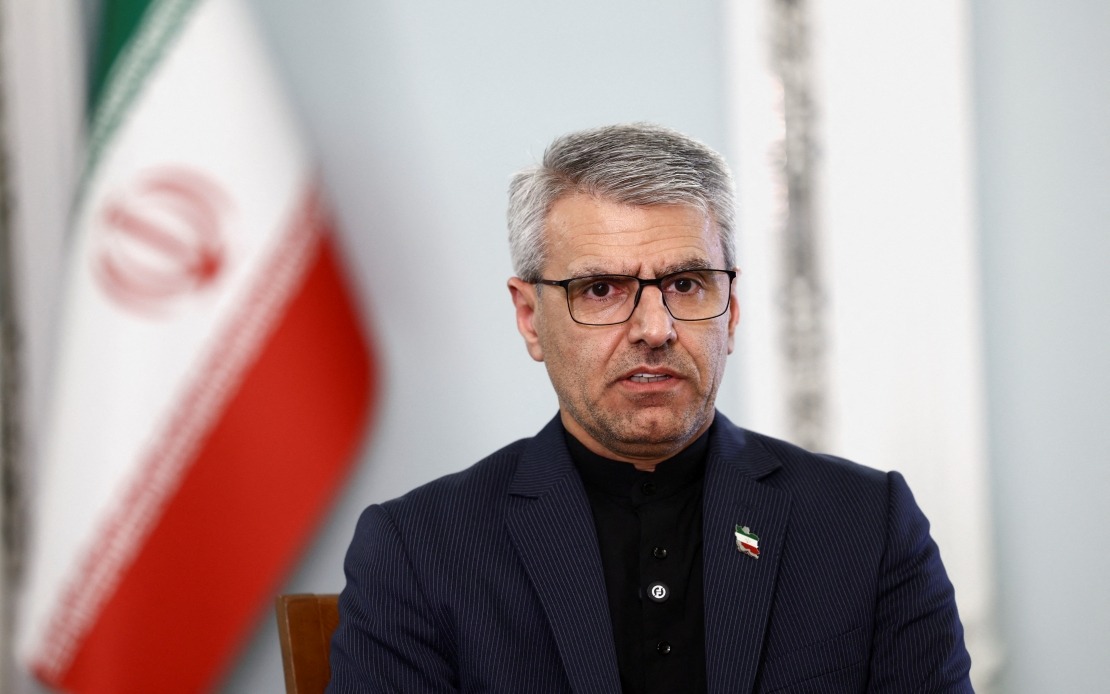
Iran has indicated that substantive progress was made during intensive negotiations held in Burgenstock, Switzerland, suggesting a path forward for resuming formal talks with the United States on reaching a final comprehensive agreement. Foreign Ministry spokesman Esmaeil Baghaei told reporters that participants had reached consensus on what he characterised as "important steps" designed to establish the groundwork necessary for launching negotiations centred on an eventual settlement between Tehran and Washington.
The remarks came at a carefully choreographed moment, with Baghaei emphasising that while the framework for dialogue had been established, success would ultimately depend on demonstrated commitment from the American side. His cautious optimism reflected the fragile nature of regional diplomacy, where public statements often serve as signals to multiple audiences—domestic, regional, and international—about each party's willingness to pursue peaceful resolution. The emphasis on observing "seriousness from the other side" underscored lingering scepticism about whether substantive movement could translate into binding agreements.
Among the specific institutional developments agreed upon was the creation of what officials termed a "deconfliction cell," a mechanism designed to operate with involvement from mediating nations. This body would assume responsibility for monitoring adherence to existing ceasefire arrangements and preventing escalation of hostilities, with particular focus on the situation in Lebanon. Such mechanisms, while seemingly technical in nature, represent meaningful confidence-building measures in contexts where trust between principals remains limited and where even minor incidents can trigger broader confrontations.
Discussions also addressed two economic dimensions central to Iranian concerns. Negotiators exchanged substantive positions regarding the administrative and legal procedures necessary for issuing licences that would permit Iranian crude oil to enter international markets, alongside mechanisms for unfreezing or partially releasing Iranian financial assets that have been subject to international restrictions. Tehran has long maintained that access to its hydrocarbon revenues and restoration of frozen funds represent essential components of any durable settlement, and the reported progress on these fronts signals that interlocutors have engaged with these priorities substantively.
The strategic importance of maritime commerce received explicit attention during the deliberations. Participants reached preliminary agreement on establishing coordinated mechanisms intended to safeguard freedom of navigation through the Strait of Hormuz, a waterway through which approximately one-third of globally traded petroleum passes annually. For regional economies including Malaysia's, which depends significantly on secure shipping lanes for energy imports and commercial trade, stability in this chokepoint carries profound implications. Any arrangement that enhances transparency and reduces the risk of maritime incidents could provide broader benefits extending well beyond the immediate parties to the negotiation.
Baghaei noted that technical working groups would continue detailed discussions on the enumerated issues and on additional matters deemed necessary for proper implementation of the understanding that had been formalised during the summit. This continuation of specialist-level engagement suggests that while headline agreements had been reached, substantial work remained on translating general principles into operational protocols and legal instruments. Such technical phases often prove more challenging than initial political agreements, as they require resolution of detailed procedural questions that can become contentious when subjected to careful scrutiny.
Mediating nations Qatar and Pakistan issued a coordinated statement amplifying the significance of the developments. The two countries announced that participants had endorsed a roadmap establishing a 60-day timeline for concluding negotiations on a definitive peace settlement. This externally announced timeframe, presumably linked to a memorandum of understanding signed in the preceding week and framed as terminating what the statement characterised as a US-Israeli military operation that commenced on February 28, provided temporal parameters for the subsequent negotiating phase.
The involvement of Qatar and Pakistan as mediators reflects the complex web of regional relationships and the challenge of finding credible neutral parties acceptable to all principals. Both nations maintain diplomatic relationships across the regional spectrum and possess incentives to facilitate resolution of conflicts that create broader instability. For Southeast Asian observers, the role of these Muslim-majority countries in conflict mediation offers lessons relevant to regional disputes and the importance of establishing trusted intermediaries.
The diplomatic momentum evident in the Swiss talks occurs within a broader context of regional tension that has threatened to expand beyond existing conflict zones. For Malaysia and other Southeast Asian nations, developments affecting Middle Eastern stability carry consequences for energy security, maritime commerce, and the prospects for broader international cooperation on transnational challenges. Disruptions to shipping or energy markets emanating from Middle Eastern instability can transmit economic effects rapidly throughout the region's interconnected economies.
The emphasis placed by Iranian officials on implementation and verification reflects realistic understanding that agreements represent only preliminary steps. The establishment of monitoring mechanisms and the commitment to ongoing technical discussions acknowledge that sustainable resolution requires not merely political will at the highest levels but sustained institutional capacity to manage implementation details and address disputes as they inevitably arise during the execution phase.
Movement toward negotiations and away from military escalation would represent meaningful progress in itself, even without guarantee of ultimate success. However, the compressed timeframe and the complexity of outstanding issues suggest that the coming two months will constitute a critical test of whether the parties can translate the diplomatic openings created in Switzerland into a framework sufficiently robust to address fundamental interests and concerns. For regional and global actors watching these developments, the outcome carries significance extending far beyond the immediate principals involved.