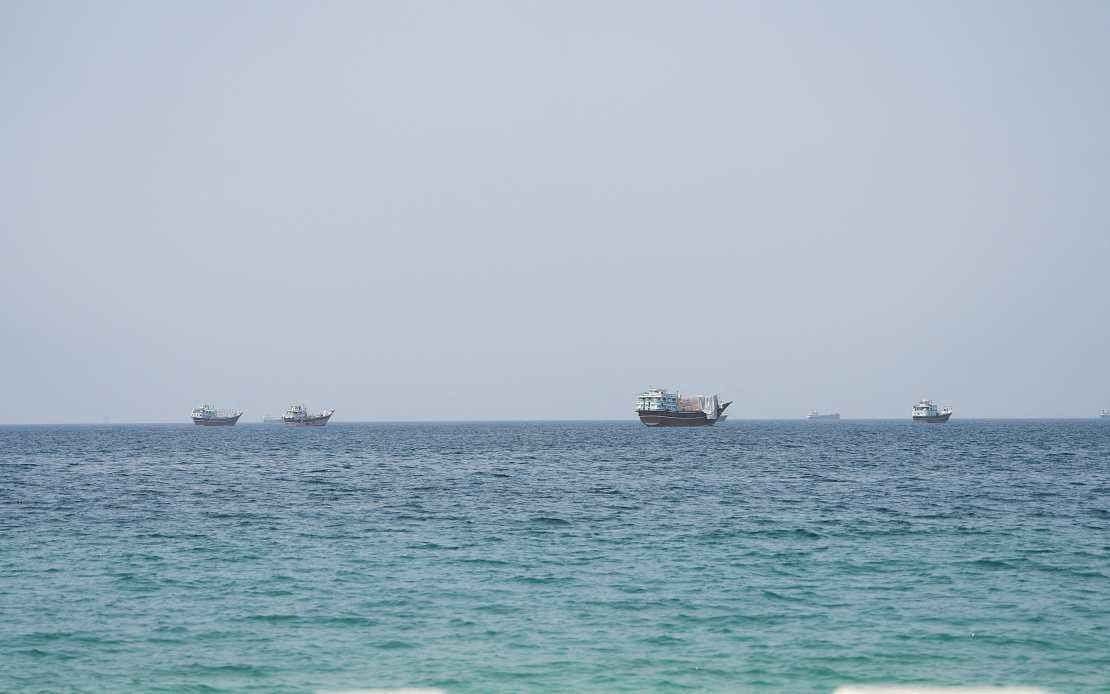
Iran's Foreign Ministry indicated Monday that discussions with Oman regarding navigation through the strategically vital Strait of Hormuz are advancing along a constructive trajectory, signalling tentative progress on one of the region's most contentious maritime issues. Spokesman Esmaeil Baqaei told reporters in a weekly briefing that negotiators have already established a shared understanding on shipping traffic patterns and are now focused on resolving remaining technical elements before finalising a joint statement. The characterisation suggests both Tehran and Muscat view the bilateral engagement as substantive rather than merely ceremonial, though significant hurdles persist in broader negotiations involving the United States.
The substance of the ongoing Iranian-Omani discussions centres on establishing operational frameworks to guarantee maritime safety in one of the world's most strategically important waterways. Baqaei outlined that the talks encompass mechanisms designed to protect freedom of passage, safeguard the marine environment from contamination or damage, and combat what Iranian officials term maritime crimes—language that typically encompasses alleged piracy and unauthorised seizures of vessels. Additionally, the two nations are addressing the commercial dimensions of maritime service provision, including the standardisation of fees and charges applicable to international shipping transiting the strait. This emphasis on practical operational details suggests the discussions have moved beyond theoretical principles into the realm of concrete implementation.
Iran has positioned the bilateral Oman talks as fundamentally separate from its broader dispute with Washington, characterising the arrangement as a narrow technical partnership designed solely to delineate safe international shipping corridors. Baqaei stressed that the negotiations possess no political dimensions and are divorced from the larger geopolitical tensions roiling the region. This framing is significant for Southeast Asian maritime nations whose vessels regularly transit the strait, as it suggests Iran is attempting to compartmentalise the Oman discussions from the more intractable US-Iran standoff. However, the distinction rings somewhat hollow given that broader diplomatic disputes inevitably influence bilateral arrangements in the Middle East.
The backdrop to these talks involves a June memorandum of understanding between Iran and the United States, negotiated through Pakistani and Qatari intermediaries, which temporarily halted active hostilities between the two countries. That agreement contemplated a phased reopening of commercial navigation through the Strait of Hormuz, restoring trade flows that had been disrupted by years of escalating tensions. Yet implementation of that accord has largely stalled, with both Tehran and Washington accusing each other of breaching its terms and refusing to advance towards a comprehensive settlement. The impasse has left the strait's status in a state of functional ambiguity, with shipping proceeding but under conditions of heightened uncertainty and elevated insurance premiums.
Iran has taken an uncompromising position regarding conditions for fully reopening the strait to normalised international commerce. Baqaei explicitly asserted that the waterway will not return to unrestricted transit until the United States withdraws its naval blockade of Iranian ports—a demand that strikes at the heart of Washington's broader containment strategy. This conditionality places Iran's partnership with Oman in a complex light: the bilateral talks may produce a functional arrangement for managing traffic flows, yet the strait's fundamental status as a freely accessible international passage remains hostage to the Iran-US dispute. For Malaysian shipping companies and regional maritime operators, this creates persistent operational challenges and uncertainty regarding long-term trade corridors.
The strategic importance of the Strait of Hormuz for Malaysian commerce and broader Southeast Asian interests cannot be overstated. Approximately one-third of global seaborne oil trade transits these waters annually, making it essential to regional energy security and economic stability. Malaysian vessels, laden with petrochemicals, palm oil, and manufactured goods bound for Middle Eastern markets, depend on reliable passage through the strait. Conversely, Malaysian imports of crude oil and liquefied natural gas, largely sourced from the Middle East, travel through these chokepoints to reach local refineries and regasification terminals. Disruptions to normal navigation patterns impose genuine costs on Malaysian commerce through longer transit times, elevated insurance charges, and supply chain delays.
The involvement of Oman as a mediating interlocutor reflects its traditional role as a diplomatic bridge in a volatile region. The sultanate, positioned geographically along the strait's eastern approaches and historically oriented towards pragmatic engagement across ideological divides, possesses unique standing to negotiate with Iran while maintaining relationships with Gulf Cooperation Council members and Western powers. Oman's willingness to host these discussions suggests regional actors recognise the necessity of some arrangement that permits functional maritime commerce whilst acknowledging Iran's security concerns. The sultanate's track record of successful mediation—most notably in facilitating the initial Iran nuclear negotiations—lends credibility to the current effort, though precedent also demonstrates the fragility of agreements when underlying political tensions persist.
The technical elements under discussion, including shipping route mapping and fee structures, represent the granular mechanics of the strait's operation. Establishing agreed protocols for maritime service charges addresses a practical friction point: Iran has periodically sought to impose tolls or require vessels to utilise Iranian-affiliated services, which international shipping interests have resisted as contrary to freedom of navigation principles. A formalised agreement on cost structures could reduce disputes over arbitrary charges whilst acknowledging Iran's interests in maritime revenues. Similarly, codifying environmental protection mechanisms and mechanisms for addressing maritime crime responds to legitimate concerns regarding pollution and unauthorised vessel seizures, phenomena that have plagued the strait in recent years.
Yet even if the Iran-Oman bilateral talks yield a functional modus vivendi on maritime operations, the underlying geopolitical tensions will continue shaping the strait's broader security environment. Iran's insistence that full normalisation depends on American concessions places the Oman arrangement in the category of interim accommodation rather than comprehensive resolution. Southeast Asian policymakers and commercial interests must plan for a prolonged period of elevated uncertainty, characterised by operational arrangements that permit commerce yet remain vulnerable to disruption should broader political conditions deteriorate. Malaysian authorities should monitor these negotiations closely whilst diversifying shipping routes through alternative passages where commercially feasible and continuing diplomatic engagement to support regional stability.

