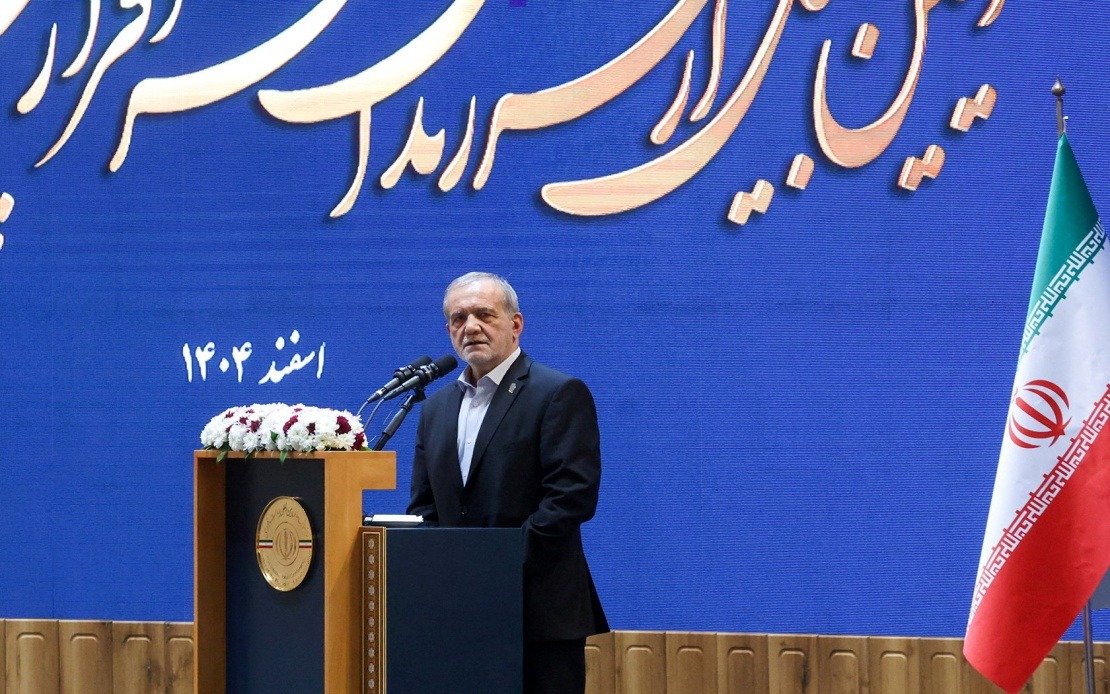
Iranian President Masoud Pezeshkian has signalled his government's potential willingness to put in writing a commitment that Tehran will not pursue nuclear weapons, marking a notable shift in tone as negotiators from Iran and the United States meet in Switzerland to work toward a comprehensive nuclear accord. The statement represents a significant development in what has been one of the most intractable geopolitical standoffs of recent decades, touching on questions of regional security that matter deeply to Southeast Asian nations concerned with global stability and trade flows through the Strait of Hormuz.
The Iranian leader's comments came as both sides have begun intensive negotiations following a memorandum of understanding signed earlier in the week that aims to establish the framework for a lasting settlement. Under this preliminary agreement, diplomats have set themselves an ambitious 60-day deadline to finalise the terms governing Iran's nuclear programme, an issue that has repeatedly derailed previous attempts at resolution and continues to occupy a central position in talks.
Pezeshkian's offer to formalise Tehran's nuclear intentions through a written declaration addresses one of the core demands that Western negotiators have consistently raised. By moving beyond rhetorical assurances to documentary commitments, Iran would be providing what diplomats term as "greater transparency and verifiability"—though the president did not elaborate on what mechanisms might accompany such a declaration or how international monitors would verify compliance. The distinction between political pledges and legally binding instruments remains crucial in nuclear diplomacy, where trust has historically been elusive.
The Iranian president did not explicitly confirm whether this option is currently being discussed as part of the active negotiations in Switzerland, leaving ambiguity about whether Pezeshkian's remarks represent a new proposal being tabled or merely an indication of Tehran's potential flexibility on questions that may arise during further discussions. This calculated vagueness is typical of nuclear diplomacy, where negotiators often test positions through public statements before committing to formal proposals.
Pezeshkian revisited the position articulated by Ali Khamenei, who served as supreme leader until his death in a recent military strike, regarding Iran's religious objections to weapons of mass destruction. According to Pezeshkian, Khamenei had maintained on theological grounds that developing nuclear arms was contrary to Islamic principles—a position that Tehran's political establishment has repeatedly cited to explain why the country has consistently denied seeking atomic weapons despite decades of international suspicion and scrutiny.
The Iranian government continues to maintain publicly that its nuclear programme remains entirely for civilian, energy-generating purposes, and that accusations of weapons development represent mischaracterizations of its intentions. This consistent messaging forms the baseline of Iran's negotiating position, though the offer to provide written assurances suggests an acknowledgment that words alone have not sufficed to convince sceptical international partners of Tehran's genuine commitment to non-proliferation principles.
Pezeshkian expressed considerable optimism about the prospects for reaching agreement with the United States, characterizing the preliminary understandings achieved so far as fundamentally advantageous to Iranian interests. Such public expressions of confidence can serve multiple purposes—signalling to domestic constituencies that their leadership is securing beneficial terms, while simultaneously providing diplomatic cover for any concessions made during negotiations. His positive framing suggests that Iranian decision-makers believe they can achieve a deal that addresses their economic interests while addressing international security concerns.
A tangible indicator of potential goodwill emerged in Pezeshkian's mention of US$6 billion in Iranian assets currently frozen in Qatar, which could form part of an opening phase of sanctions relief accompanying any agreement. The release of such substantial financial resources would provide immediate economic benefits to Iran's struggling economy, offering Tehran's leadership a domestic political victory they could present to their population as justification for any compromises reached during negotiations. For Malaysia and other Southeast Asian trading nations, renewed Iranian economic activity could eventually translate into expanded commercial opportunities in oil, petrochemicals, and other sectors.
The timing of these negotiations carries particular significance for the wider Middle East, as any breakthrough on Iran's nuclear programme could reshape regional power dynamics and potentially open pathways for broader dialogue on other contentious issues. Malaysia and ASEAN nations have consistently advocated for peaceful resolution of disputes through dialogue and have supported the principle of non-proliferation, making developments in Iran's nuclear status relevant to broader Southeast Asian strategic interests. A successful agreement could reduce tensions that have occasionally threatened freedom of navigation in crucial shipping lanes upon which the region depends heavily.
However, substantial obstacles remain before any final accord can be reached. The parties must navigate questions surrounding the scope of inspections, the timeline for sanctions removal, and verification mechanisms that satisfy both Iranian sovereignty concerns and international security requirements. Each of these elements presents genuine points of disagreement where goodwill alone may prove insufficient to bridge fundamental differences in how each side conceives of legitimate national interests and acceptable levels of external oversight.
The next 60 days will prove critical in determining whether the momentum evident in these opening negotiating sessions can translate into concrete progress on technical and political issues. Any breakdown in talks would risk reverting to the cycle of escalation that has previously characterised relations, whereas success could offer hope for a more stable Middle Eastern landscape and demonstrate that even deeply entrenched conflicts can yield to sustained diplomatic effort.
%22%2F%3E%3C%2Fpattern%3E%3C%2Fdefs%3E%3Crect%20width%3D%22100%25%22%20height%3D%22100%25%22%20fill%3D%22url(%23ph24u90g)%22%2F%3E%3Crect%20width%3D%22100%25%22%20height%3D%22100%25%22%20fill%3D%22url(%23ph24u90p)%22%2F%3E%3Ctext%20x%3D%2250%25%22%20y%3D%2250%25%22%20text-anchor%3D%22middle%22%20dominant-baseline%3D%22central%22%20fill%3D%22rgba(255%2C255%2C255%2C0.95)%22%20font-family%3D%22Georgia%2C%20'Times%20New%20Roman'%2C%20serif%22%20font-weight%3D%22700%22%20font-size%3D%22170%22%20letter-spacing%3D%22-0.02em%22%3ETambirat%3C%2Ftext%3E%3C%2Fsvg%3E)
%22%2F%3E%3C%2Fpattern%3E%3C%2Fdefs%3E%3Crect%20width%3D%22100%25%22%20height%3D%22100%25%22%20fill%3D%22url(%23ph41j3fg)%22%2F%3E%3Crect%20width%3D%22100%25%22%20height%3D%22100%25%22%20fill%3D%22url(%23ph41j3fp)%22%2F%3E%3Ctext%20x%3D%2250%25%22%20y%3D%2250%25%22%20text-anchor%3D%22middle%22%20dominant-baseline%3D%22central%22%20fill%3D%22rgba(255%2C255%2C255%2C0.95)%22%20font-family%3D%22Georgia%2C%20'Times%20New%20Roman'%2C%20serif%22%20font-weight%3D%22700%22%20font-size%3D%22194%22%20letter-spacing%3D%22-0.02em%22%3EBintulu%3C%2Ftext%3E%3C%2Fsvg%3E)