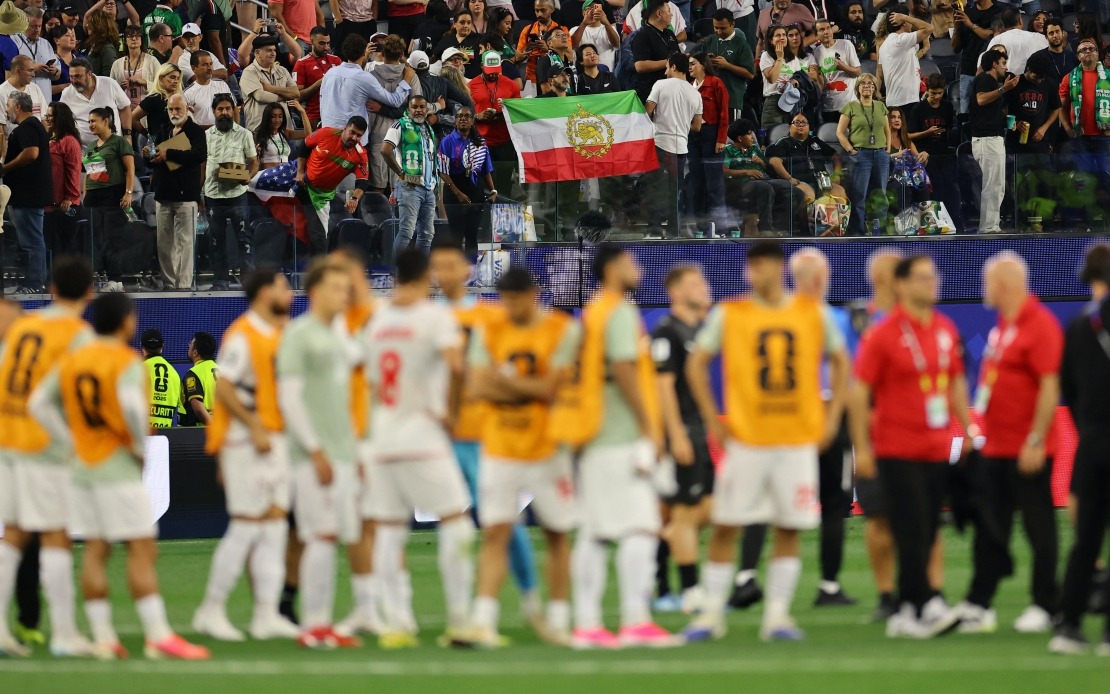
The Iranian national football team's participation in the World Cup has been marked by unusual logistical constraints that extend beyond the usual pressures facing competing nations. Manager Amir Ghalenoei publicly expressed frustration over what he characterised as the "most repressed team in the whole World Cup," highlighting a series of disruptions that appear tied to geopolitical tensions rather than ordinary competition scheduling.
Following Iran's Monday night match against New Zealand in what was anticipated to be their opening fixture, Ghalenoei revealed that the team received immediate orders to vacate Los Angeles and relocate to their designated training facility in Mexico. The directive contradicted the squad's original expectations, which included an overnight stay in California to conduct recovery protocols essential for players after international competition. Instead, team management communicated the departure order directly upon the final whistle, forcing the group to undertake another lengthy air journey without adequate rest.
The sudden relocation proved particularly onerous given the team's prior travel commitments. Ghalenoei emphasised the cumulative toll of excessive transportation on player welfare, stressing that the extended periods spent commuting compounded fatigue and hindered proper recovery procedures. His remarks, delivered through an interpreter to ESPN, underscored genuine concerns about athlete performance and physical resilience when adequate recuperation protocols cannot be observed between matches.
While Ghalenoei refrained from explicitly naming the authority behind the expulsion order, Iranian captain Mehdi Taremi offered context suggesting FIFA involvement, noting that President Gianni Infantino had visited the team's dressing room immediately after the Monday fixture. Taremi's measured language—acknowledging Infantino's purported desire to assist while simultaneously alluding to unspecified "other things"—hinted at dimensions beyond conventional tournament administration. His cryptic references appeared calculated to evoke the historically fraught relationship between the United States and Iran, suggesting that diplomatic and political considerations may have influenced the team's treatment.
The broader context of US-Iran relations frames the episode within a complex geopolitical landscape. Tensions between Washington and Tehran have defined decades of international relations, creating an atmosphere where hosting Iranian athletes within American territory carries symbolic and diplomatic weight. Taremi's deliberate acknowledgment of this reality—"everyone knows it" and "you know where we are"—implied that the squad understood forces beyond normal sporting governance were at play, even if direct acknowledgment remained diplomatically cautious.
Iran's initial World Cup accommodation strategy had already encountered complications reflecting these underlying tensions. The federation originally planned to establish their base camp in Tucson, Arizona, but relocated to Tijuana, Mexico in late May after confronting logistical obstacles and visa-related difficulties. This earlier displacement suggested that organising Iranian participation involved friction points that persisted throughout their tournament preparation. The subsequent demand for immediate departure following their opening match appeared consistent with a pattern of managing the Iranian delegation with particular scrutiny.
The timing of these constraints carries additional significance given international developments. Taremi's reference to a prospective peace accord—noting a period exceeding 100 days of tension between the nations—situated the team's experience within a moment of potential diplomatic thaw. Yet even as potential resolution loomed at the governmental level, the squad faced restrictions that seemed to reflect institutionalised wariness toward their participation and presence.
For Malaysian and regional Southeast Asian observers, this episode illuminates how international football tournaments remain susceptible to geopolitical pressures that transcend sport. The treatment of the Iranian delegation demonstrates that competition hosting involves navigation of complex diplomatic considerations where national interests and international relations influence practical decisions affecting athletes. While FIFA maintains formal governance over World Cup operations, the involvement of host nation authorities in movement restrictions and logistical arrangements reveals underlying power dynamics.
The incident also raises broader questions about fairness and equal treatment at major sporting events. Teams competing in the World Cup theoretically operate within standardised operational frameworks, yet the Iranian experience suggests that political relationships can produce disparate treatment affecting preparation quality and competitive conditions. Other nations with contentious international relationships may recognise similar dynamics in their own tournament participation.
Ghalenoei's characterisation of his team as exceptionally "repressed" within the tournament context highlights how non-sporting factors can complicate athlete performance and wellbeing. Recovery protocols between matches represent fundamental requirements for maintaining player fitness and tactical readiness. When such protocols are disrupted by factors external to competition itself, the ramifications extend beyond individual discomfort to affect team performance and the tournament's competitive integrity.
The broader implications suggest that World Cup hosting requires careful attention to ensuring that geopolitical considerations do not compromise the tournament's foundational principle—that competition should be decided on the field rather than through administrative mechanisms influenced by political relationships. For fans and analysts across Southeast Asia, the Iranian squad's experience serves as a reminder that international football, despite its appearance of political neutrality, remains embedded within the structures and tensions of global power relations.