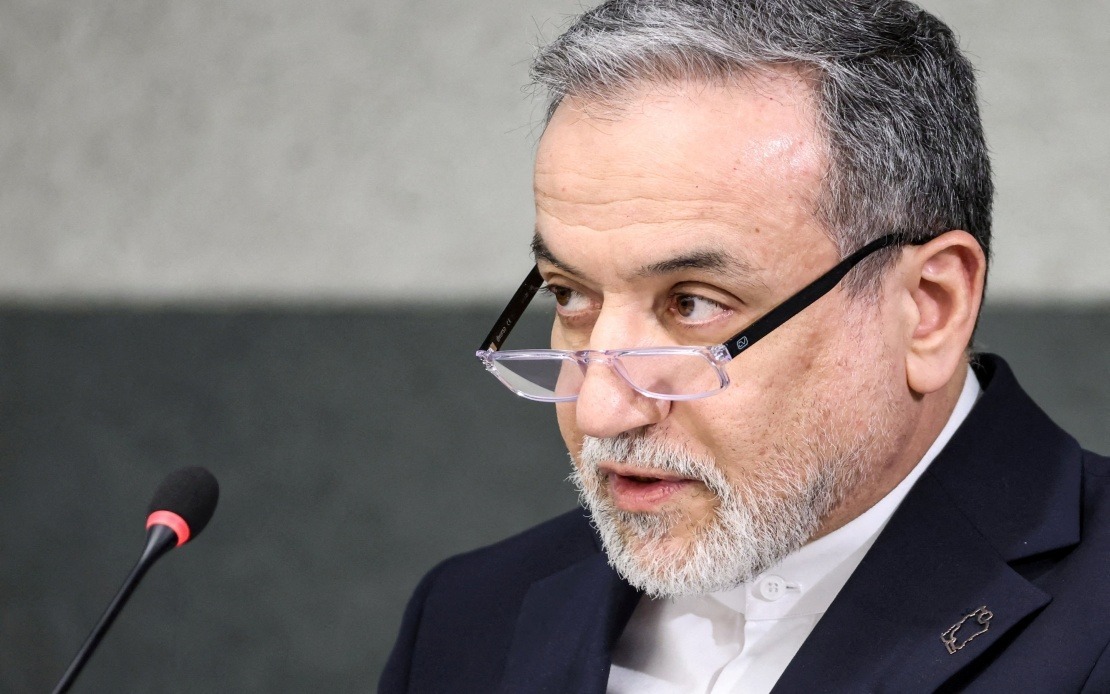
Iran has pushed back against US President Donald Trump's proposal to charge vessels a 20 per cent toll for safe passage through the Strait of Hormuz, with Foreign Minister Abbas Araghchi declaring on Monday that Tehran will indefinitely maintain its role as protector of this critical maritime corridor. Speaking through the X social media platform, Araghchi acknowledged the principle that entities providing secure transit deserve compensation, yet signalled that Iran considers Trump's suggested percentage excessive and plans to pursue what it deems equitable terms instead.
The Strait of Hormuz represents one of the world's most strategically vital waterways, with roughly one-third of all seaborne traded oil passing through its narrow channel between Iran and Oman. This geographic reality has long positioned Iran as a central player in global energy security, a fact that Araghchi's statement underscores. By framing Iran as the waterway's eternal guardian, the foreign minister articulates a historical and geopolitical claim that resonates deeply with Tehran's regional ambitions and self-perception as a major power in the Middle East.
Trump's announcement earlier on Monday that the United States intends to blockade Iran whilst extracting transit fees marks a significant escalation in rhetoric concerning the strategically important passage. The 20 per cent levy would substantially increase operational costs for international shipping and could trigger broader economic consequences across global trade. For Malaysia and other Southeast Asian nations heavily dependent on Middle Eastern energy supplies and reliant on smooth passage through this bottleneck, such developments carry immediate implications for energy security and shipping costs.
Araghchi's measured response, acknowledging the legitimacy of compensation whilst rejecting the specific rate, suggests Iran may be open to negotiation rather than outright confrontation. His assertion that "20 per cent is of course too much. We will be fair" indicates Tehran's willingness to engage on the issue, though with the underlying presumption that Iran maintains primary authority over the waterway. This negotiating posture differs markedly from previous hardline positions, potentially signalling flexibility amid heightened tensions.
The broader context reveals simmering hostilities between Washington and Tehran that extend well beyond shipping fees. Both nations have engaged in tit-for-tat military actions despite a Pakistani-brokered memorandum of understanding designed to facilitate lasting peace between them. This agreement, which theoretically commits both sides to de-escalation and conflict resolution, appears increasingly fragile as public statements grow more bellicose and military posturing intensifies.
For regional powers like Malaysia, Singapore, and other Southeast Asian economies, the stability of the Strait of Hormuz remains paramount. Any significant disruption to shipping through this corridor would reverberate across ASEAN nations' energy supplies and manufacturing costs. The spectre of toll systems or blockades—whether implemented by the United States or Iran—threatens to destabilise the delicate balance that has permitted relatively unimpeded commercial traffic through contested waters.
Iran's invocation of itself as the strait's eternal guardian reflects a longstanding argument in Tehran's foreign policy lexicon. The nation maintains substantial naval assets throughout the region and has invested considerably in maritime capabilities, viewing its presence as essential to regional stability and maritime security. From Iran's perspective, positioning itself as the protective force—rather than a disruptive threat—fundamentally reframes the narrative around its military activities and territorial claims.
The Trump administration's proposed blockade and toll system appears designed to economically pressure Iran whilst asserting American dominance over a strategically critical space. However, such measures risk triggering unintended consequences, including potential Iranian retaliation, disruptions to global energy markets, and escalating regional tensions that could spread beyond the immediate vicinity. International precedent suggests that attempts to control the Strait of Hormuz through coercion have historically proven unstable and counterproductive.
As both capitals exchange increasingly confrontational statements, the window for diplomatic resolution appears to narrow. Araghchi's willingness to discuss fair compensation suggests possible grounds for negotiation, yet fundamental disagreements persist regarding who rightfully controls the waterway and under what terms. The Pakistani mediation effort, already tested by recent escalations, faces mounting pressure to prevent further deterioration into direct military confrontation.
For Malaysian policymakers and businesses, these developments underscore the importance of diversifying energy sources and supply routes to reduce dependency on any single passage. While the Strait of Hormuz will almost certainly remain central to regional trade for the foreseeable future, reducing vulnerability to potential disruptions through strategic alternatives represents prudent long-term planning. Simultaneously, diplomatic engagement and support for multilateral peace initiatives become increasingly valuable as regional tensions mount.

