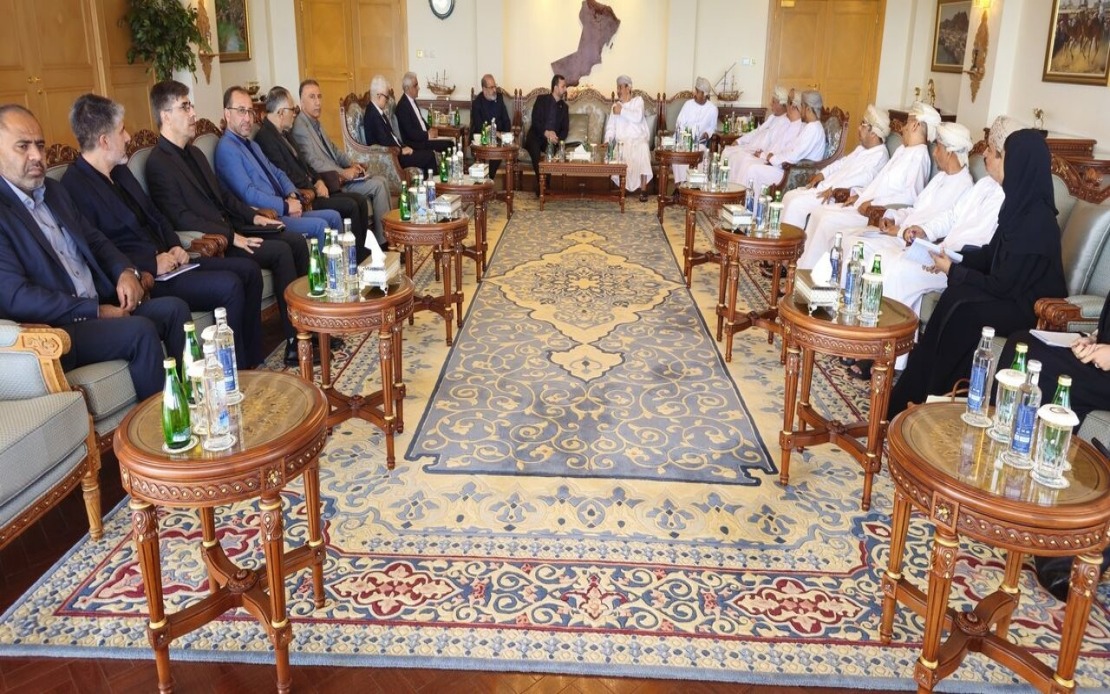
Iran and Oman have taken a significant step towards formalising diplomatic cooperation on maritime governance by convening the first official meeting of their Joint Hormuz Committee. The inaugural session brought together Iranian Deputy Foreign Minister Kazem Gharibabadi and Oman's Ambassador-at-Large Abdulaziz Al Hinai to address complex issues surrounding the Strait of Hormuz, one of the planet's most commercially consequential and geopolitically sensitive waterways. This development signals both countries' commitment to establishing institutional mechanisms for dialogue on a matter that transcends bilateral relations to affect global energy security and regional stability.
The meeting represents a formalisation of commitments made just days earlier when Iranian Foreign Minister Abbas Araghchi and negotiating head Mohammad Bagher Ghalibaf visited Muscat on June 23. That visit culminated in a joint statement emphasising that both nations view respect for littoral state sovereignty and maritime rights as foundational principles for any future arrangements. The establishment of the committee, now staffed by both foreign ministries, demonstrates that the initial diplomatic overtures have evolved into a structured institutional framework capable of sustained engagement on difficult technical and legal questions.
During the inaugural meeting, both delegations examined pressing contemporary challenges affecting transit through the Strait while simultaneously looking toward long-term governance models. The discussions were anchored in specific international legal frameworks, particularly Paragraph 5 of the Islamabad Memorandum of Understanding, which provides established guidelines for managing strategic waterways. By grounding their conversations in recognised international instruments, Iran and Oman are signalling their intention to work within the existing rules-based maritime order rather than pursuing unilateral approaches that could provoke international concern or escalation.
The committee's mandate extends beyond merely managing immediate friction points. Officials have tasked themselves with developing consensus mechanisms for future governance of shipping activities, including the provision of essential maritime services and the equitable distribution of associated costs. This ambitious scope suggests both capitals recognise that sustainable arrangements must address not only security and sovereignty concerns but also the practical logistics of facilitating commerce in one of the world's most important shipping lanes. The Strait of Hormuz annually handles approximately one-third of global seaborne traded oil, making its stability crucial for international energy markets and economies worldwide.
For Southeast Asian readers and policymakers, this initiative carries considerable significance. Malaysia and other regional nations depend substantially on unimpeded passage through the Strait for energy imports and export markets. Any instability or new arrangements affecting transit could ripple across maritime trade throughout the region. The establishment of this bilateral mechanism also provides a model for how neighbouring states can address shared maritime challenges through dialogue rather than confrontation, a principle increasingly relevant as competition for resources and influence intensifies across Asian waters.
The emphasis on international standards within the committee's framework suggests both countries are conscious of global expectations regarding freedom of navigation and commercial passage. By committing to compliance with established norms, Iran and Oman are positioning themselves as responsible maritime actors rather than revisionist powers seeking to impose new restrictions. This approach may also reflect recognition that any arrangements perceived as threatening established shipping rights would likely face resistance from major maritime powers and trading nations.
Oman's role as convenor and mediator in this arrangement deserves particular attention. The sultanate has historically positioned itself as a bridge-builder between Iran and Western nations, maintaining diplomatic channels and hosting back-channel negotiations. Oman's involvement in establishing the Hormuz Committee underscores its commitment to regional stability and suggests Muscat views transparent, institutionalised cooperation on maritime issues as preferable to ad-hoc crisis management or unilateral actions by any single actor.
The timing of this initiative, following years of heightened tensions affecting shipping in the region, indicates both countries recognise the necessity of reducing uncertainty and miscalculation risks. Previous incidents involving vessel seizures, drone attacks on tankers, and aggressive interceptions have periodically disrupted commerce and elevated geopolitical risks. A formalised committee structure with regular meetings and established protocols could help prevent similar incidents by creating channels for rapid communication and dispute resolution.
Looking forward, the committee faces substantial challenges in reconciling differing security perspectives, sovereignty claims, and strategic interests. However, the fact that both nations have committed to sustained dialogue through an institutionalised mechanism suggests genuine motivation to find workable solutions. The agreement to continue discussions and pursue further meetings indicates this initial gathering was productive rather than a one-off diplomatic gesture.
For international observers and trading nations dependent on Hormuz passage, the establishment of this committee offers measured optimism. While it does not resolve all underlying tensions or eliminate all risks affecting the waterway, it represents a constructive channel through which Iran and Oman can address challenges collaboratively. The emphasis on international standards and littoral state rights suggests both countries intend to operate within recognised frameworks rather than pursue arrangements that might provoke international backlash.
The successful conclusion of this first meeting and commitment to continued engagement may also encourage other regional actors to pursue similar dialogue mechanisms. As maritime challenges multiply across Asian waters due to climate change, resource competition, and geopolitical tensions, institutionalised bilateral and multilateral committees offer proven frameworks for managing shared interests while respecting national sovereignty. The Iran-Oman model, if successful, could provide valuable lessons for addressing maritime governance challenges elsewhere in the region.

