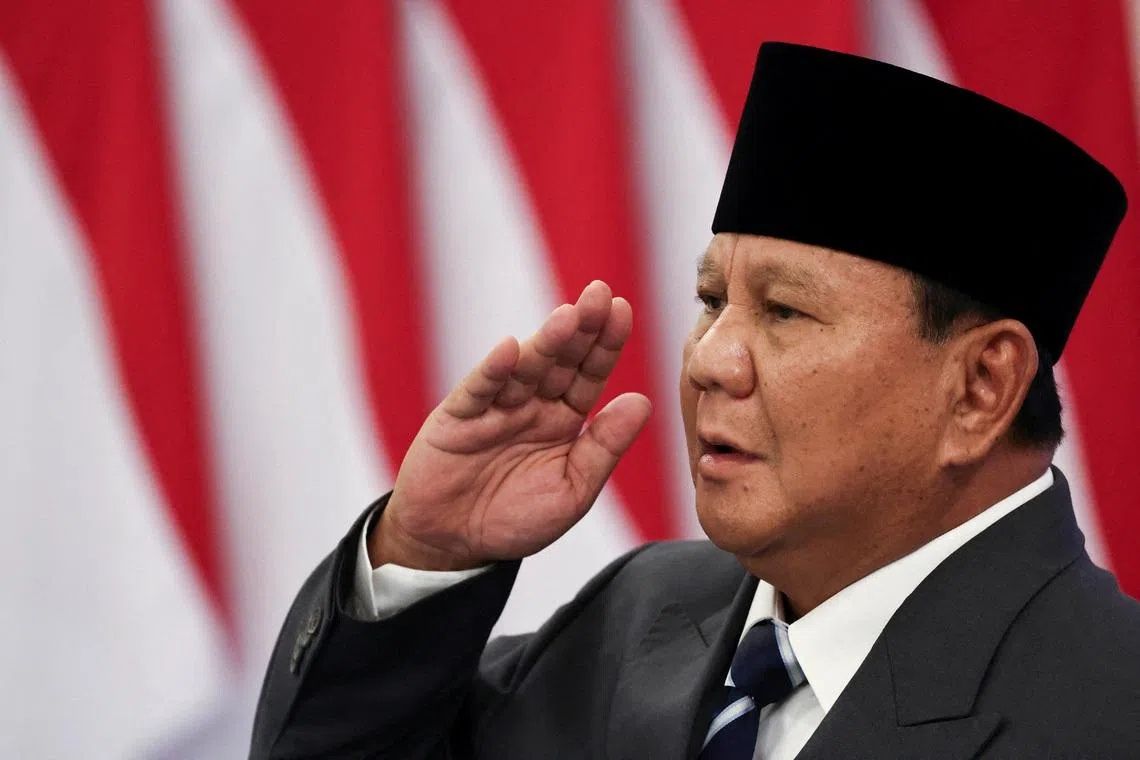
Indonesia's national human rights commission has called on the government to scrap mandatory military training requirements for prospective managers enrolled in President Prabowo Subianto's signature Red and White Cooperatives initiative, following the deaths of five participants just 10 days into a 45-day military course. The demand represents a significant challenge to the administration's controversial expansion of military involvement in civilian economic programmes, raising fresh questions about the compatibility of military instruction with commercial enterprise management.
The Red and White Cooperatives scheme, which commenced in July of the previous year, represents a cornerstone of the Prabowo administration's economic strategy. The programme envisions the establishment of approximately 80,000 village-level cooperatives spanning Indonesia's archipelago with the dual objective of generating employment opportunities and propelling the nation towards an ambitious eight per cent economic growth target by 2029. These cooperatives are designed to operate as retailers of essential commodities, including government-subsidised cooking gas and agricultural fertiliser, thereby addressing both basic consumer needs and rural agricultural productivity.
The introduction of mandatory military training into the cooperative management curriculum reflects the broader pattern of the Prabowo administration, which has increasingly integrated military personnel and institutions into civilian governance and economic structures since the former general assumed the presidency in 2024. Nearly 35,000 individuals designated to lead cooperatives and fishing village associations are required to participate in the military instruction component, which commenced on June 14 and continues until the end of July at multiple regional military training facilities.
The deaths reported between June 17 and June 26 have prompted intense scrutiny of the training methodology and participant selection criteria. The defence ministry attributed the fatalities to diverse medical causes, including cardiac arrest, heat stroke, tuberculosis, and pneumonia, with Major General Ketut Gede Wetan, who oversees human resource development at the defence ministry, asserting that all five deceased individuals had completed pre-training medical examinations and received clearance. The ministry maintained that the training regimen was not physically demanding and did not emphasise combat techniques or intensive physical conditioning.
However, Pramono Ubaid Tantowi, an official representing Indonesia's rights commission, contested the military training framework's fundamental relevance to cooperative management. He articulated the commission's position that cooperative institutions are fundamentally economic entities requiring expertise in business administration, member service delivery, and organisational governance. From this perspective, foundational military training represents a categorical mismatch with the actual competencies necessary for cooperative managers to succeed operationally and serve their communities effectively.
The rights commission has specifically recommended that capacity-building programmes for cooperative managers should prioritise the development of managerial competence, leadership capability, and financial literacy—domains in which military instruction offers minimal direct application. This distinction highlights a conceptual tension within the Prabowo administration's approach: the incorporation of military training into a civilian economic programme blurs the institutional boundaries between defence and commerce, potentially compromising both the military's proper function and the cooperative sector's developmental effectiveness.
In response to the fatalities and escalating criticism, the defence ministry has committed to conducting a thorough evaluation of the training curriculum. This reassessment will encompass strengthened health monitoring mechanisms, enhanced early identification procedures for participants presenting health vulnerabilities, and recalibration of training activity intensity levels. The ministry additionally signalled that the health sector will assume a more prominent role in overseeing the training programme's implementation, suggesting at least partial acknowledgment of the concerns raised by the rights commission and broader public discourse.
The rights commission has further demanded a comprehensive government investigation into the circumstances surrounding the five deaths. The body has urged law enforcement authorities to pursue forensic autopsies expeditiously to establish definitive cause-of-death evidence that may inform any subsequent criminal inquiries. This investigative requirement reflects concerns that the deaths may not result solely from pre-existing medical conditions but potentially from training conditions or methodology inadequacies.
For Malaysia and other Southeast Asian economies, the Indonesian situation carries instructive implications regarding the integration of military structures into civilian-oriented development initiatives. As regional governments pursue aggressive economic growth targets and explore unconventional institutional arrangements to achieve them, the Indonesian experience provides a cautionary example of how security sector expansion into economic domains can generate unintended consequences and procedural complications. The controversy surrounding the Red and White Cooperatives training underscore the importance of maintaining clear institutional separation between military and commercial functions, even when unified objectives might appear to justify such integration.
The political dimensions of the dispute also merit attention. Prabowo's background as a former military officer has influenced his receptiveness to military-centric solutions, yet civilian institutions and rights bodies are increasingly pushing back against this orientation. The ongoing negotiations between the defence ministry and the rights commission regarding the training framework will likely shape how the administration calibrates its approach to military involvement in civilian programmes. The outcome may establish precedent for how similar initiatives are structured in the coming years, with implications extending beyond Indonesia's borders as regional governments observe how Jakarta navigates this tension between security sector utilisation and civilian institutional integrity.

