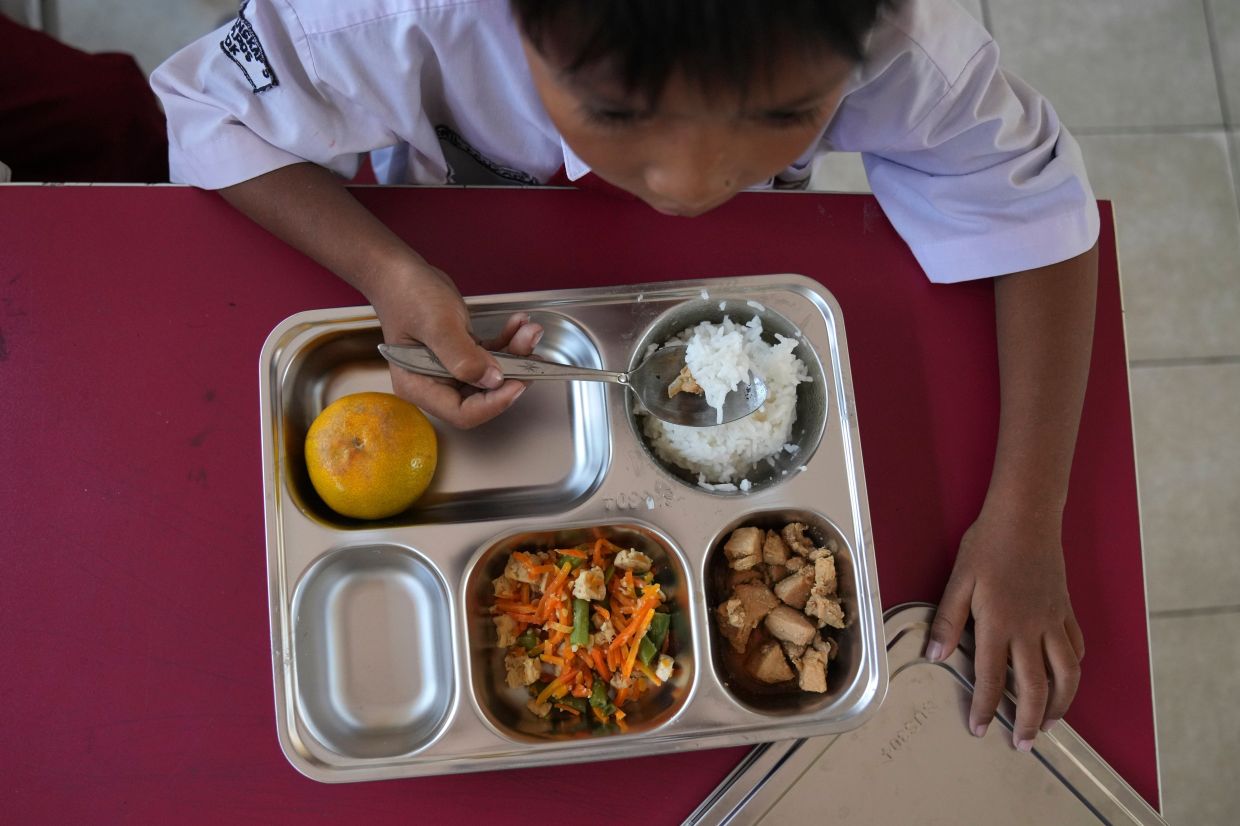
Indonesia's anti-corruption establishment is intensifying pressure on the government to fundamentally reassess President Prabowo Subianto's ambitious free meals initiative, one of his administration's most visible policy pledges. Indonesia Corruption Watch, the influential civil society group that initially exposed governance failures within the scheme, is now calling for the temporary suspension of the entire US$15 billion programme and the complete dissolution of the National Nutrition Agency overseeing it. The organisation's head of law and investigations, Wana Alamsyah, argues that authorities must conduct a substantially broader investigation that extends far beyond the handful of senior officials already detained.
The controversy erupted after authorities arrested Dadan Hindayana, the founding director of the National Nutrition Agency known locally as BGN, on corruption allegations just hours after his removal from office. Four additional individuals have since been apprehended, including two of his former deputies and an executive from a vendor company supplying motorcycles to the programme. Yet the anti-corruption group insists this enforcement action barely scratches the surface of systemic vulnerabilities embedded throughout an operation that was established less than two years ago but has already expanded to feed more than 60 million Indonesians across the archipelago.
Wana's statement reflects deep frustration within Indonesia's civil society sector about what observers characterise as belated governmental action. He emphasises that the procurement and governance failures plaguing the initiative were widely documented on social media and in public discourse throughout 2025, yet authorities appeared reluctant to intervene until recently. Rather than reactive responses to corruption allegations, Wana contends that comprehensive audits should examine every participant who profited from the programme's loose administrative structures, including procurement committee members, food vendors, kitchen operators, and the network of foundations managing local distribution points. The scope of the investigation, he suggests, should be commensurate with the scale of the operation itself.
The programme's financial magnitude has become increasingly contentious within Indonesia's fiscal landscape. The scheme was budgeted at 268 trillion rupiah—approximately US$14.9 billion—for the current fiscal year, representing a substantial commitment of public resources at a time when the government faces mounting pressure on its budget. Rising fuel costs driven by regional geopolitical tensions have forced Indonesia to increase subsidies, creating competing demands on scarce government revenue. This fiscal squeeze may explain why officials are now scrutinising a flagship initiative that faced minimal official accountability despite widespread public criticism.
Nanik S. Deyang, who assumed leadership of the free meals agency this month, has outlined a revised operational strategy that departs markedly from the original implementation model. Rather than pursuing the initial target of reaching 82.9 million beneficiaries, the new leadership intends to concentrate resources on remote and underserved regions where malnutrition remains most acute. The agency aims to reduce spending below the originally budgeted amount by prioritising food quality and nutritional content over sheer numerical coverage. This strategic recalibration suggests that even within government circles, questions have emerged about whether the universal school-based distribution model best serves the programme's stated health objectives.
President Prabowo himself has publicly committed to zero tolerance for misconduct within the initiative, declaring before thousands of programme stakeholders that public funds will not be misappropriated under his watch. Such statements, however, have done little to assuage broader concerns about structural vulnerabilities that multiple independent research organisations have documented. A comprehensive Indonesia Corruption Watch investigation analysing 102 foundations operating kitchens across 38 provinces identified troubling connections between operators and politically-connected figures including politicians, military officers, and business networks. These relationships create potential conflicts of interest that warrant systematic examination rather than isolated prosecutions of individual officials.
Independent research institutions have amplified these concerns through detailed analysis of the programme's design flaws. The Centre of Economic and Law Studies, based in Jakarta, found that nearly 79 percent of surveyed respondents identified potential conflicts of interest in how vendors were directly appointed without competitive processes. Earlier studies warned that the programme risked uneven geographic distribution, inconsistent food quality, and substantial budget inefficiencies. Reports of food poisoning incidents and complaints about ultra-processed meal content further underscore operational deficiencies that suggest problems extend well beyond the level of senior agency administrators.
Public demonstrations have emerged as another manifestation of dissatisfaction with the programme's implementation. Police in Jakarta clashed with students protesting both Prabowo's broader spending priorities and the free meals initiative specifically on June 12, with additional demonstrations erupting in major cities during the following week. Authorities deployed more than 6,000 police and military personnel in the capital to manage these protests, illustrating the intensity of public concern about resource allocation. The demonstrations reflect broader anxieties among younger Indonesians about government spending decisions and fiscal sustainability.
Investor apprehension about the programme's budgetary implications adds another dimension to the controversy. International financial markets monitor Indonesia's fiscal position closely, and the scale of commitment to the free meals scheme has generated nervousness among foreign investors concerned about debt trajectories and budget sustainability. Economists and research institutions have questioned whether the programme will deliver on promises regarding employment generation, health improvements, and broader economic outcomes. These doubts extend beyond corruption concerns to fundamental questions about programme effectiveness and return on public investment.
Wana suggests a more critical analysis of official motivations for the sudden enforcement action. He hypothesises that the government's fiscal deterioration may have triggered the decision to sacrifice certain officials as a means of legitimising a restructured version of the programme, thereby containing political backlash from communities that have already established kitchen operations. This interpretation, while speculative, highlights how corruption enforcement may become entangled with broader fiscal and political calculations rather than representing purely technical responses to misconduct.
Deyang's tenure as new agency head has introduced a moratorium on establishing additional kitchens, signalling an intention to consolidate existing operations and tighten screening procedures for future vendor applications. The revised approach emphasises utilising existing school canteen infrastructure rather than constructing new facilities, potentially reducing procurement opportunities that may have attracted corrupt actors. Whether these managerial adjustments will be sufficient to address the structural governance challenges identified by multiple independent organisations remains an open question.
For Malaysian observers and policymakers, the Indonesian experience offers instructive lessons about the challenges of rapidly scaling major social programmes without simultaneously building robust governance frameworks and anti-corruption mechanisms. Large-scale food security initiatives require not only adequate budgeting but also transparent procurement systems, competitive vendor selection processes, and independent oversight mechanisms established before implementation begins rather than grafted on afterward. Indonesia's free meals programme demonstrates how ambitious policy intentions can become compromised when institutional safeguards prove inadequate to manage the inevitable complexity of nation-wide service delivery networks.