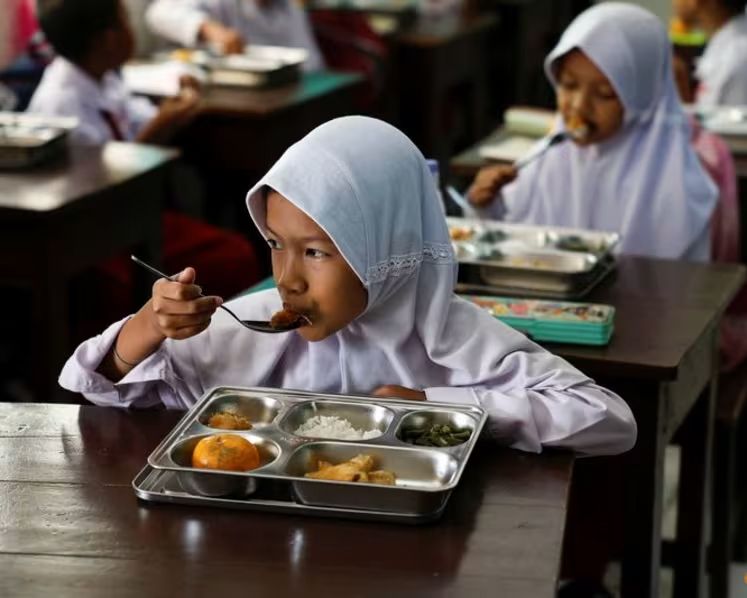
Indonesia's free meals initiative, positioned as a cornerstone of President Prabowo Subianto's domestic agenda, has suffered another significant setback with the resignation of National Nutrition Agency chief Nanik Sudaryati Deyang, who cited deteriorating health as her reason for stepping down. Her departure marks the second major leadership transition at the embattled agency within six weeks, underscoring the mounting pressures facing what was envisioned as a transformative social programme but has instead become synonymous with operational dysfunction and financial constraints.
Nanik, who assumed control of the agency barely five months ago in June, disclosed her decision through a Facebook announcement, revealing that her physician had warned of dangerously clogged arteries resulting from what she described as severe occupational stress. Her resignation comes at an acutely difficult moment for the programme, which has grappled with persistent logistical bottlenecks, food safety concerns and multiple documented instances of mass food poisoning since commencing operations in January this year. The timing appears particularly unfortunate given that institutional instability typically compounds existing implementation challenges rather than resolving them.
The departure follows the dramatic removal of Nanik's predecessor last month, who was arrested on corruption allegations directly connected to the multibillion-dollar scheme following an investigative raid conducted at agency headquarters. This sequence of events has generated considerable reputational damage for the initiative and raised fundamental questions about governance, oversight and the adequacy of anti-corruption mechanisms within the administration's most prominent social welfare undertaking. For Malaysian observers, the situation reflects broader challenges that developing economies face when attempting to rapidly scale ambitious welfare programmes without establishing robust institutional safeguards beforehand.
Budgetary constraints have emerged as an equally troubling dimension of the programme's difficulties. The agency announced a second consecutive reduction to its 2026 allocation, slashing the budget from 268 trillion rupiah to 229 trillion rupiah, equivalent to approximately $12.79 billion. This reduction compounds an earlier cut, leaving current funding more than 100 trillion rupiah below the original allocation of 335 trillion rupiah. Such substantial reductions create a perplexing contradiction: the government simultaneously maintains this programme as a priority initiative while progressively constraining its financial resources, a dynamic that inevitably compromises service delivery and amplifies operational stress throughout the organisational structure.
The programme's initial scope reflected extraordinary ambition, targeting the provision of free meals to 83 million beneficiaries encompassing children, pregnant women and presumably other vulnerable populations. As of the most recent reporting, the agency reported having successfully distributed meals to 62.5 million individuals, representing substantial progress in absolute terms yet falling notably short of the original target. The widening gap between intended beneficiary numbers and actual coverage, combined with the severe funding constraints, suggests that further contraction of programme scope remains probable unless political commitment crystallises into sustained financial backing.
Nanik indicated that President Prabowo is contemplating the establishment of a supervisory board for the agency and has requested that she lead this new institutional structure. This proposed reorganisation, while potentially addressing some governance deficiencies, simultaneously represents a partial retreat from the singular leadership model that presumably characterised the agency's original design. The formation of an oversight body typically signals recognition that existing internal controls are insufficient, yet such structural adjustments require careful implementation to avoid creating additional bureaucratic layers that impede rather than facilitate operational efficiency.
The agency has indicated that additional budget reductions may materialise pending further reviews, creating an atmosphere of institutional uncertainty that complicates strategic planning and staff retention. This precarious situation invites consideration of how effectively large-scale social programmes can function when sustained by unstable financial foundations and interrupted leadership. For policymakers across Southeast Asia contemplating similar initiatives, Indonesia's experience provides cautionary lessons regarding the critical importance of establishing stable funding mechanisms and robust governance frameworks before programme launch rather than attempting to construct them retrospectively amid operational crises.
Nanik's public framing of the programme as a nutritional intervention measure rather than a political initiative represents an attempt to insulate the scheme from partisan criticism, yet such characterisations ring hollow when fundamental organisational dysfunction persists. The accumulation of logistical failures, food safety incidents, leadership instability and budget volatility necessarily invites scrutiny regarding whether the underlying policy framework itself requires fundamental recalibration. Malaysian policymakers, increasingly interested in welfare expansion, should note that grand announcements unaccompanied by genuine institutional capacity and consistent financial commitment tend to generate public disappointment and erode confidence in government programmes.
The identity of Nanik's successor remains undetermined, although she indicated that her replacement would be a junior colleague within the agency. This approach presents advantages in terms of institutional continuity but raises questions about whether promoting from within an organisation that has experienced corruption allegations and significant operational failures represents the optimal path forward. External recruitment of experienced programme management specialists might provide fresh perspectives and reduce the likelihood of perpetuating established dysfunctional practices.
Looking forward, the convergence of budget cuts, leadership changes, ongoing corruption investigations and persistent logistical challenges suggests that Indonesia's free meals programme faces a critical juncture. The government must decide whether to provide the stable funding and institutional support necessary for genuine success or to acknowledge that the programme's current scope exceeds available capacity and restructure accordingly. Without decisive action addressing these interconnected problems, the initiative risks becoming a cautionary tale of well-intentioned social ambitions undermined by inadequate planning and inconsistent implementation, ultimately disappointing the millions of Indonesians whose welfare depends on effective programme delivery.

