Indonesia's ambitious free nutritious meal programme has become the flashpoint for a broader national argument about government priorities, fiscal responsibility and programme integrity. As competing rallies swept through major cities from Jakarta to Batam and Bali, the flagship initiative launched by President Prabowo Subianto in January last year increasingly exemplifies the tensions within his administration between ambitious social ambitions and concerns over implementation, cost and alleged mismanagement.
The programme, which targets approximately 83 million beneficiaries ranging from schoolchildren to pregnant women and nursing mothers, represents a significant commitment of state resources. With an initial allocation of at least Rp 335 trillion this year, equivalent to roughly US$15 billion, the initiative was designed to address persistent malnutrition and childhood stunting across the archipelago. Yet the scale of this investment has become precisely the element attracting the most vocal criticism, particularly as the government simultaneously implements broader austerity measures across other sectors.
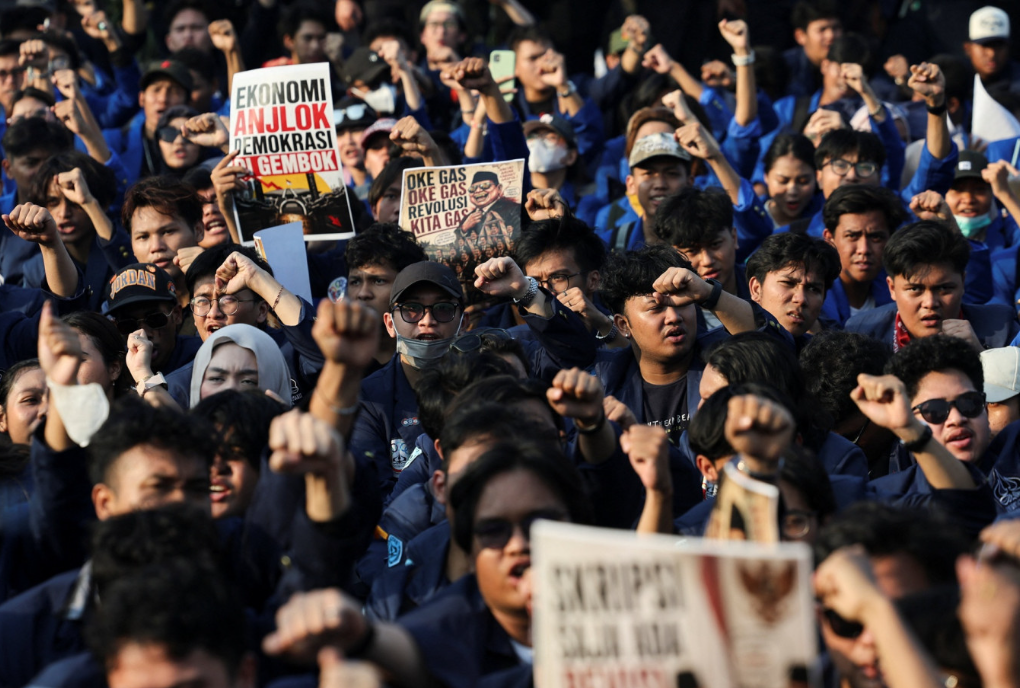
Student activists have become the most visible critics of the programme's continuation. In Bali, hundreds of university students gathered outside the regional legislative council in Denpasar on Monday to demand a comprehensive audit of the initiative. Their grievances extended beyond simple fiscal concerns; they called for investigations into documented food poisoning incidents and corruption allegations surrounding programme implementation. The students specifically requested that the Supreme Audit Agency conduct a full forensic review, questioning why such substantial spending should continue when other government priorities face cuts. The arrest of three top officials from the National Nutrition Agency, which oversees the programme, lent weight to these corruption allegations and provided the impetus for more aggressive demands for institutional overhaul.
In Jakarta's legislative district, the momentum of student opposition accelerated dramatically. Thousands of students affiliated with the Indonesian Islamic Student Movement assembled outside the House of Representatives complex on Monday, joining earlier demonstrations on Friday that had drawn more than 1,000 participants. The rallies, which included contingents from Trisakti University, Mercu Buana University, Esa Unggul University and the Islamic Students Association, articulated a broader critique of government spending philosophy. Protesters called explicitly for President Prabowo to suspend what they characterised as wasteful expenditure, positioning the free meal programme as emblematic of fiscal mismanagement rather than as a deserving social investment. Their messaging also incorporated demands for improved teacher welfare and stronger economic fundamentals, suggesting that opposition to the programme reflected anxiety about the administration's overall economic direction.
Batam in the Riau Islands witnessed similar student mobilisation, with university coalitions staging Thursday protests that demanded a comprehensive programme evaluation with an explicit caveat: suspension should follow if administrators could not demonstrate effectiveness and proper targeting. Muryadi Agus Priawan, speaking as coordinator of the Batam Student Movement Alliance, framed youth activism as a legitimate democratic check on government decision-making. His comments reflected the protesters' self-perception as guardians of public interest rather than as obstructionist activists, a positioning that attempted to deflect accusations of blocking a popular social programme.
However, the narrative shifted dramatically when examining the programme's beneficiaries and those who derive income from its implementation. Hundreds of kitchen workers across Batam staged weekend counter-demonstrations outside the local legislative council, directly rebutting student calls for suspension. Their grievance was starkly material: daily wage earners faced income disruption as the government moved to reduce meal distribution from six days to five days weekly and suspend operations during school holidays from late June through mid-July. In Batam alone, approximately 1,500 kitchen workers described themselves as entirely dependent on daily programme payments to support families, a reality that rendered the efficiency measures existentially threatening to their livelihoods. Programme coordinator Langga Husein further noted that suspending meal distribution during school closures would harm vulnerable populations including pregnant women, nursing mothers and toddlers who require year-round nutritional support regardless of school schedules.
Support for programme continuation extended beyond wage labourers directly employed in meal preparation and distribution. In Bandar Lampung, residents staged demonstrations backing the initiative, arguing that its continuation benefited entire local economies beyond the immediate recipients. Field coordinator Maradoni highlighted how the programme's purchasing power absorbed substantial quantities of locally produced commodities including corn, rice, cassava, fruits and vegetables, thereby supporting agricultural sector pricing and farmer incomes. This perspective reframed the free meal programme not as pure social welfare but as an agricultural stimulus mechanism with multiplier effects throughout rural and small-town economies. Similar supportive protests erupted in Jakarta, West Nusa Tenggara and East Java, suggesting that geographical variation in programme sentiment correlated with local economic structures and employment patterns.
The government has attempted to navigate these competing pressures through measured compromise. Government Communications Agency head Muhammad Qodari affirmed that the programme would continue despite suspension calls, arguing that improvement rather than cancellation represented the appropriate policy response. Officials announced budget reductions from the initial Rp 335 trillion to Rp 228.4 trillion, alongside efficiency measures designed to address fiscal concerns while maintaining programme fundamentals. The National Nutrition Agency, through Deputy Head Agustina Arumsari, also identified 76 schools in relatively affluent areas as suitable candidates for meal distribution suspension, arguing that these communities possessed sufficient private resources to address student nutritional needs without government support. Such targeting adjustments theoretically preserved the programme's poverty-reduction focus whilst reducing overall expenditure.
The underlying policy tension reflects enduring questions about Indonesia's developmental trajectory and fiscal capacity. A programme allocating a quarter-trillion rupiah annually represents a substantial commitment by any Southeast Asian government, particularly one pursuing broader spending restraint. The food poisoning incidents and corruption investigations that prompted institutional scrutiny suggest that implementation challenges, rather than the conceptual validity of nutritional support, drive much of the political friction. For Malaysian observers, the Indonesian case demonstrates how even socially meritorious programmes can generate political instability when execution falters, costs exceed expectations or benefits prove unequally distributed. The competing rallies underscore the fundamental difficulty of sustaining large-scale state programmes when questions about integrity, targeting and effectiveness remain unresolved.