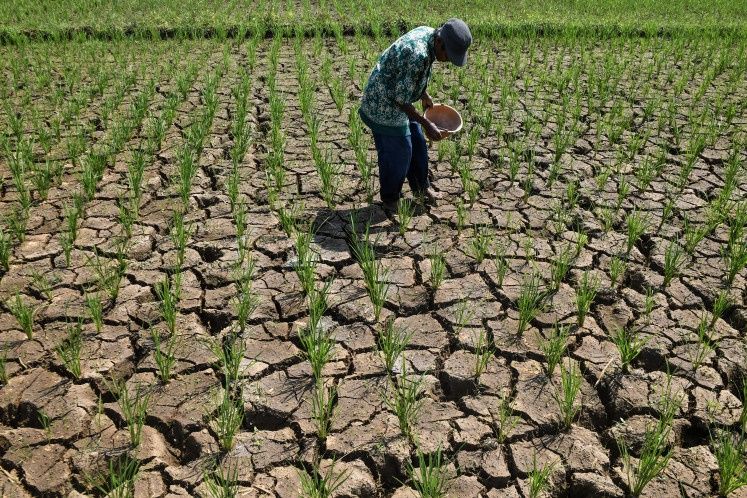
The Indonesian archipelago is confronting an accelerating water crisis as El Niño conditions drive an exceptionally dry season across multiple provinces. Thousands of families in regions spanning from Java to the eastern islands have endured weeks without adequate rainfall, prompting the National Disaster Mitigation Agency (BNPB) to mobilize emergency responses and call for heightened preparedness measures nationwide.
Latest assessments by BNPB have expanded the roster of affected areas significantly. Gunungkidul in Yogyakarta, Semarang in Central Java, and Jember in East Java have been newly added to the crisis list, bringing approximately 700 additional households into the emergency water distribution network. These figures compound an already dire situation affecting more than 7,100 households that were already struggling across established hotspots, including Cilacap, Klaten and Jepara in Central Java; Bantul in Yogyakarta; Karawang, Tasikmalaya and Sukabumi in West Java; as well as Seram in Maluku.
The severity of conditions has prompted several regional administrations to declare 90-day drought alert statuses, a procedural mechanism designed to expedite emergency interventions. Gunungkidul initiated its alert phase in June, while West Java followed suit this month. In West Nusa Tenggara, authorities in West Lombok escalated measures to a full drought emergency declaration on June 15, affecting approximately 3,600 households. These declarations underscore the administrative recognition that circumstances have crossed thresholds requiring extraordinary measures rather than standard drought management protocols.
The meteorological foundation for this crisis lies in intensifying El Niño conditions, characterized by elevated ocean surface temperatures across the Pacific Ocean. Indonesia's Meteorology, Climatology and Geophysics Agency (BMKG) has characterized the current dry season as potentially reaching "extreme" proportions, with implications extending far beyond immediate water access concerns. By mid-June, more than one-third of Indonesia's climate zones had formally transitioned into dry season conditions, while nearly half the nation was already recording precipitation levels substantially below historical norms.
BMKG projections indicate that the drought will reach peak intensity between July and September, with downpours declining to below-normal levels across more than 80 per cent of the sprawling archipelago during this critical three-month window. These meteorological forecasts have prompted climate experts within the agency to advocate for immediate implementation of comprehensive mitigation strategies. Deputy for climatology Ardhasena Sopaheluwakan emphasized the necessity of adjusting agricultural schedules, prioritizing drought-resistant crop varieties alongside early-maturing cultivars, and expanding the portfolio of food crops beyond traditional staples to distribute water stress across multiple production systems.
The agricultural implications of prolonged drought carry particular weight for a nation where rice represents the foundational grain crop and food security remains a central policy concern. Policy analysts have previously warned that extended dry conditions could destabilize domestic food supplies and trigger rice price escalations reaching record levels unless water infrastructure and supply systems receive adequate prioritization and investment. In response, the Ministry of Agriculture has initiated a series of preventive measures designed to minimize disruption to planting calendars and maintain production continuity through the critical months ahead.
Agriculture Minister Amran Sulaiman announced that the ministry had undertaken anticipatory preparations to counteract deteriorating drought circumstances. His department has accelerated deployment of irrigation pump systems to sustain water availability in agricultural areas and preserve food production momentum. Simultaneously, government officials have moved to reassure public anxieties regarding food supply chains by repeatedly emphasizing that national rice reserves remain at historically elevated levels—characterizations that, while designed to build confidence, reflect underlying concerns about supply disruptions that might otherwise materialize.
The House of Representatives' Commission IV, exercising parliamentary oversight of agriculture and food security sectors, has pressed the government to intensify assistance programs targeting vulnerable communities. The commission has called for accelerated delivery of seeds, fertilizers, farming equipment and livestock feed to regions where drought threatens both crop cultivation and animal husbandry operations. This parliamentary intervention indicates that legislative bodies perceive current governmental responses as potentially inadequate to address the comprehensive scope of agricultural challenges emerging from extended dry conditions.
However, immediate water distribution through tanker truck operations, while necessary for urgent humanitarian needs, represents only a temporary palliative measure addressing symptoms rather than underlying structural deficiencies. Bagas Yusuf Kausan, a researcher at Yayasan Amerta Air Indonesia, a think tank specializing in water policy analysis, has articulated the necessity for sustained infrastructure investments targeting drought-vulnerable areas that currently lack dependable clean water access. He advocates specifically for expansion of piped water services administered through regional water utilities known as PDAM, arguing that government subsidization of these services would constitute a meaningful demonstration of commitment to chronically water-stressed communities.
Beyond immediate climatic factors, Kausan identifies human activities and environmental degradation as contributors to increasing regional vulnerability patterns. Land conversion for development purposes and unsustainable groundwater extraction have collectively depleted water reserves that once buffered communities against seasonal variations. These anthropogenic pressures have transformed marginal drought impacts into acute crises, concentrating vulnerability in populations lacking capacity to implement individual adaptation strategies.
This analysis suggests that Indonesia's drought response requires simultaneous engagement across multiple temporal horizons. Immediate emergency distributions address humanitarian needs, medium-term agricultural adjustments preserve food production capacity, while long-term infrastructure investments and environmental protection measures address structural vulnerabilities. Kausan has proposed that El Niño episodes should prompt governments to reinforce restrictions on land conversion, particularly in water catchment zones where environmental degradation directly diminishes regional water availability and compounds drought severity. This integrated perspective recognizes that climate variability, while inevitable, intersects with modifiable human practices that either amplify or mitigate its impacts on vulnerable populations across the archipelago.

