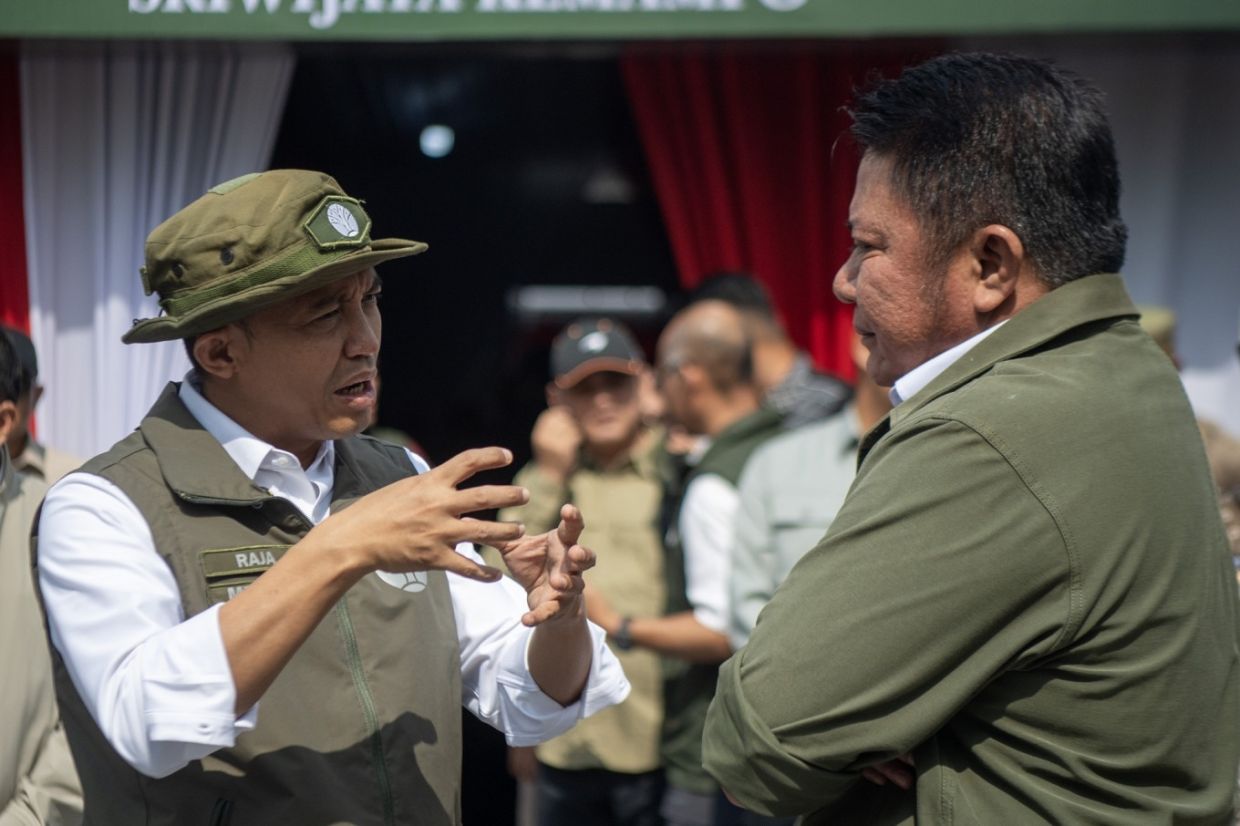
Indonesia's Corruption Eradication Commission (KPK) has reopened its investigation into Forestry Minister Raja Juli Antoni following suspicions that he may not have fully accounted for alleged kickbacks received from Suhardiman Amby, regent of Kuantan Singingi in Riau province. The development signals renewed pressure on the minister as authorities scrutinise discrepancies between the amounts reportedly given and returned in what appears to be a coordinated scheme to influence forestry policy decisions.
According to KPK spokesperson Budi Prasetyo, investigators are examining inconsistencies in the sums involved in the transaction. The regent allegedly handed Raja Juli an envelope containing Singaporean dollars following a June 2 meeting between forestry ministry officials and Kuantan Singingi's administration. The envelope initially contained S$14,000 (approximately US$10,919), though the precise current accounting of those funds remains under scrutiny. The investigation has broadened to encompass other ministry personnel who allegedly received separate kickbacks amounting to S$12,500 from various Kuantan Singingi officials, suggesting a more systematic pattern of illicit inducements rather than isolated incidents.
The minister's account of events has become central to the investigation's direction. Raja Juli reported the alleged bribery attempt to the KPK on July 3, claiming he had rejected the envelope and returned it to Kuantan Singingi police headquarters on June 12—a full ten days after the initial meeting. He stated publicly that he lacked the authority to accept such a gift. However, the presence of documented discrepancies between the originally reported amount and what investigators have traced through their probe has cast doubt on the completeness of his accounting, prompting the KPK to examine whether all funds were genuinely returned or whether some were retained.
Underlying the alleged bribery is a substantive policy matter with significant environmental implications. Kuantan Singingi's administration had submitted proposals requesting the forestry ministry reclassify more than 1,800 hectares of limited production forest (HPT) land under different use categories. Such reclassification can open vast tracts of forest to development, mining, or agricultural conversion. Indonesian law requires that improper gifts linked to official duties must be reported to the KPK within 30 days of receipt, not to police authorities as Raja Juli allegedly did. Officials found guilty of accepting illicit payments face penalties of up to 20 years imprisonment and fines reaching 1 billion rupiah (US$55,867), underscoring the seriousness with which Indonesia's legal framework treats such conduct.
The pattern of interaction between Raja Juli and Suhardiman extends beyond the single June meeting that triggered the bribery disclosure. Budi revealed that the two officials had convened on at least three separate occasions spanning April, May, and June, though investigators have not yet clarified whether these meetings were thematically connected or served differing purposes. This frequency of engagement, alongside the documented financial transfer, raises questions about the nature of their discussions and whether the payments represented a systematic effort to influence ministry decisions regarding forest classifications that would benefit the regency's development ambitions.
Suhardiman's own legal jeopardy has expanded the scope of the investigation. The regent, a politician from President Prabowo Subianto's Gerindra Party, was arrested and designated a suspect by the KPK in late June on unrelated charges involving alleged kickbacks to a regional secretary named Zulkarnain in exchange for his appointment to the regency administration. Investigators subsequently broadened their inquiry to encompass the alleged payments to the forestry ministry, suggesting they view these incidents as part of a broader pattern of corrupt governance within the Kuantan Singingi administration rather than isolated wrongdoing.
The controversy has subjected Raja Juli, who simultaneously serves as secretary-general of the Indonesian Solidarity Party (PSI), to intense scrutiny from parliament and the public. Members of the House of Representatives Commission IV, which oversees forestry planning, summoned him for clarification regarding the allegations. Notably, the minister was absent from a scheduled July 14 meeting with Commission IV, with deputy chair Alex Indra Lukman from the Indonesian Democratic Party of Struggle (PDI-P) attributing his absence to an umrah religious pilgrimage in Saudi Arabia. This absence, whether intentional or unavoidable, occurred during a period of heightened parliamentary and public interest in his conduct.
The forestry ministry has adopted a defensive posture while maintaining nominal cooperation with investigators. In an official statement, ministry officials reaffirmed their commitment to supporting the KPK investigation and pledged to provide any requested documentation or information. Simultaneously, they contended that no forest reclassifications affecting Kuantan Singingi have been approved to date. The ministry noted that recent proposals from the regency administration have either been rejected outright or remain in verification stages, suggesting that whatever influence the alleged bribes were intended to secure had not yet materialised in concrete policy outcomes. This defensive stance aims to demonstrate institutional integrity while the minister faces personal legal exposure.
The case carries broader implications for Indonesia's environmental governance and anti-corruption efforts. Forest reclassification represents a consequential policy lever with long-term environmental and economic ramifications across Southeast Asia's largest archipelago. The alleged use of bribes to influence such decisions underscores persistent vulnerabilities in Indonesia's forestry administration despite decades of reform efforts. For Malaysian observers, the case illustrates common governance challenges across the region, where economic interests frequently intersect with resource management decisions, and where corruption mechanisms targeting mid-level officials can circumvent institutional safeguards. The KPK's continued investigation will test whether Indonesia's anti-corruption framework can effectively prosecute mid-ranking government officials with political party affiliations, or whether such connections provide insulation from accountability.
The legal and political ramifications for Raja Juli remain fluid as the investigation continues. His dual role as minister and party secretary-general means that outcomes could affect not only his personal freedom but also the credibility of President Prabowo's administration during its early months. The discrepancy in the accounting of funds—the core focus of renewed KPK scrutiny—may prove decisive in determining whether prosecutors can establish criminal intent or merely negligent administrative handling. For Indonesia's anti-corruption drive and Southeast Asian governance observers, this investigation will signal whether institutional checks on executive power can function effectively even when the implicated officials possess political connections and party standing.

