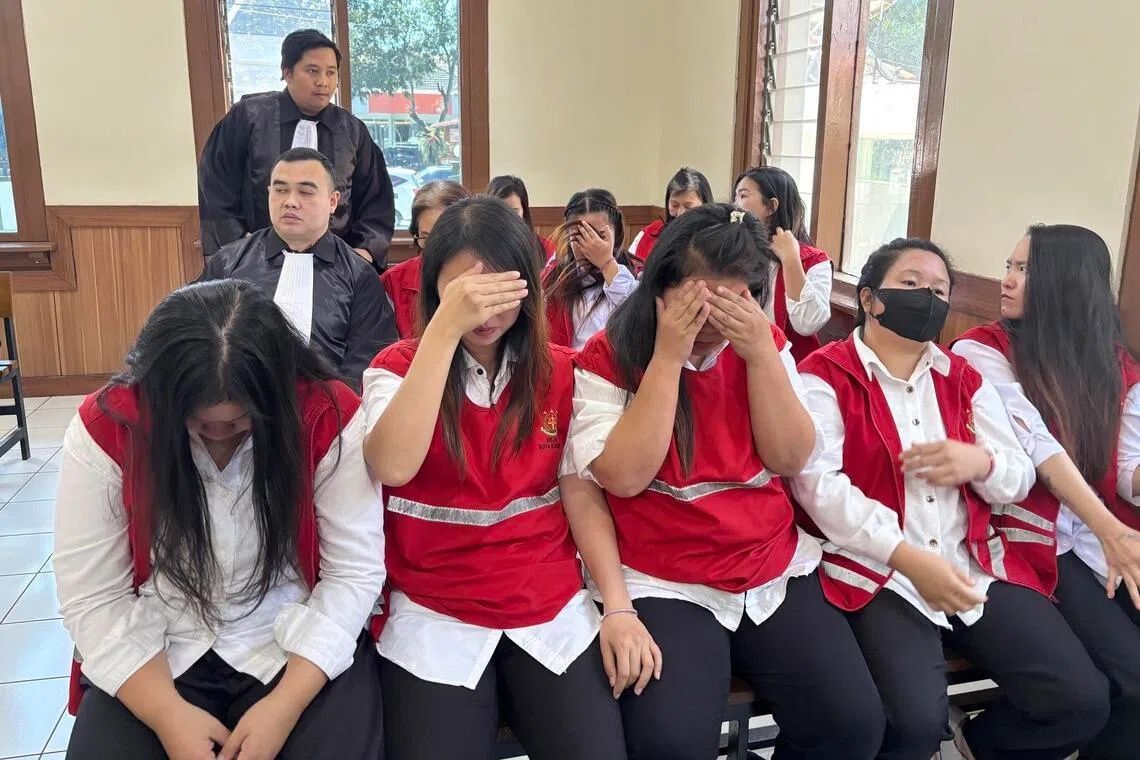
Indonesian authorities have moved closer to concluding a landmark human trafficking prosecution, with prosecutors delivering closing arguments on Tuesday in a case that has exposed a sophisticated network responsible for the illegal sale of at least 34 infants across borders. The Bandung District Court hearing marked a critical juncture in what officials describe as one of the country's most significant cross-border trafficking cases in recent times, involving 19 defendants—18 women and one man—whose alleged activities span from 2023 to early 2025.
The syndicate's operations targeting Singapore proved particularly extensive, with prosecutors establishing that at least 12 infants were transported to the city-state as part of the scheme. Each child commanded prices between 200 and 250 million rupiah, roughly S$18,110, transforming vulnerable newborns into commodities within a well-organised criminal enterprise that exploited desperate adoptive parents across the region.
Central to the prosecution's case is 70-year-old Lie Siu Luan, identified by investigators as the alleged mastermind orchestrating the entire operation. Prosecutors characterised her role as comprehensive and deliberate: she allegedly recruited babies from vulnerable mothers, orchestrated the creation of fraudulent documentation to facilitate adoptions, and coordinated the movement of infants across international boundaries. Her significance within the criminal hierarchy became evident as prosecutors detailed how her decisions shaped the syndicate's reach and operational scope.
During Tuesday's proceedings, prosecutor Cucu Gantina formally sought a ten-year sentence for Lie, submitting that evidence had proven beyond doubt her involvement in recruiting, harbouring, transporting and transferring individuals for the purpose of exploitation. The charges carried particular weight given Indonesia's strict laws against human trafficking and the cross-border dimension of the crimes, which elevated the matter beyond simple domestic criminality to an issue of regional concern.
Prosecutors demonstrated similar severity towards three additional defendants deemed to occupy leadership positions within the network. Astri Fitrinika, identified as a primary recruiter responsible for identifying and sourcing babies from vulnerable mothers, received a matching ten-year sentence recommendation, as did fellow recruiters Djaka Hamdani and Elin. Lai Su Hua, accused of manufacturing fraudulent adoption documents essential to the scheme's international success, similarly faced a decade-long prison term. These coordinated sentences reflected the prosecution's view that these individuals bore comparable criminal responsibility for the operation's systematic nature.
The remaining 14 defendants, characterised as caretakers who maintained infants pending their transfer to buyers, received lower sentence recommendations of five years each. This graduated sentencing approach acknowledged their positions within the criminal hierarchy while recognising that substantive decision-making authority rested with the leadership cohort. The prosecution's differentiated approach mirrored established principles of criminal culpability, distinguishing between architects and peripheral participants in the trafficking enterprise.
Emotional responses dominated the courtroom following the prosecution's presentation, with both Lie and Astri visibly distressed by the severity of sentences being sought. However, the defence teams mounted immediate challenges to the prosecutors' characterisations. Lie's attorney, Sendi Sanjaya, conceded respect for the prosecution's arguments while disputing a fundamental element of the charges: the claim that exploitation had occurred. He presented an alternative narrative suggesting that transferred infants arrived in good health and remained traceable, thereby failing to satisfy legal definitions of exploitation that underpin trafficking prosecutions throughout Southeast Asia.
Astri's counsel, Hendri Samuel Tampubolon, adopted a differentiation strategy, arguing that his client occupied a subordinate role within Lie's hierarchical structure rather than functioning as an equal principal. He highlighted Astri's cooperation with law enforcement agencies, positioning compliance with authorities as a mitigating factor deserving judicial consideration. This defence approach sought to reframe the prosecution's case by emphasising context and relative culpability rather than direct refutation of factual allegations.
The syndicate's operations unravelled through a combination of vigilance and chance when West Java resident Dani Hidayat, seeking to adopt following his wife's difficult pregnancy, joined online communities dedicated to prospective parents. When Astri made contact offering monetary compensation in exchange for the newborn, Hidayat recognised the arrangement's criminality and reported the matter to authorities in July 2025. This single report catalysed investigations that ultimately dismantled a network operating across multiple provinces and international boundaries, demonstrating how individual alertness can disrupt sophisticated criminal enterprises.
The trial revealed sophisticated international dimensions previously underappreciated by regional law enforcement. Lie identified four Singaporeans—identified only as "Petter," "John," "Mr Tan" and "Mr Chew"—as adoption agents serving the ring's interests in the island nation. These individuals allegedly facilitated placement of trafficked infants with Singaporean families, suggesting the network extended beyond simple Indonesia-to-Singapore transfers to encompass a complex ecosystem of criminal actors spanning both nations. Such international complexity underscores challenges facing Southeast Asian enforcement agencies in addressing transnational trafficking networks operating across jurisdictional boundaries.
Official acknowledgment of the case's gravity came through a joint statement by Singapore and Indonesian governments in January, pledging coordinated investigative efforts and mutual legal cooperation. This diplomatic response signals recognition that baby trafficking transcends bilateral concerns, instead threatening the social cohesion and integrity of family structures throughout the region. The case carries implications for adoption oversight mechanisms across Southeast Asia, potentially prompting stricter regulation of international adoptions and enhanced verification protocols for prospective parents and intermediaries.
Defence presentations are scheduled for the following week, providing the 19 defendants opportunity to contest prosecution allegations through their counsel and potentially testify on their own behalf. The trial's progression toward final arguments suggests verdicts could arrive within weeks, marking resolution of a case that has reverberated through regional law enforcement circles and prompted renewed scrutiny of adoption networks operating throughout Southeast Asia. The forthcoming judicial determination will establish precedent for how Indonesian courts assess trafficking liability when defendants occupy varying positions within criminal hierarchies and where evidence of physical harm remains disputed.

