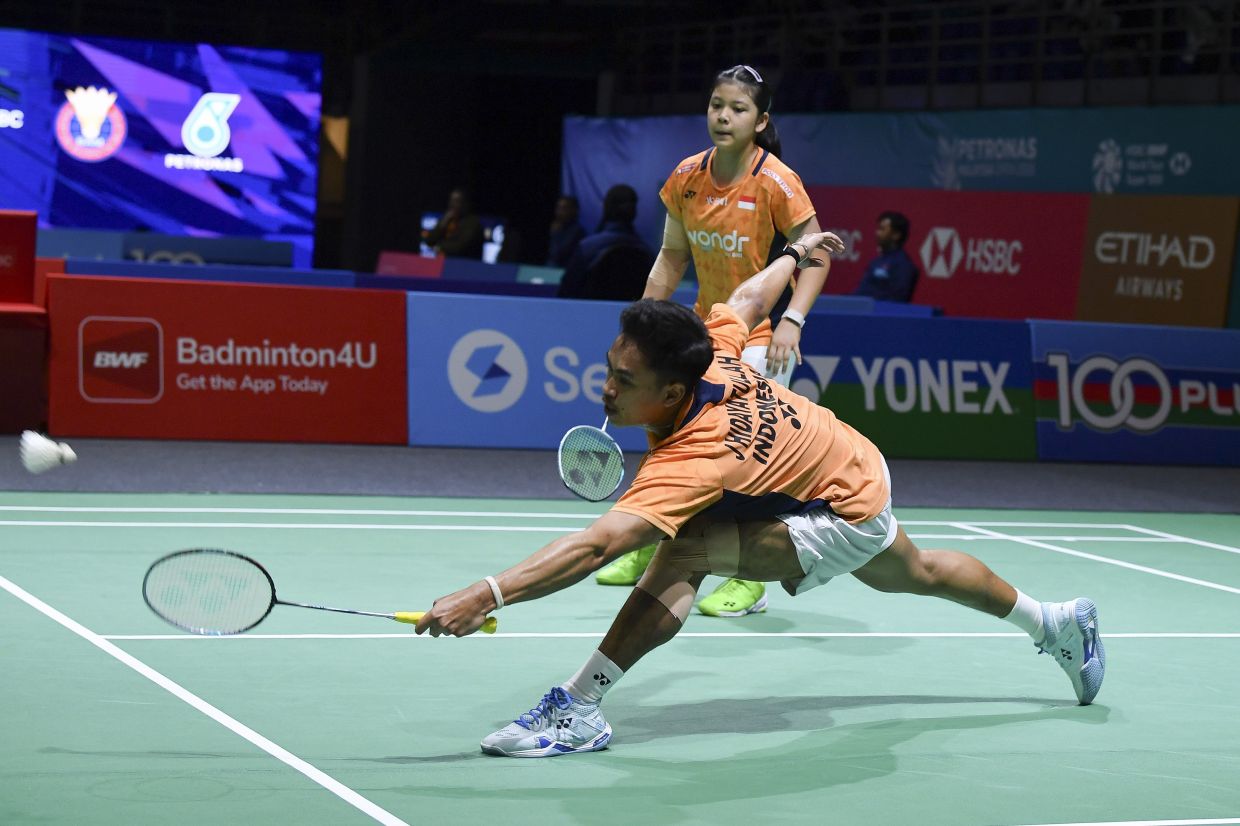
Indonesia's world-ranked 13th mixed doubles pair Jafar Hidayatullah-Felisha Pasaribu have withdrawn from the World Championships, with their departure coming amid ongoing investigations into alleged match-fixing involving a number of Indonesian badminton players. Although the Indonesian Badminton Association has not officially linked the pair to any specific wrongdoing, the timing and nature of their withdrawal have prompted widespread conjecture about the underlying circumstances.
The Indonesian Badminton Association, known locally as PBSI, announced through secretary-general Ricky Soebagdja that both Jafar-Felisha and another mixed doubles combination, Adnan Maulana-Indah Cahya Sari Jamil, have been removed from Indonesia's squad for the World Championships. In its formal statement, the PBSI characterised the decision as part of planned modifications to the nation's team composition, without elaborating on the precise reasons for the changes. The vagueness of this explanation has left observers questioning whether administrative restructuring or disciplinary action motivated the removals.
Simultaneously, the PBSI acknowledged that the Badminton World Federation, the sport's international governing body, has initiated independent judicial review proceedings concerning alleged breaches of integrity rules by several Indonesian competitors. This disclosure provides crucial context for understanding the withdrawals, suggesting they may be precautionary measures rather than routine squad adjustments. The federation's acknowledgement that an external investigation is underway indicates the severity with which the matter is being treated at the highest levels of the sport.
In its statement, PBSI emphasised that the decision to withdraw the two pairs reflects the organisation's commitment to upholding international standards and ensuring that athlete participation in global tournaments complies with established regulations and procedural requirements. This framing positions the withdrawal as a proactive step to demonstrate institutional responsibility and alignment with global governance standards. For Malaysian badminton observers and administrators, this approach offers a case study in how national federations navigate the delicate balance between protecting their reputation and respecting ongoing investigative processes.
The Badminton World Federation's independent judicial proceedings represent a significant moment for the sport in Southeast Asia, where Indonesia has historically been a powerhouse and where match-fixing allegations have occasionally surfaced in recent years. The federation's decision to conduct these proceedings independently underscores the importance of maintaining transparency and impartiality in addressing integrity concerns that could undermine public confidence in competitive fairness. Such investigations, when conducted openly and thoroughly, serve to reinforce rather than diminish the sport's credibility.
Adnan Maulana-Indah Cahya Sari Jamil initiated their withdrawal on July 13, while Jafar Hidayatullah-Felisha Pasaribu followed approximately two weeks later on July 29. The staggered timing of these withdrawals suggests they may have resulted from separate determinations or communications regarding each pair's participation status. This sequence also demonstrates how investigations of this nature can unfold gradually, with additional information emerging and prompting successive institutional responses.
Despite the loss of these two pairings, Indonesia's mixed doubles representation at the World Championships remains intact through alternative arrangements. The federation has confirmed that Amri Syahnawi-Nita Violina Marwah will lead Indonesia's mixed doubles contingent at the event. Additionally, PBSI has elevated Rehan Kusharjanto-Gloria Widjaja from the reserve roster to compete in place of the withdrawn pairs, ensuring that Indonesia maintains a competitive presence in this category.
The PBSI's decision to refrain from elaborating further on the circumstances while the Badminton World Federation's proceedings continue reflects established best practices in international sports governance. The association has explicitly requested that all stakeholders, including media and public commentators, withhold speculation until the BWF Independent Hearing Panel reaches and issues its final determination. This restraint, though occasionally frustrating for those seeking immediate clarity, protects the integrity of the investigative process and prevents premature judgment that could later prove inaccurate or prejudicial.
For Malaysian badminton officials and the broader Southeast Asian badminton community, this situation carries several implications. The enforcement of integrity standards by the Badminton World Federation demonstrates that the sport's governing bodies are committed to rooting out corruption, regardless of which nations or athletes are involved. This commitment, while occasionally creating short-term embarrassment for affected countries, ultimately strengthens the sport's credibility and ensures that competitive outcomes reflect genuine athletic performance rather than predetermined results. Malaysia's own badminton administration may view this as a reinforcement of the importance of maintaining robust internal compliance mechanisms.
The investigation also highlights the persistent vulnerability of professional badminton, particularly at international levels where financial incentives and betting markets create potential inducements for integrity breaches. Indonesian badminton's prominence within regional and global competitions makes it a particular focus for those seeking to manipulate outcomes. The PBSI's cooperation with the Badminton World Federation in these proceedings demonstrates how national federations can work constructively with international bodies to address systemic risks.
As the Badminton World Federation's Independent Hearing Panel conducts its review, the sport's reputation in Southeast Asia may hang in the balance. The transparency and thoroughness of this investigation, coupled with appropriate consequences if breaches are substantiated, will signal whether the sport can effectively police itself. For Indonesian badminton, the immediate priority involves demonstrating institutional commitment to integrity through full cooperation with the investigation, while maintaining competitive excellence through the athletes who remain eligible to compete.

