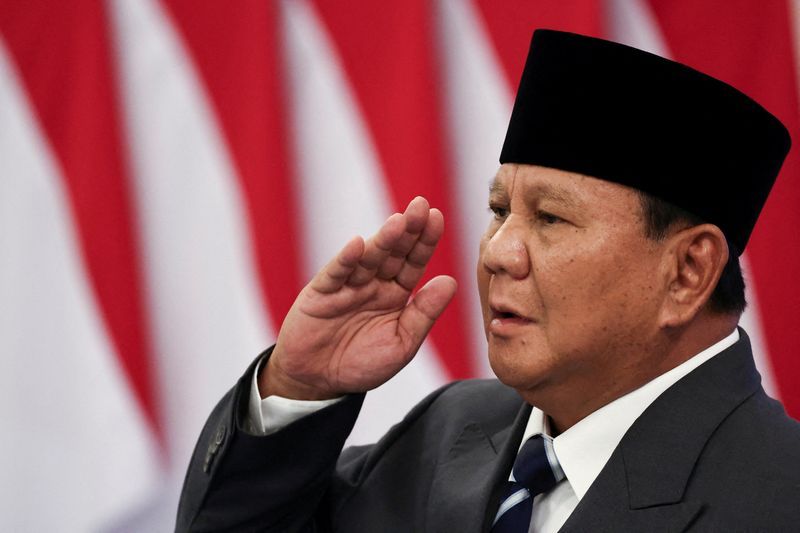
Indonesia is poised to embed artificial intelligence across its most prominent social programmes, including its flagship $15 billion free-meals initiative, according to a draft presidential regulation awaiting President Prabowo Subianto's signature. The move reflects Jakarta's determination to harness AI technology to enhance government efficiency and economic competitiveness, with officials projecting that expanded AI deployment could add approximately $366 billion to the nation's gross domestic product by 2030.
The proposed regulation establishes a comprehensive implementation roadmap spanning 2026 to 2029, directing ministries and regional governments to integrate AI across priority programmes. According to the draft document reviewed by Reuters, the initiative seeks to position Indonesia as a more competitive player in the global and regional AI landscape, building on a white paper released the previous year. Tech firms including Meta Platforms, IBM and Microsoft have contributed to shaping the regulatory framework, according to Wahyudi Djafar, a technology analyst who participated in drafting the regulation and serves on the government's AI task force.
For Malaysian and Southeast Asian observers, Indonesia's strategic push carries significant regional implications. While Indonesia has historically lagged behind Singapore and Malaysia in AI development infrastructure, both of which have successfully positioned themselves as regional technology hubs attracting billions in investment from global technology companies seeking to establish cloud and AI service facilities, Jakarta's government-backed approach signals a determination to close this gap. Microsoft alone committed $1.7 billion over several years to expand cloud and AI capabilities in Indonesia, indicating that major technology providers view the market as strategically important despite current infrastructure limitations.
The free-meals programme represents a particularly telling use case for AI integration. The initiative, which has faced substantial criticism over transparency and operational execution, would deploy artificial intelligence to customise regional meal plans based on local preferences and nutritional needs, monitor kitchen hygiene standards through automated systems, forecast food demand patterns, identify irregularities in programme delivery, and cross-reference health data to enable early warning systems for potential public health emergencies. These applications directly address documented failures that contributed to tens of thousands of children suffering food poisoning incidents in the previous year, alongside concerns about inefficient resource allocation and operational irregularities in kitchen establishment and safety protocols.
Government officials argue that AI-driven automation can enable substantial efficiency gains while simultaneously reducing operational expenditure, a compelling argument given Indonesia's constrained budgetary environment and the political imperative to demonstrate effective social programme management. The free-meals initiative, which previously resulted in the termination and arrest of its programme head, represents an opportunity for the administration to showcase improved governance and fiscal responsibility through technological oversight.
Beyond food security, the regulation envisions AI applications in Indonesia's complimentary health screening programme and tuberculosis testing initiatives. These health sector deployments would leverage artificial intelligence to analyse screening data, identify patterns suggesting disease outbreaks, and facilitate more targeted public health interventions. Such applications align with broader Southeast Asian efforts to modernise health surveillance systems, particularly relevant given the region's vulnerability to infectious disease transmission.
However, significant obstacles remain before Indonesia can meaningfully compete as an AI developer or leader. Derwin Suhartono, an artificial intelligence professor at Bina Nusantara University in Jakarta, emphasises that Indonesia currently lacks essential infrastructure prerequisites, including semiconductor manufacturing capabilities and domestic chip production, alongside a critical shortage of workforce talent trained in AI development and deployment. Suhartono cautions that without addressing these foundational constraints, Indonesia risks remaining primarily a consumer of foreign-developed AI products and services rather than cultivating domestic technological capacity. He further critiques the current implementation approach, characterising it as predominantly rhetorical at the execution phase rather than supported by concrete operational mechanisms.
The proposed regulatory framework acknowledges these challenges through several mechanisms. The draft envisions establishing a "sovereign AI fund" administered primarily through Danantara Indonesia, the government's newly created wealth fund, designed to mobilise capital specifically for AI development initiatives. Additionally, the regulation proposes implementing fiscal incentive structures targeting AI researchers and establishing talent acquisition programmes to address the documented shortage of skilled professionals in this sector.
The regulation also addresses emerging risks associated with expanded AI deployment. A companion regulatory draft mandates that government bodies establish reporting mechanisms for AI-related hazards, encompassing the misuse of biometric data collection and authentication systems, infringement of intellectual property rights, and the generation and circulation of deepfake content. This risk-management orientation reflects growing global concerns about AI governance and the potential for technological misuse, particularly within government administration where data sensitivity and public trust considerations are paramount.
The timing of Indonesia's AI integration push comes as the broader region intensifies competition for technological leadership and foreign investment. Singapore and Malaysia have established themselves as preferred destinations for tech multinational operations, offering superior infrastructure, regulatory clarity, and skilled workforces. Indonesia's government-directed approach, leveraging presidential authority to mandate AI adoption across the bureaucracy, represents an alternative strategy relying on domestic demand and scale to attract investment and capability-building.
The regulatory initiative also reflects broader Prabowo administration priorities, embedding AI adoption within flagship presidential programmes rather than treating it as a standalone technology sector initiative. This approach potentially accelerates practical AI implementation but also concentrates risk around specific programmes, meaning failures in execution could undermine both the particular initiative and public confidence in AI governance more broadly.
Indonesia's success in this endeavour will significantly influence whether Southeast Asian nations pursue government-led versus market-driven AI development models. For Malaysia and Singapore, Indonesian progress offers insights into alternative governance approaches and competitive dynamics within the regional technology ecosystem. The coming months, following President Prabowo's expected signature on the regulation, will prove critical in determining whether Indonesia can translate ambitious AI integration plans into functional, beneficial government services or whether execution challenges replicate earlier programme failures.