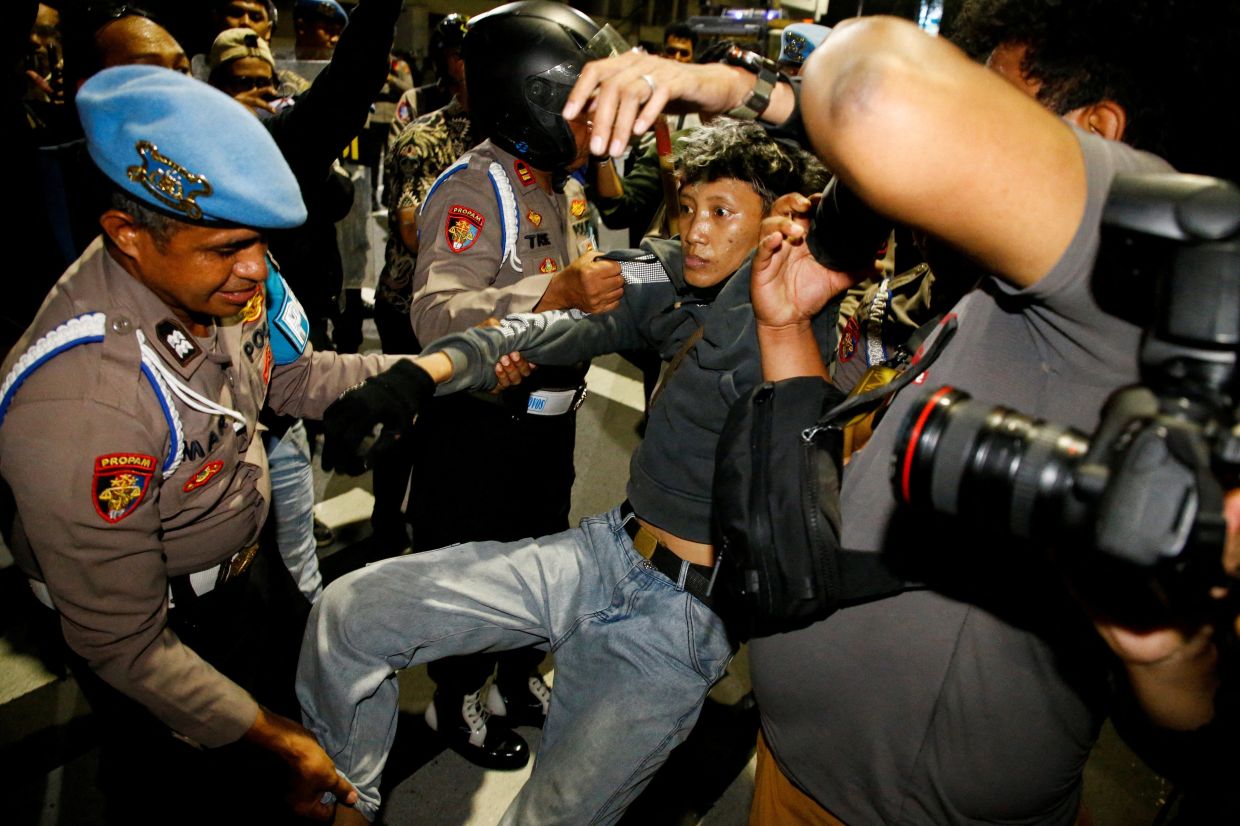
Indonesian police have pressed charges against four people in connection with an anti-government demonstration held in Surabaya, the country's second-largest city, marking the latest in a series of public protests against contentious government policies. The charges were confirmed by Surabaya police chief Luthfie Sulistiawan during a statement on Sunday, June 28, following Friday's rally that drew an estimated 100 demonstrators to the area surrounding a government building.
The gathering represented broader public discontent with two major government initiatives that have sparked significant controversy across Indonesia's sprawling archipelago. Protesters voiced anger over a recent fuel price increase affecting non-subsidised gasoline, which rose by approximately 30 per cent, and simultaneously objected to the government's flagship free school meals programme, which has become mired in serious allegations of corruption and food safety violations. The dual grievances underscore growing frustration among ordinary Indonesians facing mounting economic pressures while questioning the management of public welfare programmes.
According to police accounts, the demonstration escalated when some participants began hurling objects including firecrackers and rocks at authorities and property, prompting law enforcement to employ what officials characterised as "firm actions" to disperse the crowd. The four individuals now facing charges have been identified as suspects in connection with property destruction and assault against police officers, representing the most serious accusations stemming from the incident. This enforcement approach reflects the government's apparent determination to maintain order during a period of heightened social tension across multiple cities.
The fuel price adjustment announced this month reflects Jakarta's efforts to ease significant strain on the national budget, a challenge intensified by geopolitical turbulence in the Middle East that has disrupted global oil markets and elevated crude prices. Despite Indonesia's status as an oil-producing nation and Southeast Asia's largest economy, the country remains a net importer of petroleum products, rendering it vulnerable to international price fluctuations. The government's decision to reduce subsidies on gasoline represents an attempt to rebalance fiscal obligations, though it has imposed immediate hardship on millions of ordinary citizens already contending with inflation and rising living costs.
Police operations during the Surabaya protest resulted in the initial detention of 24 individuals, though authorities released the vast majority without filing charges. This selective approach to prosecution, focusing charges on only four participants, suggests police may have been attempting to balance public order concerns with avoiding perceptions of excessive crackdowns. Additionally, six individuals remain under investigation following the discovery of controlled substances in their systems, a development that could lead to separate drug-related charges unrelated to the primary protest allegations.
The school meals programme, touted by the government as a comprehensive solution to child malnutrition affecting millions of Indonesian children, has become deeply controversial due to recurring health crises and mismanagement concerns. Since its launch, tens of thousands of people have fallen ill following consumption of meals provided under the scheme, with mass food poisoning incidents triggering public alarm and erosion of confidence in government competence. The programme was partially suspended in response to these health emergencies, yet authorities have continued defending the initiative's fundamental objectives even as implementation failures mount.
Students in Jakarta, Indonesia's sprawling capital, have emerged as particularly vocal critics of both the fuel price hikes and the school meals initiative, organising their own demonstrations that have drawn thousands of participants. This youth-led activism reflects broader generational concern about economic equity, governmental accountability, and the quality of public services delivered to ordinary families. The student movement has added significant momentum to anti-government sentiment, creating pressure on officials to address underlying grievances rather than simply responding with enforcement actions.
Corruption allegations surrounding the meals programme have particularly inflamed public opinion, with various local officials and contractors facing investigation for allegedly misappropriating funds or providing substandard ingredients. These revelations have reinforced perceptions among Indonesians that government programmes often benefit connected elites rather than intended beneficiaries, a sentiment that extends well beyond the current education initiative. The combination of health crises, financial mismanagement, and corruption charges has transformed what was framed as a compassionate social policy into a symbol of governmental dysfunction.
For Malaysia and other Southeast Asian nations, Indonesia's current political turbulence and protest movements offer important lessons about economic policy implementation and public communication. The Indonesian government's experience demonstrates that major price adjustments affecting essential commodities require careful public messaging, advance consultation with stakeholders, and credible mechanisms for addressing hardship among vulnerable populations. The explosive response to simultaneous fuel price increases and a malfunctioning welfare programme reveals how economic grievances can rapidly compound into broader political discontent when citizens perceive systemic failures in governance and accountability.
Looking forward, Jakarta's handling of these protests and the underlying policy challenges will shape regional perceptions of Indonesian governance and economic management during an increasingly uncertain global environment. The willingness of authorities to employ selective prosecutions rather than wholesale crackdowns suggests some recognition of the need to maintain legitimacy while restoring order. However, resolving underlying disputes over fuel subsidies, school meal programme reform, and corruption in government will require sustained political commitment to transparency, institutional reform, and genuine public engagement beyond simply managing dissent through law enforcement mechanisms.

