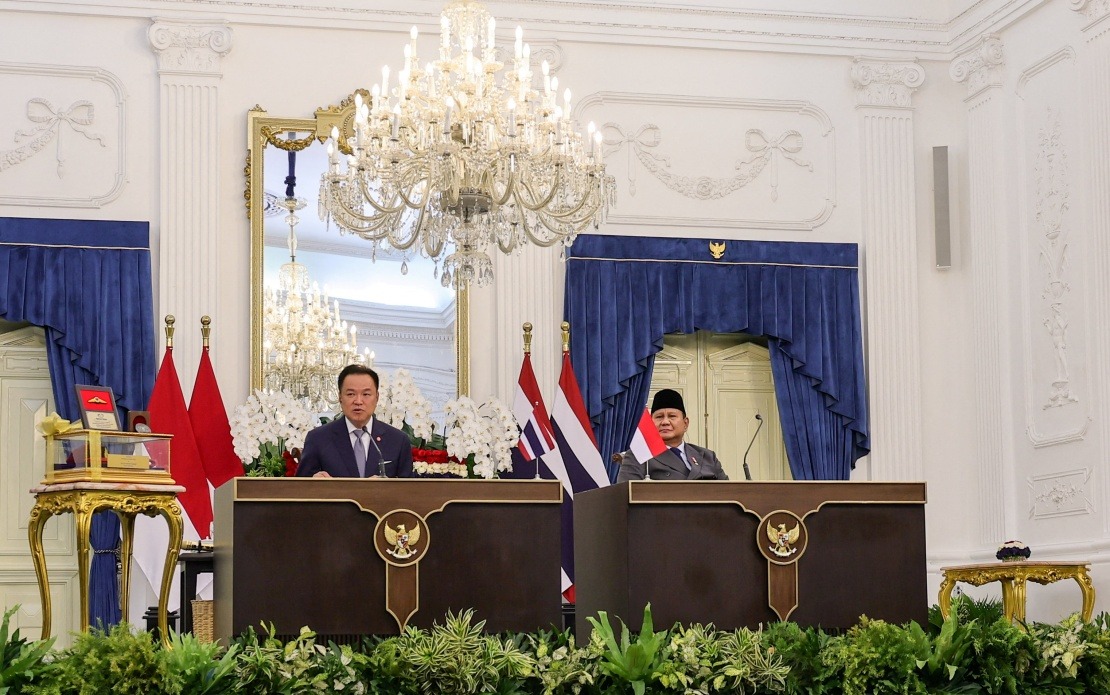
Indonesia and Thailand have reaffirmed their dedication to supporting ASEAN's peace initiatives in Myanmar, with both nations emphasising the critical importance of regional unity in achieving stability. The commitment emerged during the second Leaders' Consultation between Indonesian President Prabowo Subianto and Thai Prime Minister Anutin Charnvirakul, held at Jakarta's Merdeka Palace on Monday. The two nations signalled their intention to continue advancing the implementation of ASEAN's Five-Point Consensus through dialogue-based approaches that prioritise ending violence, broadening humanitarian access, and fostering inclusive participation in peace negotiations.
President Prabowo underscored that maintaining ASEAN's cohesion and central role within regional affairs remains foundational to any durable resolution in Myanmar. He stressed that Indonesia and Thailand would work in concert to ensure ASEAN maintains a constructive trajectory in Myanmar's political transition, implicitly acknowledging the bloc's limited leverage but affirming commitment to diplomatic channels. This stance reflects the broader challenge Southeast Asian nations face in influencing Myanmar's trajectory without direct intervention, particularly as military leadership persists despite international pressure and the Five-Point Consensus having yielded limited tangible progress since its adoption in 2021.
Beyond the Myanmar focus, the two nations identified transnational crime as an escalating regional security concern demanding enhanced bilateral coordination. The agreement encompasses a comprehensive framework for combating online scam syndicates that have become increasingly sophisticated in targeting citizens across Southeast Asia. Indonesian officials highlighted that closer intelligence sharing, joint investigations, financial tracking mechanisms, and coordinated law enforcement represent essential tools for dismantling criminal networks that often operate across multiple jurisdictions and exploit gaps in regulatory frameworks.
The scale of the online scam threat became apparent when Prabowo acknowledged Thailand's facilitation in repatriating nearly 1,000 Indonesians victimised by these operations. This figure underscores both the magnitude of the problem and the tangible human cost of transnational organised crime, which extends beyond financial losses to include psychological trauma and social disruption within affected communities. The repatriation efforts demonstrate practical bilateral cooperation, though they also highlight reactive rather than preventive approaches to criminal activity.
A notable initiative emerging from the consultations involves developing a Transnational Referral Mechanism specifically designed to accelerate identification, protection, and safe repatriation of crime victims. This institutional framework addresses a significant gap in regional victim support systems and reflects growing recognition that effective responses to transnational crime require coordinated protocols ensuring dignified treatment of affected individuals. For Malaysian readers, the mechanism's establishment carries relevance given Malaysia's significant role as both a transit point and destination for victims of transnational crimes, positioning the country to potentially benefit from enhanced regional protocols.
Thailand's Prime Minister Anutin proposed expansive defence and security partnerships, including military training exercises, information-sharing protocols, and maritime security cooperation with Indonesia. His suggestion to supply 36 amphibious wheeled armoured vehicles to Indonesia signals deepening defence industry collaboration within Southeast Asia, potentially strengthening regional military capabilities while supporting Thailand's defence industrial base. Such procurement arrangements typically involve technology transfer discussions and operational training, incrementally building interoperability between Indonesian and Thai armed forces.
Anutin's emphasis on combating online scam networks, human trafficking, and drug trafficking reflects Thailand's own acute experience with transnational criminal enterprises. These three crime categories intersect significantly across the region, with criminal networks often exploiting similar operational infrastructure and victim-recruitment mechanisms. Enhanced law enforcement cooperation, capacity building initiatives, and intelligence sharing arrangements represent practical mechanisms for addressing these interconnected challenges, though their effectiveness ultimately depends on sustained political will and adequate resourcing.
The consultation marked Anutin's maiden official visit to Indonesia since assuming office as Thailand's 32nd prime minister in September 2025, underscoring the strategic importance both nations accord their bilateral relationship. More significantly, this represented the first Thai prime ministerial visit to Indonesia in 15 years, suggesting a deliberate recalibration of Thailand's regional diplomatic priorities following recent political transitions. The extended interval between previous visits indicates either diplomatic stagnation or shifting focus areas, with this current engagement potentially signalling renewed emphasis on Southeast Asian partnerships over other regional or global commitments.
The timing of these bilateral consultations occurs against a broader backdrop of Myanmar's deteriorating humanitarian situation and questions regarding ASEAN's capacity to meaningfully influence outcomes. While Indonesia and Thailand's renewed commitments to the Five-Point Consensus reflect diplomatic convention, implementation challenges persist, including limited leverage over Myanmar's military leadership and competing interests among ASEAN members regarding appropriate intervention levels. The shift toward practical cooperation on transnational crime may represent a more achievable avenue for bilateral collaboration, offering concrete results that can demonstrate effective regional partnerships.
For Malaysia and other ASEAN members, the Indonesia-Thailand framework on transnational crime cooperation establishes precedents that could be expanded through existing regional mechanisms or bilateral partnerships. The proposed Transnational Referral Mechanism potentially serves as a template for comprehensive victim support systems that Malaysia could help develop or join, particularly given the country's experience managing complex cross-border crime situations. Moreover, enhanced intelligence sharing protocols developed through Indonesia-Thailand cooperation may eventually facilitate broader regional networks addressing organised crime more systematically.
The defence industry collaboration aspects, particularly vehicle procurement arrangements, reflect evolving Southeast Asian military modernisation patterns. Such acquisitions strengthen individual nation capabilities while fostering defence industrial linkages within the region, potentially reducing reliance on distant suppliers and building indigenous expertise. For Malaysian defence planners, observing successful bilateral defence partnerships provides insights into negotiation frameworks and technology transfer possibilities within the region.
Moving forward, the sustainability of these commitments depends on institutional mechanisms translating political will into operational reality. Regular joint training exercises, established intelligence-sharing protocols, and dedicated task forces addressing specific crime categories require consistent funding, personnel, and political prioritisation. The consultation's outcomes represent important declarations of intent, though the test of their significance will emerge through implementation monitoring and visible results in combating transnational criminal networks and advancing Myanmar peace objectives over subsequent months and years.

