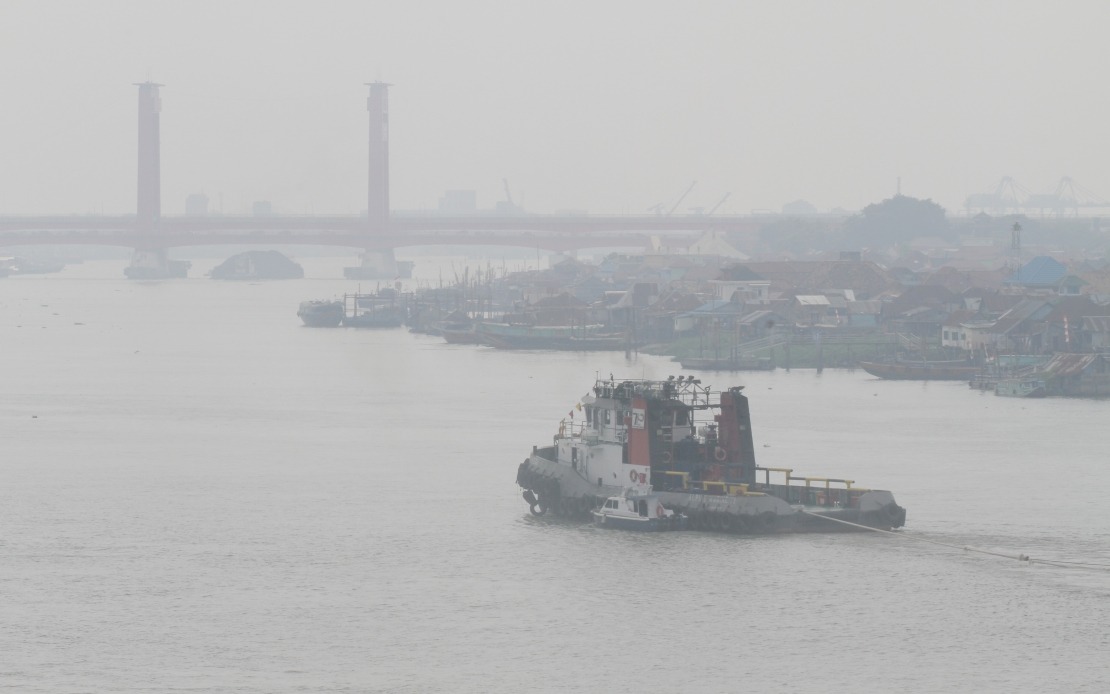
Indonesia has formally confirmed active coordination with Malaysia to combat the worsening transboundary haze crisis, with weather modification operations emerging as a priority focus area along their shared border regions. The commitment reflects mounting urgency as smoke from forest and land fires in West Kalimantan continues to degrade air quality across Sarawak and peninsula Malaysia, with some areas recording Air Pollutant Index readings of 195—dangerously close to the 201 threshold that denotes very unhealthy conditions for the general population.
Berton Panjaitan, Acting Head of the National Disaster Mitigation Agency (BNPB) Data, Information, and Disaster Communication Centre, outlined the scope of bilateral engagement between Jakarta and Kuala Lumpur. Beyond weather modification initiatives, the two governments are exploring expanded cooperation frameworks spanning prevention measures, real-time air quality monitoring systems, and mutual firefighting assistance. This represents a deliberate shift towards deeper institutional collaboration, moving beyond traditional diplomatic exchanges to embed practical mechanisms for rapid response.
Malaysia's Environment Ministry has already secured crucial permissions from Indonesia to conduct cloud-seeding operations across Indonesian airspace, a development disclosed during high-level discussions between Malaysian Natural Resources and Environmental Sustainability Minister Datuk Seri Arthur Joseph Kurup and Indonesian Environment Minister Jumhur Hidayat on August 24. This operational clearance eliminates a significant bureaucratic hurdle that historically complicated cross-border weather intervention efforts, allowing Malaysian teams to deploy technology more swiftly when atmospheric conditions favour seeding operations.
The intensity of this year's haze episode underscores the problem's escalating severity. Malaysian diplomatic staff in Pontianak have reported notably deteriorating conditions compared to 2024 and 2025, when transboundary haze remained relatively manageable. The Malaysian Consulate has documented the widening health and safety impact on the 577 registered Malaysian nationals residing across Kalimantan, predominantly comprising expatriate workers whose vulnerability to prolonged air pollution exposure requires proactive protection measures.
Direct firefighting assistance remains under discussion without formal requests yet submitted for water-bombing operations or other airborne firefighting assets. Indonesian officials have signalled openness to such cooperation through existing bilateral mechanisms, though Berton cautioned that Jakarta prefers to escalate support incrementally based on demonstrated necessity rather than deploying resources preemptively. This measured approach reflects practical constraints on Indonesia's firefighting capacity during peak fire season, when multiple regions simultaneously battle uncontrolled blazes.
The haze phenomenon extends well beyond Sarawak's borders, affecting major population centres across peninsula Malaysia including Kuala Lumpur, Selangor, Penang, Kedah, and Perak. This geographic spread demonstrates how transboundary air pollution transcends administrative boundaries and affects urban agglomerations far removed from primary fire sources. The widespread impact has elevated the crisis from a regional concern to a national health priority demanding coordinated policy responses.
Malaysia's track record of supporting Indonesian firefighting efforts provides institutional memory for deepening cooperation. In 2023, the Pontianak Consulate contributed six water pumps to West Kalimantan's provincial administration, establishing precedent for direct material assistance complementing government-to-government engagement. Such initiatives demonstrate how multilevel diplomatic channels—spanning federal governments, provincial authorities, and diplomatic missions—can combine resources and expertise to address transnational environmental challenges.
The Malaysian Consulate's operational directives to expatriate communities underscore the immediate health implications of prolonged haze exposure. Mandatory mask-wearing, temporary school closures shifting lessons to online platforms, and curtailed outdoor activity reflect precautionary public health measures now embedded in ordinary life during fire seasons. These disruptions cascade through economic and social systems, affecting workplace productivity, educational continuity, and quality of life metrics.
Weather modification technology represents a high-stakes intervention strategy with uncertain efficacy but significant political appeal. Cloud-seeding operations depend on precise atmospheric conditions—adequate cloud formation, specific humidity levels, and wind patterns—that cannot always be engineered on demand. When conditions align favourably, seeding can theoretically accelerate precipitation, clearing smoke layers and reducing API readings. However, operational limitations mean weather modification functions as a supplementary tactic rather than a comprehensive solution, necessitating parallel investments in fire prevention and suppression.
The haze cycle reflects deeper environmental governance challenges across Southeast Asia. Recurrent transboundary smoke episodes signal insufficient landscape-level fire management in source regions, inadequate enforcement of agricultural burning regulations, and competing land-use pressures that incentivise rapid forest clearance through controlled burning. Addressing root causes requires sustained investment in alternative agricultural practices, strengthened environmental monitoring infrastructure, and economic incentives rewarding fire-free land management approaches.
Malaysia's diplomatic engagement demonstrates pragmatic recognition that unilateral air quality management proves ineffective when smoke originates across international borders. By embedding Malaysia's interests within bilateral cooperation frameworks, Kuala Lumpur positions itself as a constructive regional partner while securing operational concessions—notably airspace access for cloud-seeding—that advance tangible health protection objectives. This approach balances assertive advocacy for Malaysian interests with acknowledgment of Indonesia's sovereignty and operational constraints.

