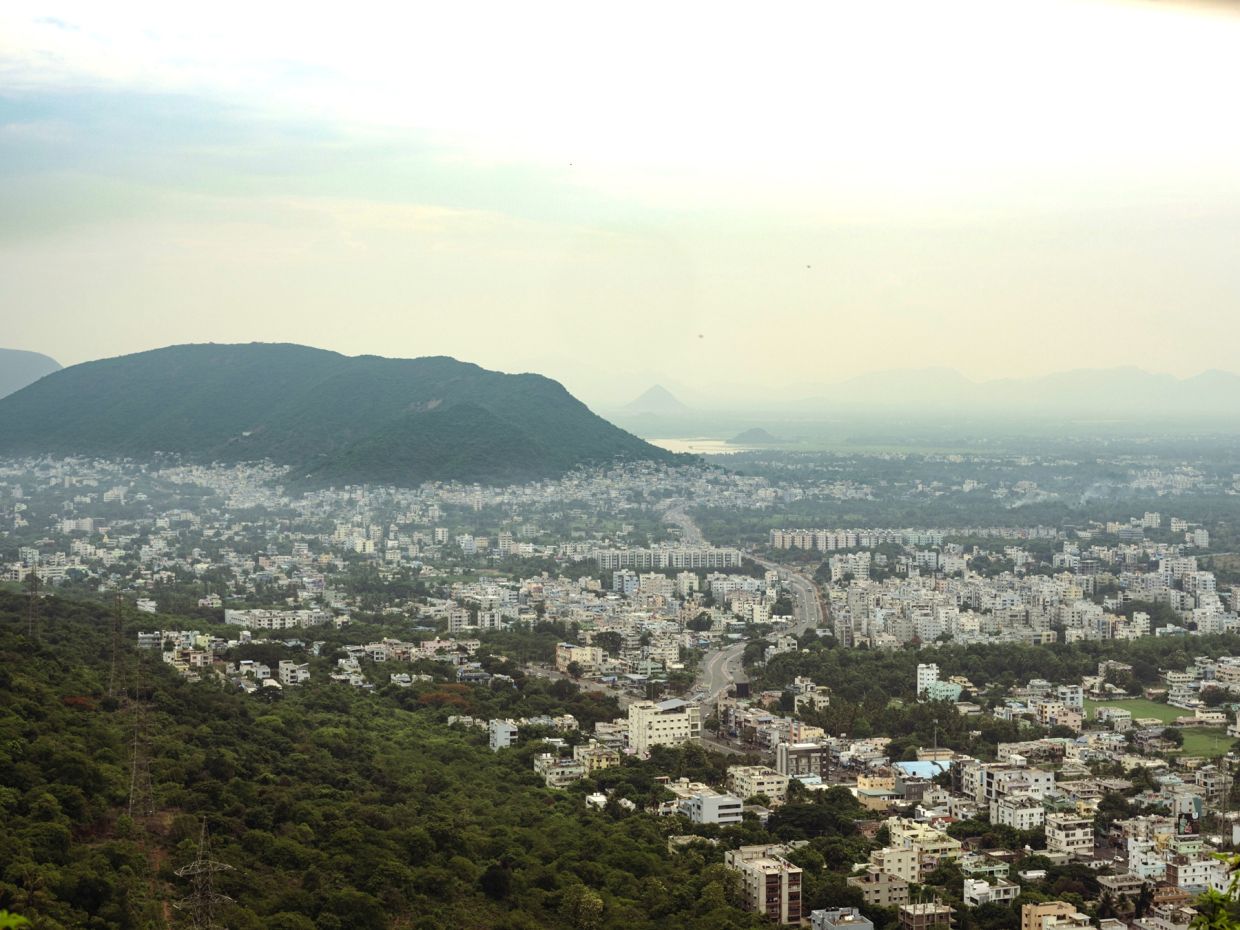
India's ambitious push to establish itself as a serious player in global artificial intelligence development is colliding with mounting scepticism from residents in Visakhapatnam, a coastal city in Andhra Pradesh where the government is fast-tracking transformative technology infrastructure. Two enormous data centre projects—one backed by Google and local billionaire Gautam Adani, the other a joint venture between Brookfield Asset Management and Reliance—represent a watershed moment in India's technological ambitions, yet they have simultaneously exposed deep tensions between accelerated development and community concerns about environmental sustainability and economic fairness.
The scale of these initiatives is staggering. Google's US$15 billion undertaking includes construction of a one-gigawatt data centre, subsea cable infrastructure, and integrated power generation facilities. When both projects reach operational capacity, they will more than double India's existing data centre capacity relative to the end of last year. For policymakers in New Delhi and in Andhra Pradesh, these investments represent essential infrastructure for India to claim a seat at the global table as nations compete fiercely to develop and deploy artificial intelligence capabilities. The Indian government has sweetened the deal considerably, offering Google and the Adani Group substantial subsidies encompassing discounted land, reduced energy rates, minimised water costs, and expansive tax breaks—an incentive package that critics argue reflects the desperation underlying India's catch-up agenda.
Behind these ambitions lies a sobering assessment of India's current standing. Despite the nation's vast population, thriving technology sector, and world-class software engineering talent, India remains what Morgan Stanley termed a "laggard" in building actual artificial intelligence capability. While India generates approximately twenty percent of the world's data, its share of global data centre capacity remains a fraction of that proportion. Simultaneously, billions of dollars in investment capital have flowed out of India toward competing economies like Taiwan and South Korea, which are at the forefront of manufacturing cutting-edge AI chips and foundational technologies. This exodus signals that international investors view India less as an innovation hub for breakthrough developments and more as a deployment zone for technology services targeting domestic and international markets. For Indian leadership, closing this gap has become an urgent imperative, particularly as southern Indian states compete fiercely against one another and against northern regions to attract foreign direct investment.
Andhra Pradesh's information technology minister, Nara Lokesh, whose face appears on welcome billboards alongside Prime Minister Narendra Modi, articulates the state government's vision expansively. He frames the data centres not as isolated infrastructure projects but as catalysts for broader manufacturing ecosystems. According to his vision, the investments should magnetise suppliers of power electronics, air conditioning systems, and building materials to establish production facilities in Andhra Pradesh, thereby creating a comprehensive industrial cluster. This logic reflects genuine economic strategy—data centre development, theoretically, can generate momentum for upstream and downstream industries. However, this optimistic framing collides with the actual employment records of comparable facilities elsewhere and the technological reality of modern hyperscale operations.
Opposition has crystallised around several interconnected concerns. Hyperscale data centres are notoriously energy-intensive and water-hungry operations, yet they generate surprisingly few permanent jobs relative to their physical footprint and capital investment. These tensions have already surfaced in the United States, where communities have successfully delayed or blocked data centre projects worth tens of billions of dollars. In India, where both energy infrastructure and freshwater resources face structural constraints, these concerns acquire sharper urgency. Visakhapatnam itself sits in a water-stressed region where summer supply disruptions are routine, raising legitimate questions about whether the city's water systems can sustainably support industrial-scale data centre operations alongside growing residential demand.
The employment projections offered by state officials have become a flash point for credibility. Officials claim the Google project alone will generate approximately one hundred twenty thousand jobs during the construction phase and sixty thousand permanent positions thereafter. However, critics and independent observers have questioned these figures as inconsistent with employment outcomes from comparably sized data centre facilities elsewhere globally. The environmental clearance documents filed for the project contain granular details—parking space requirements, toilet water consumption—that imply a workforce substantially smaller than the official estimates. This discrepancy suggests either that job creation claims have been inflated for political purposes or that the project documents themselves misrepresent the facility's actual operational scale, neither scenario instilling confidence in government transparency.
Environmental and procedural transparency deficits compound public anxiety. Campaigners and former officials contend that environmental clearance protocols have been bent or circumvented to permit construction in ecologically sensitive zones. VS Krishna, a campaigner with the Human Rights Forum operating in the region, articulated the frustration bluntly: the project operates under a veil of opacity inappropriate for a major developmental undertaking, yet information about water sourcing, electricity supply chains, and cost distribution remains scarce. This opacity intersects with India's documented tendency to suppress dissent and limit public discourse on large infrastructure projects, deepening apprehension that community interests will be subordinated to state and corporate priorities.
The role of billionaire Gautam Adani in these projects introduces an additional layer of contention. Adani's wealth has expanded dramatically during Narendra Modi's twelve years as Prime Minister, and he is widely perceived as a favoured ally with exceptional influence over major government approvals. His presence as Google's local partner has led critics to suggest that the partnership structure itself—pairing Google's technological expertise with Adani's government relationships—represents a mechanism for circumventing normal regulatory scrutiny. EAS Sarma, a former senior official in India's ministries of finance and energy with doctoral credentials in energy planning, articulated this suspicion plainly: Adani's capacity to "clear anything here in the government of India" fundamentally alters the negotiating dynamics between foreign corporations and Indian communities.
Google and the Adani subsidiary managing the project have issued reassurances designed to address water and energy concerns. Company representatives assert that the facilities will employ advanced cooling technologies minimising water consumption and will operate independently of municipal potable water supplies. Additionally, they claim that Google is investing in clean energy generation capacity and will "ensure no costs are passed on to local households, local businesses, or the state government." These commitments, if honoured, would theoretically insulate the broader community from direct financial or resource burdens. Yet such assurances have failed to persuade sceptical residents and observers who view them as rhetorical gestures rather than binding commitments enforceable against future pressure to economise or shift burdens.
The broader employment implications of India's AI infrastructure expansion reveal deeper structural tensions in the Indian economy. As hyperscale data centres and artificial intelligence deployment accelerate, India simultaneously confronts what the International Monetary Fund has warned could be a "tsunami hitting the labour market." India's technology services industry, which has provided employment pathways for hundreds of thousands of workers and constitutes a pillar of the nation's export economy, faces existential pressure from automation and artificial intelligence displacement. Expanding heavily-automated facilities could exacerbate this headwind precisely as India grapples with generating sufficient quality employment for a population exceeding 1.4 billion. The paradox is acute: India is investing heavily in technology infrastructure that may ultimately contract rather than expand employment opportunities across the economy.
Former official Sarma has articulated the economic counterargument with particular force, contending that transmission line construction costs alone will ultimately surface in residents' electricity bills regardless of government claims to the contrary. Every subsidy, he argues, represents a societal cost that will manifest somewhere within India's fiscal or resource systems. This distributional perspective highlights a fundamental asymmetry: multinational corporations and favoured domestic industrialists capture the gains from subsidised infrastructure, whilst diffuse costs—elevated electricity prices, constrained water availability, foregone alternative land uses—disperse across the broader population. For Visakhapatnam residents and observers across South Asia tracking India's technological trajectory, the central question remains whether India's ambition to compete globally in artificial intelligence justifies the environmental risks, employment uncertainties, and fiscal transfers embedded within these projects.

