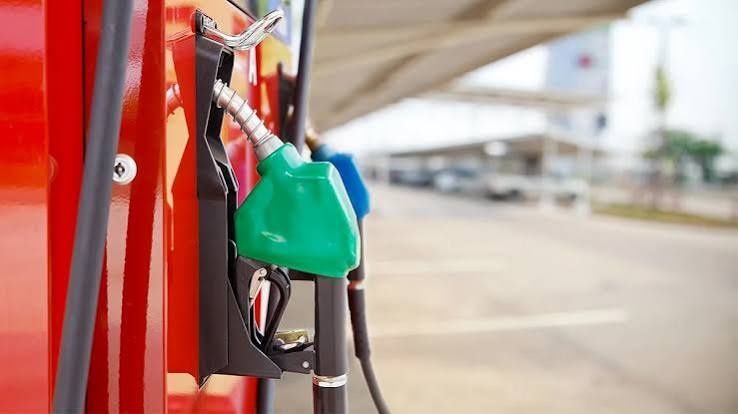
India's government found itself on the defensive on Friday as it attempted to manage escalating public outcry over its mandatory adoption of E20 fuel—a blend containing 20 per cent ethanol and 80 per cent petrol. The controversy has become one of the most pressing political challenges facing Prime Minister Narendra Modi's administration, particularly given India's status as the world's third-largest automobile market where consumer sentiment carries significant weight.
The E20 mandate, which took effect last year, was designed to serve multiple policy objectives simultaneously: reducing carbon emissions, diminishing India's reliance on crude oil imports, and bolstering rural incomes by creating demand for agricultural feedstocks needed in ethanol production. Yet despite these environmental and economic rationales, the policy has encountered fierce resistance from everyday motorists who report tangible deterioration in their vehicles' performance and fuel consumption patterns.
The political crisis intensified dramatically this week when Attorney General R. Venkataramani described E20 as an "experiment" during a court proceeding, stating that comprehensive results would only become available by next year. This characterisation proved deeply damaging to government credibility, suggesting that the rollout proceeded without sufficient evidence of its safety and efficacy. Although the government swiftly denied the attorney general had made such remarks, video footage from the court hearing circulated rapidly across social media platforms, contradicting the official denial and amplifying public distrust.
When confronted by Reuters on Friday, Venkataramani attempted to clarify that he had employed the term "experiment" solely in reference to ethanol supply volumes rather than the fuel policy's overall viability. This distinction failed to mollify public anger. Instead, the government's press office adopted a dismissive tone, characterising criticism as "wild claims" and urging citizens to resist "rage bait." Such rhetoric arguably compounded the damage by appearing tone-deaf to legitimate consumer concerns rather than engaging substantively with the evidence motorists were presenting.
Petroleum Minister Hardeep Singh Puri made an unconventional attempt to rebuild confidence by comparing E20 to fuel used in professional motor racing, noting that high-performance vehicles utilise ethanol blends for enhanced acceleration. He acknowledged that fuel mileage might decline slightly but presented this as an acceptable trade-off. The analogy proved unconvincing to ordinary drivers, many of whom lack the technical resources and vehicle specifications typical of professional racing operations and simply want reliable, efficient transportation at predictable costs.
The mandate has stripped motorists of consumer choice at petrol stations, a factor that has intensified frustration. Many drivers claim they were not consulted before the policy took effect and now find themselves forced to purchase fuel that they contend damages their vehicles. Hundreds have documented their grievances on social media, with some posting workshop videos showing repair costs they attribute to E20-related wear and tear. One viral video featured a motorist identified as Manish Kashyap visibly distressed in a repair workshop, describing how his vehicle required extensive repairs after just two months of using E20 fuel, despite having made significant financial investments and paid substantial taxes.
Opposition figures have seized upon the controversy to criticise the government's governance approach. Priyank Kharge, a state minister in the Congress party, argued on X that the E20 rollout proceeded without adequate public consultation and that the government cannot ask citizens to prove harm "when your own data is still pending." This framing resonates with broader concerns that the Modi administration prioritised environmental and fiscal objectives without conducting sufficiently robust testing or gathering comprehensive feedback from affected vehicle owners.
The controversy carries regional significance for Southeast Asia, as India's automotive market dynamics often influence broader regional trends. If the E20 mandate is modified or reversed due to consumer pressure, it could signal to other governments considering similar fuel policies that public backlash poses genuine political risks. Conversely, if India persists with the policy despite protests, it demonstrates how environmental goals can be implemented against consumer preferences when political will is sufficiently strong.
Civil society mobilisation around the issue has accelerated rapidly. Tehseen Poonawalla, a New Delhi-based public figure and Congress party affiliate, announced plans for a Sunday protest against E20 in the capital, reporting that thousands of individuals had expressed interest in participation. This grassroots activism represents a significant political vulnerability for the government, suggesting that discontent extends well beyond online complaints to organised street-level opposition.
The government's core environmental argument—that E20 reduces emissions and import dependence—remains technically sound. Ethanol-blended fuels do produce lower carbon emissions and reduce reliance on imported crude oil, thereby preserving foreign exchange reserves. The policy also benefits agricultural sectors by creating sustained demand for sugarcane and other ethanol feedstocks, supporting farmer incomes in rural areas. However, the execution has divorced these benefits from consumer welfare considerations, creating a narrative of top-down imposition rather than collaborative policy development.
As the controversy deepens, the government faces a strategic choice: either respond to consumer concerns through technical adjustments, extended testing periods, or gradual implementation phases, or attempt to weather the political storm by maintaining the current policy while intensifying communications efforts. The viral spread of the attorney general's remarks and the accumulating documentation of reported vehicle damage suggest that rhetorical reassurance alone may prove insufficient to restore public confidence in the E20 mandate.

