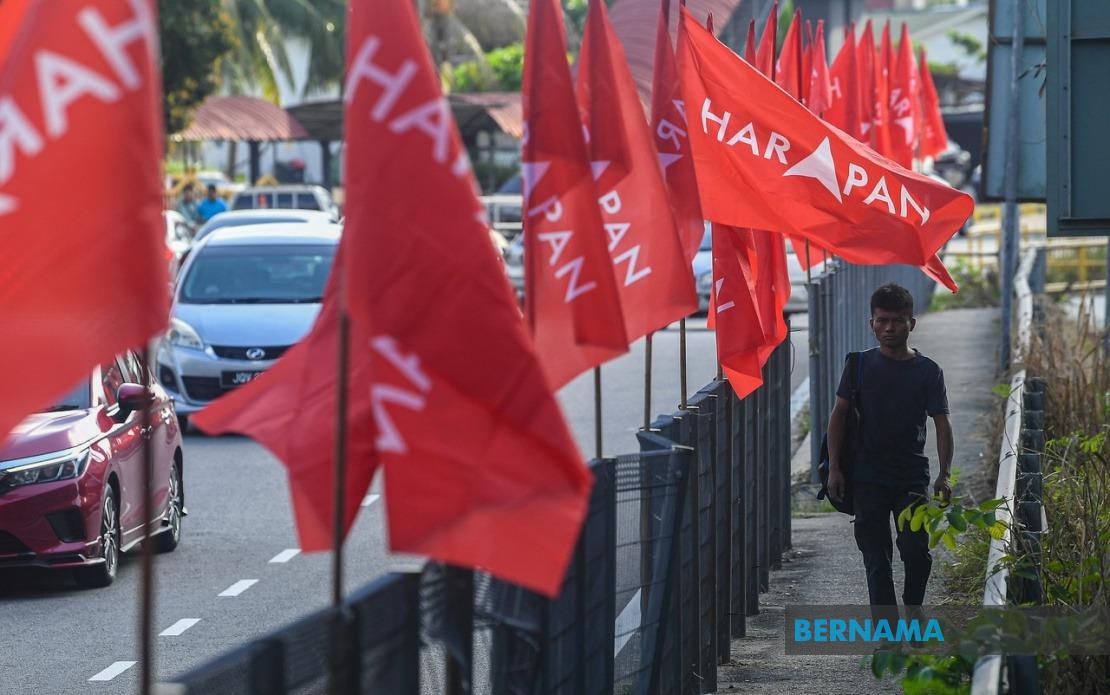
The Indian community holds potentially decisive influence over the outcome of the Johor state election scheduled for July 11, according to Parti Keadilan Rakyat (PKR) Central Leadership Council member Dr Gunaraj George, who has called on minority voters to back Pakatan Harapan (PH) to secure political continuity and economic progress. Though representing a smaller proportion of the state's population compared to other communities, Indian voters could determine results across approximately 25 mixed and marginal State Legislative Assembly seats, making their participation strategically important for any coalition seeking to form government.
Dr Gunaraj, who represents the Sentosa state assembly seat, framed the forthcoming election as more than a routine exercise in selecting representatives. Instead, he positioned it as a fundamental choice between maintaining the momentum of institutional reform and economic stability, or risking a return to the political turbulence that has historically unsettled investor confidence and corporate expansion plans. This framing reflects broader PH messaging that emphasises continuity and competence over change, a strategy particularly aimed at constituencies where swing voters from minority communities might tip the balance.
The timing of this appeal carries particular weight given Malaysia's current economic environment, where inflationary pressures, rising living costs, and international uncertainties have heightened public sensitivity to governance quality. Dr Gunaraj emphasized that amid global economic headwinds and geopolitical tensions, the nation requires steady political leadership focused on attracting investment, creating employment opportunities, and improving household purchasing power. The argument that political instability directly threatens economic prospects has become a central pillar of PH's campaign narrative, particularly as regional economies compete for foreign capital and talent.
A cornerstone of PH's outreach to the Indian community has been demonstrating tangible resource allocation improvements for Indian-specific programmes and institutions. Dr Gunaraj highlighted the significant increase in Malaysian Indian Transformation Unit (MITRA) funding from RM100 million to RM150 million—the first increase in nearly a decade—with Prime Minister Datuk Seri Anwar Ibrahim pledging further progressive increases to address contemporary requirements. He also stressed that MITRA's administration has undergone substantial transparency improvements, with systematic monitoring and parliamentary accountability mechanisms now in place, addressing long-standing concerns about fund deployment and governance.
Beyond MITRA, the MADANI Government's support for Tamil National-Type Schools (SJKT) through enhanced allocations represents targeted investment in Indian educational infrastructure at a time when medium vernacular schools face sustainability challenges. Maintenance grants for religious places of worship, including temples, address a longstanding community need for government support in preserving cultural and spiritual spaces. These programmes collectively signal recognition of Indian community priorities within the broader national development framework, a messaging strategy designed to demonstrate inclusive governance beyond electoral cycles.
The expansion of Technical and Vocational Education and Training (TVET) opportunities, combined with targeted assistance for students from economically disadvantaged backgrounds, addresses employment and skills development concerns that resonate across minority communities facing economic mobility constraints. Coupled with cash assistance schemes including Sumbangan Tunai Rahmah (STR) and Sumbangan Asas Rahmah (SARA), these measures represent direct economic support during periods of household financial stress. The government's support for micro, small, and medium enterprises also appeals to Indian business communities seeking preferential access to financing and operational support.
Dr Gunaraj's appeal carries implications that extend beyond Johor's immediate political dynamics, potentially setting precedent for how Malaysian coalitions mobilize minority voter blocs in future elections. The acknowledgment that Indian voters, despite comprising a demographic minority, wield disproportionate influence in marginal constituencies reflects the mathematical realities of Malaysia's electoral system, where tight competition in swing seats frequently determines overall outcomes. This dynamic has elevated minority community negotiating power in post-election coalition discussions and policy implementation priorities.
The institutional reform agenda that Dr Gunaraj referenced—encompassing anti-corruption efforts, governance improvements, and more inclusive economic policy architecture—represents the philosophical foundation of PH's broader appeal. For Indian voters, governance quality directly affects access to government resources, fair treatment in bureaucratic processes, and equitable participation in development programmes. Corruption and patronage-based systems historically disadvantaged communities perceived as lacking political clout, making institutional accountability mechanisms particularly salient messaging for minority constituencies.
Pakatan Harapan's decision to contest all 56 state seats in Johor reflects confidence in its electoral machinery and policy platform across the entire state, not merely concentration on traditional strongholds. This comprehensive approach signals to voters, including the Indian community, that PH views itself as having broad appeal and legitimacy to govern the entire state. For a coalition that has faced questions about regional representation and management diversity, this stance represents an attempt to present itself as a truly multiethnic political force rather than a faction-based grouping.
The stakes for the Indian community extend beyond immediate policy allocations to encompass representation within government structures and decision-making institutions. Historical underrepresentation of Indians in civil service, judiciary, and corporate leadership positions has created persistent concerns about equal access to opportunity. Electoral endorsement of PH potentially signals voter confidence that the coalition will continue prioritizing diversification within institutional hierarchies and ensuring that policy implementation reflects multiethnic input and accountability.
Dr Gunaraj's articulation of MADANI Government performance over more than three and a half years in office provides voters with a track record to assess rather than relying solely on campaign promises or opposition critiques. This performance-based evaluation approach appeals to pragmatic voters concerned with demonstrable results—funding increases for community institutions, expanded educational opportunities, and direct cash assistance—rather than ideological positioning. For swing voters in marginal constituencies, concrete policy outcomes often prove more influential than partisan rhetoric.
The electoral mathematics in Johor suggest that Indian voter turnout and preference margins could indeed prove consequential. If Indian voters concentrate support in specific constituencies where their demographic presence is substantial but not dominant, their voting cohesion could amplify their political weight. Conversely, if Indian voter participation remains fragmented or divided between competing coalitions, their potential influence diminishes substantially. Dr Gunaraj's intervention represents an explicit attempt to encourage electoral mobilization and unified support behind PH within the Indian community.
The broader context of Malaysian politics includes ongoing competition for minority voter allegiances across multiple coalitions, each offering different programmatic appeals and ethnic representation formulas. Pakatan Harapan's specific focus on demonstrable resource allocation increases and institutional reform represents one approach to attracting minority support, emphasizing tangible benefits and governance quality over other possible appeals. Whether this strategy succeeds in Johor will provide insights into how minority communities prioritize different political values during Malaysia's ongoing democratic evolution.

