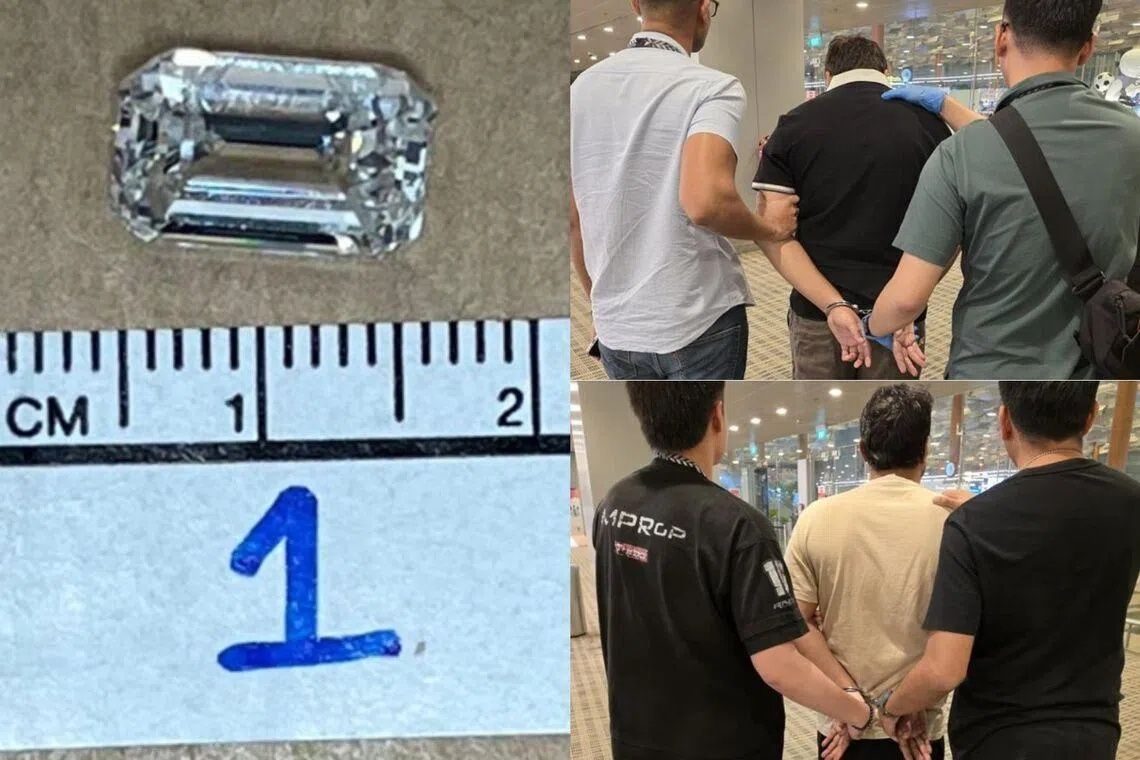
A meticulously planned jewellery heist in Singapore's Chinatown has resulted in the conviction of an Indian national, marking another high-profile retail theft in the island's commercial district. Mangroliya Manojkumar Kurjibhai, aged 41, received a custodial sentence of two years, two months and two weeks after pleading guilty to stealing a diamond valued at nearly S$200,000 from Dianoche jewellery store on Kreta Ayer Road. His accomplice, Serasiya Milan Ramnikbhai, 30, remains in custody pending trial on related charges following their arrests at Changi Airport that same evening.
The crime involved a sophisticated scheme requiring considerable preparation. Court documents reveal that the two men had orchestrated the theft from India before arriving in Singapore, commissioning a counterfeit diamond that matched not only the appearance of the genuine stone but also its technical specifications and serial number. This level of detail underscores the premeditation involved and raises questions about the international networks supporting such elaborate crimes. Prosecutors were unable to disclose from court documents how the pair initially learned of the specific diamond's existence at the Chinatown establishment, suggesting possible involvement of insiders or sophisticated intelligence gathering.
On June 19, the morning of the heist, both men arrived in Singapore on the same day, immediately proceeding to execute their plan. By approximately 3 pm, they entered the Dianoche store, with Serasiya concealing the fraudulent diamond in his mouth—a technique commonly employed to evade detection by metal detectors and security scanners. Mangroliya approached a sales manager seeking to examine the 4.95-carat diamond, officially valued at US$154,000, equivalent to over S$199,000. The genuine stone represented a substantial target, making the risk-reward calculation particularly lucrative for the perpetrators.
The execution of the swap demonstrated careful operational planning. Mangroliya deliberately requested views of multiple additional items, compelling the sales manager to leave his position repeatedly and creating the necessary distraction. During one of these absences, Mangroliya signalled Serasiya, who then spat the counterfeit diamond onto the counter surface. Serasiya promptly retrieved the authentic diamond and secreted it in his own mouth, mimicking the earlier concealment technique. When the manager returned, Mangroliya expressed continued deliberation over the purchase, allowing both men to casually exit the premises without raising immediate suspicion.
The theft might have succeeded had store security systems been less robust. The jewellery outlet's closed-circuit television footage captured the entire transaction sequence, providing prosecution authorities with clear visual evidence of the swap. More significantly, when the sales manager later subjected the remaining diamond to examination using an optical gemstone identification machine—a standard practice in the industry—the counterfeit nature became immediately apparent. This technological verification would prove crucial in establishing the facts of the case and demonstrating the deliberate nature of the substitution.
Following the successful removal of the diamond, both men checked out of their hotel accommodation and arranged transportation to Changi Airport for an evening flight back to India. However, their escape plan unravelled when immigration officers, possibly acting on an alert from the jewellery store or as part of routine security procedures, intercepted them at Terminal 3 around 9 pm the same day. Officers conducted a search and recovered the genuine diamond from Serasiya's haversack, effectively ending their attempt to flee the jurisdiction with the stolen property.
State Prosecuting Officer Yip Cheng Yee presented the evidence methodically to the court, establishing the premeditation, conspiracy, and execution phases of the crime. The prosecution's case was strengthened by the physical recovery of the stolen diamond, CCTV evidence of the swap, the recovered counterfeit stone, and the men's abrupt departure from the city immediately after the theft. Mangroliya's guilty plea accelerated the judicial process, resulting in his sentencing on July 17.
The punishment reflects Singapore's firm stance on retail crime and organised theft. Under Singapore law, theft convictions carry potential sentences of up to seven years imprisonment plus fines, making the imposed sentence—while substantial—within the discretionary range available to the court. The two-year-plus custodial term signals serious judicial disapproval of transnational theft schemes targeting the island's jewellery sector, though it remains below the maximum threshold, possibly accounting for Mangroliya's guilty plea and cooperation with authorities.
This case carries implications for Southeast Asian retail security and international law enforcement cooperation. The sophistication of the counterfeit diamond and the cross-border planning suggest criminal networks with substantial resources and technical expertise. For Malaysian readers and businesses in the region, the incident underscores vulnerabilities in jewellery retail operations, particularly the risks posed by organised theft rings that combine international coordination with insider knowledge. The rapid apprehension at Changi Airport demonstrates the effectiveness of modern border security protocols in disrupting criminal activity, though the fact that the perpetrators nearly succeeded emphasises the ongoing challenges facing retailers in protecting high-value merchandise from determined, well-prepared thieves.

