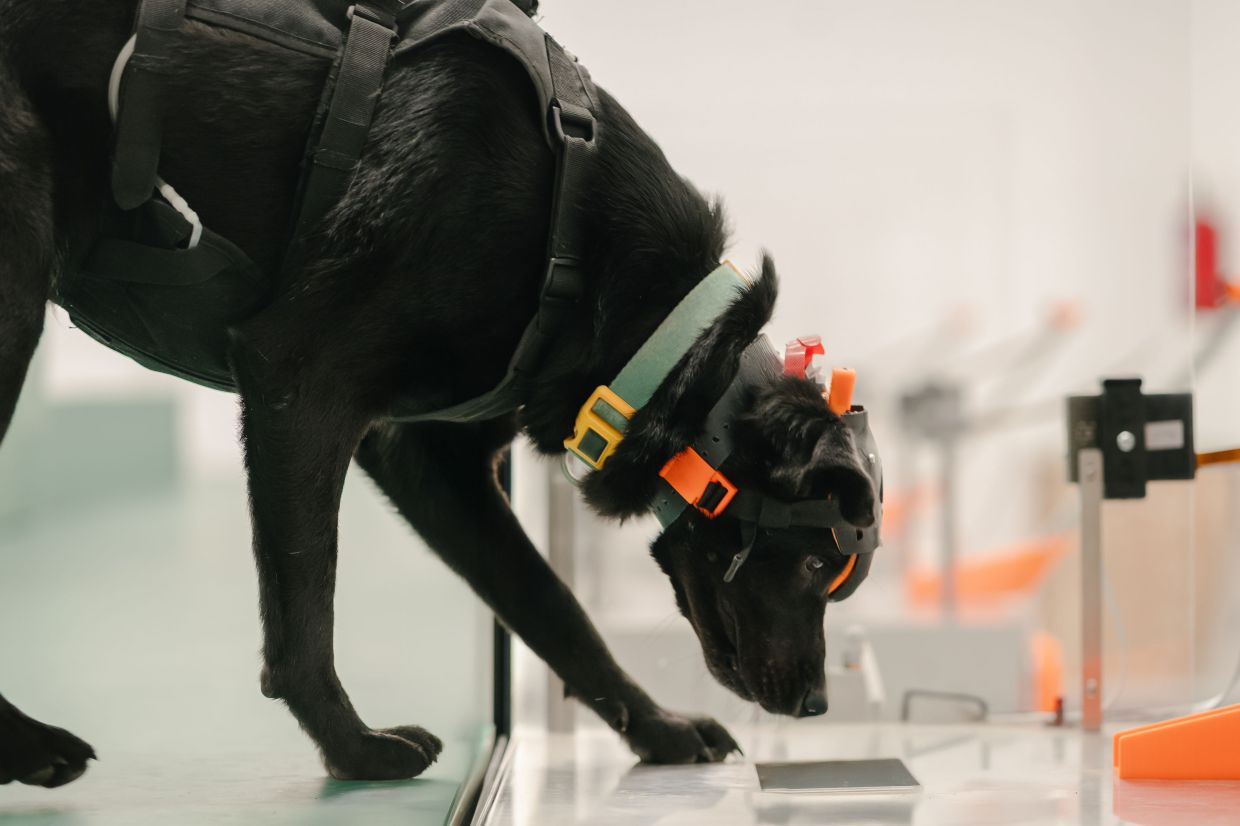
On a rural outpost near Bengaluru, a team of beagles, labradors and Dutch shepherds clock in daily for a job that could reshape how millions of Indians access early cancer detection. Billy, Jessie and Banu are not pets—they are diagnostic instruments in training at Dognosis, a two-year-old startup harnessing dogs' extraordinary sense of smell to identify malignancy from human breath samples. The venture represents a bold attempt to democratise a screening capability historically reserved for expensive imaging and laboratory tests, addressing one of South Asia's most pressing health challenges.
The mechanism behind Dognosis is elegantly simple but technologically sophisticated. Patients breathe into collection masks that are shipped to the company's facility, where trained canines are exposed to the samples. Rather than relying on the dogs as the sole diagnostic tool, the startup pairs animal behaviour with machine learning. Sensors capture detailed data on the dogs' movements, respiration patterns, brain activity and body language, which algorithms then analyse to identify cancer signatures. This fusion of biological instinct and computational power bypasses the need for invasive procedures like biopsies, costly imaging scans or blood draws, making detection fundamentally more accessible.
The scientific foundation for this approach is not mere speculation. A Phase 2 study published in the Journal of Clinical Oncology documented approximately 90 percent sensitivity for early-stage cancers across more than 20 malignancy types spanning seven broad categories, with breast cancer among those tested. Perhaps more intriguingly, dogs trained to recognise ten cancer types demonstrated the ability to identify an eleventh variant they had never encountered before, suggesting their olfactory system captures deep patterns of disease rather than memorised scents. This generalisability could prove crucial for expanding applications beyond current training parameters.
India's public health landscape makes the timing of such innovation particularly acute. The nation ranks third globally for new cancer incidence, with international agencies estimating 1.5 million newly diagnosed cases and over 900,000 deaths in 2024 alone. Roughly one in every ten Indians faces a cancer diagnosis before reaching age 75. Yet the screening infrastructure remains catastrophically underdeveloped. Only 1.9 percent of Indian women surveyed between 2019 and 2021 reported ever undergoing cervical cancer screening, while less than one percent had been screened for breast or oral malignancies. Male screening rates are similarly abysmal, with just 1.2 percent reporting oral cancer examinations. This vast gap between disease burden and early detection represents both a massive public health failure and a critical opportunity for innovation.
Dognosis has already attracted institutional backing from prominent venture capital firms including Accel India and San Francisco-based Caffeinated Capital. The startup secured US$1.5 million (RM6.12 million) through a pre-seed funding round in 2024, supplemented by an additional undisclosed investment shortly thereafter. According to co-founder Akash Kulgod, these resources provide sufficient runway for two years of planned expansion. The company maintains its canine workforce on a two-acre farm where the animals enjoy regular exercise and playtime, with detection work structured as a game rewarded with treats—ensuring both scientific rigour and animal welfare.
The commercial strategy reveals ambitious scaling intentions. Dognosis plans to launch an at-home multi-cancer prescreening test in India next year at a cost of several thousand rupees, making it substantially cheaper than conventional alternatives while remaining accessible to a broader demographic. The company's ultimate vision involves processing one million tests annually, expanding its dog team to 30 animals, and reducing turnaround time to a single week. Geographical expansion beyond South Asia is also firmly planned, with Kulgod indicating that the firm could establish a United States facility by late 2027 or early 2028, positioning the technology for eventual global deployment.
Validating the technology at commercial scale presents formidable challenges that extend beyond pure scientific performance. The company must demonstrate that accuracy remains consistent across larger, more ethnically and geographically diverse populations rather than controlled trial cohorts. Equally demanding is the logistical infrastructure required to collect, transport and process massive volumes of breath samples while maintaining sample integrity. Perhaps most daunting is the psychological and professional hurdle of convincing physicians and patients to trust a screening paradigm centred on animal biology rather than conventional medical instrumentation—a barrier that should not be underestimated in healthcare systems predisposed toward technological scepticism.
Dognosis has commenced its Phase 3 clinical trial in April, enrolling participants across ten hospitals throughout India with plans to recruit approximately 10,000 subjects over twelve months. This study will focus on two high-risk populations: asymptomatic individuals at elevated cancer risk and survivors at risk of recurrence. Critically, anyone flagged by the dog-based screening will proceed to conventional follow-up including imaging and biopsy, ensuring that positive results translate into actionable medical intervention rather than diagnostic ambiguity. This complementary approach addresses legitimate clinical concerns raised by specialists like Pankaj Chaturvedi, deputy director of the Centre for Cancer Epidemiology at Tata Memorial Centre in Mumbai, who emphasises that emerging technologies should strengthen rather than replace existing screening infrastructure.
A significant regulatory advantage favours Dognosis's near-term commercialisation prospects. Because the startup positions its offering as a prescreening tool rather than a diagnostic device, it avoids the stringent regulatory pathway required for the latter category in India. This distinction—admittedly somewhat semantic—potentially accelerates market entry and enables the company to begin generating real-world performance data immediately. If Phase 3 results validate the technology's efficacy in diverse populations, Dognosis intends to launch initially in Bengaluru before expanding nationally through partnerships with established diagnostic chains and healthcare networks.
For Malaysian and Southeast Asian observers, Dognosis's trajectory carries several strategic implications. The region's cancer burden mirrors India's, with insufficient screening infrastructure across most countries. If the Bengaluru startup successfully scales its operations and demonstrates sustained accuracy, the model could be adapted for Malaysia, Singapore, Thailand and other nations experiencing similar epidemiological and infrastructural constraints. The technology's fundamental reliance on breath samples and portable processing equipment means geographic expansion could proceed relatively straightforwardly compared to establishing new imaging or laboratory facilities.
The broader significance transcends commercial opportunity. Dognosis represents a deliberate repurposing of established canine capabilities—traditionally deployed for narcotics and explosives detection—toward a fundamentally humanitarian application. As Kulgod notes, society already depends on dogs for life-or-death functions. The innovation lies not in discovering that dogs can detect disease, but in solving the standardisation and scaling challenge that had previously limited application to laboratory curiosity. This reframing of animal-human collaboration as a scalable health technology could inspire similar ventures across the region, particularly in contexts where biological systems offer advantages over infrastructure-dependent solutions.
The competitive landscape remains nascent, with New Jersey-based SpotitEarly reporting comparable results from canine cancer-detection trials, though commercialisation remains pending. This suggests Dognosis is not pursuing an entirely novel concept but rather executing more aggressively on a concept with demonstrated scientific validity. The race to commercialise dog-based screening at scale will likely depend on execution quality, regulatory navigation and capital availability rather than fundamental scientific breakthroughs. For a region with constrained healthcare budgets and substantial unmet screening needs, the emergence of multiple viable options would represent genuine progress toward addressing cancer's detection crisis.

