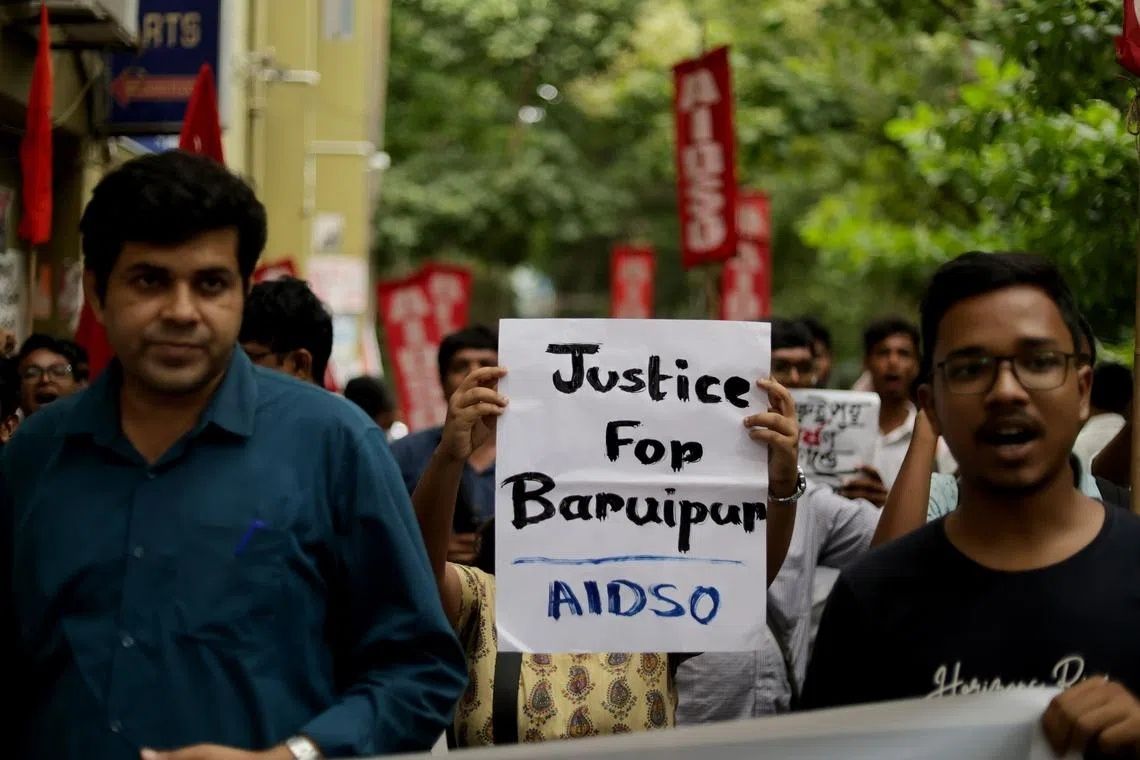
Indian police moved swiftly to impose order in West Bengal this week following days of turbulent street demonstrations triggered by the discovery of an 11-year-old girl's body in a pond near Kolkata. The violence erupted after the child went missing on July 4, with her remains found the following day in Baruipur city, approximately 30 kilometres from the state capital. In response to the tragedy, law enforcement authorities detained 35 individuals implicated in destructive acts including vandalism and public disturbances, with senior police official Arvind Kumar Anand indicating that additional suspects remain under investigation as digital evidence continues to be examined.
The discovery of the girl's body unleashed widespread community anger that manifested in blockaded thoroughfares and burning vehicles across the region. A particularly dark chapter emerged when an innocent bystander fell victim to mob violence as angry residents sought immediate retribution. The scale and intensity of the unrest underscored the deep reservoir of public anguish surrounding crimes against children, with ordinary citizens expressing their frustration through direct action rather than relying solely on institutional channels. The incident highlighted the challenges authorities face in managing public sentiment when high-profile crimes inflame community tensions.
Police investigations into the assault and murder culminated in identifying four men for arrest. However, the case took a dramatic turn during the investigative phase when one suspect, Prabhas Mondal, was fatally shot by officers in the early morning hours of July 8. According to police statements, Mondal died while allegedly attempting to flee the scene after being transported to the location where the crime occurred as part of standard investigation procedures. The killing of a suspect during custody raises questions about interrogation protocols and use-of-force procedures, issues that regularly invite scrutiny from civil liberties advocates in India.
The circumstances surrounding Mondal's death became further complicated by his mother's public response, which she shared during a television interview. Rather than defend her son or contest the police narrative, she expressed profound moral condemnation of his alleged actions, stating that she could not bring herself to accept his body for funeral rites given the gravity of what he had supposedly committed. Her comments reflected the social stigma and familial shame attached to such heinous crimes, revealing how perpetrators become pariahs even within their own households. The mother's unwillingness to claim her son's remains demonstrated the extent to which communities ostracize those accused of crimes against children.
The investigation also encompassed three additional suspects whose innocence or guilt remained under scrutiny. Relatives of at least one of these men publicly contended that he had been wrongfully apprehended, attributing his arrest to mistaken identity rather than actual involvement in the crime. Such claims raise concerns about investigative accuracy and whether law enforcement conducted sufficiently thorough verification before detaining individuals. The absence of public statements from families of the remaining two suspects left gaps in understanding whether other misidentifications or wrongful detentions may have occurred during the police response to this case.
State leadership moved quickly to address public concerns about safety and governance. Suvendu Adhikari, who recently assumed the position of West Bengal's chief minister following his party's electoral triumph in May state elections, pledged an uncompromising stance against sexual violence and mob brutality. Through a social media statement issued on July 9, Adhikari declared that his administration would demonstrate "no leniency" toward perpetrators of rape, violent offences, or extrajudicial killings of innocent persons. He positioned the government's approach as one of rigorous legal accountability, promising that criminals would face prosecution through established judicial mechanisms rather than succumbing to political pressure to circumvent formal legal procedures.
This latest tragedy once again brought into sharp focus India's persistent struggles with sexual violence and gender-based crimes, despite legislative reforms introduced in response to earlier high-profile cases. The murder of a 22-year-old woman during a gang rape in Delhi in 2012 catalysed nationwide movement for enhanced protections and harsher penalties, ultimately resulting in capital punishment for four of the convicted perpetrators. Yet more than a decade later, crimes against women and children continue at alarming rates, suggesting that legal reforms alone have proven insufficient in deterring would-be offenders or preventing such brutality.
West Bengal specifically has become a focal point for concerns regarding women's safety following events in 2024 when a trainee doctor at Kolkata's RG Kar Medical College and Hospital was raped and murdered. That incident sparked massive nationwide demonstrations and international attention, with advocates and citizens demanding comprehensive systemic changes to protect women and girls. The recent case of the 11-year-old victim demonstrates that the problem transcends age groups, professional status, or location, affecting the most vulnerable members of society regardless of precautions or institutional settings.
For Malaysian and Southeast Asian observers, these developments underscore challenges that extend across the region. While legislative frameworks differ across jurisdictions, issues of sexual violence, investigative accountability, and public confidence in law enforcement remain pertinent concerns across South and Southeast Asia. The tension between community demands for swift justice and requirements for due process reflects broader governance questions that policymakers across the region continue navigating, particularly as mobile technology amplifies public consciousness of such crimes and enables rapid mobilisation of public opinion and protest.
The case also illuminates the complex interplay between police action and communal response. While authorities must maintain order and prevent vigilante violence, they simultaneously face pressure to demonstrate that institutions can deliver justice effectively. Shooting a suspect during investigation, regardless of the circumstances presented, complicates this balance by raising questions about transparency and accountability within security forces. Moving forward, West Bengal's government will need to balance genuine commitment to victim protection with institutional reforms that build public trust through demonstrable restraint and procedural fairness.

