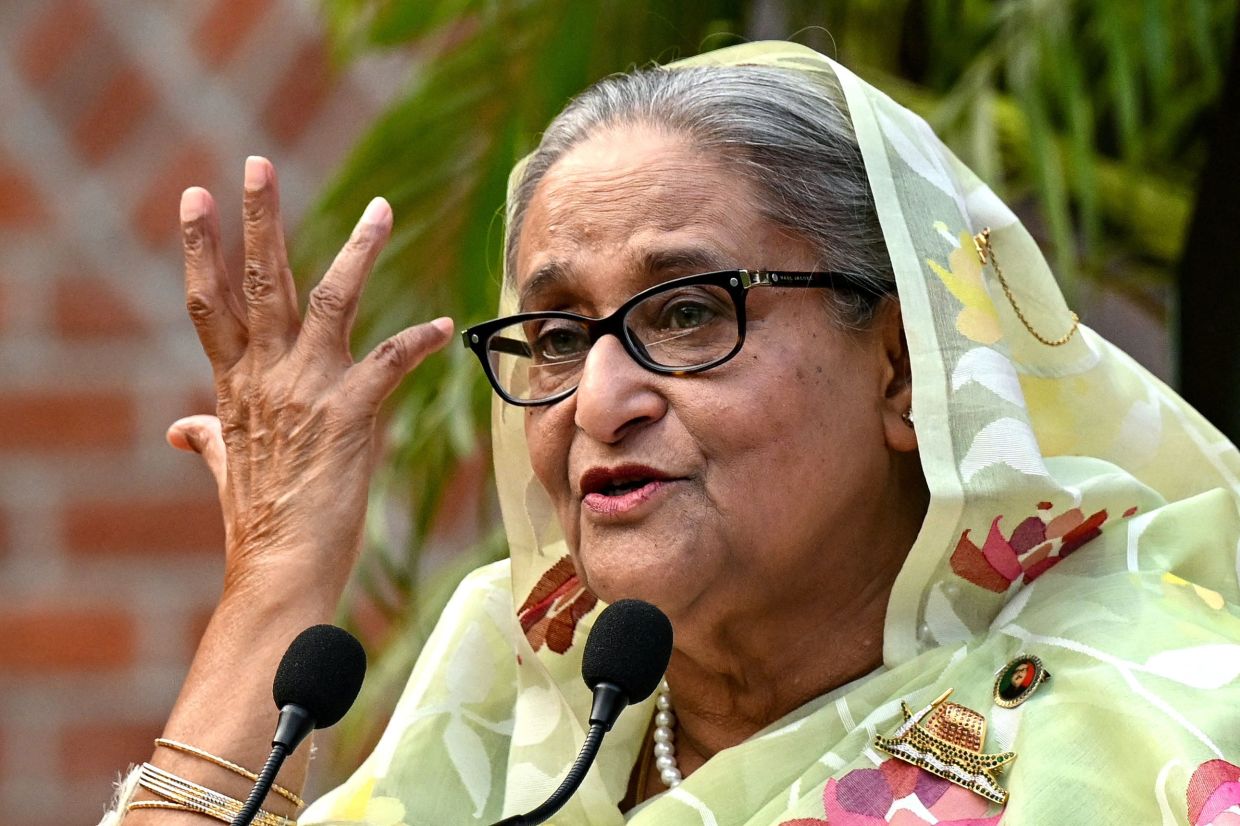
India's foreign ministry has moved to distance the government from a scheduled virtual address by Bangladesh's former Prime Minister Sheikh Hasina, underscoring the delicate diplomatic balance New Delhi must maintain between respecting free speech and avoiding friction with its neighbour. Spokesperson Randhir Jaiswal told journalists on Wednesday that the event being hosted by the Foreign Correspondents' Club of South Asia in New Delhi is being organised entirely by private media interests, with no state involvement or endorsement of any statements made during the forum. The clarification came after Bangladesh explicitly raised concerns with the Indian government about allowing the exiled leader to deliver what would be her first public remarks since fleeing the country.
Sheikh Hasina has remained in India since a student-led uprising toppled her government in 2024, having sought refuge across the border amid deteriorating circumstances at home. The 78-year-old former premier is scheduled to deliver her address virtually on August 5, coinciding with the second anniversary of the demonstrations that ultimately forced her from power. The event will also feature her son, Sajeeb Wazed Joy, alongside other speakers, marking a significant moment in Hasina's exile as she breaks her public silence through an international media platform rather than through traditional political channels.
Bangladesh's response has been swift and restrictive, with Information Adviser Zahed Ur Rahman issuing a pointed warning to all domestic media outlets that broadcasting or publicising Hasina's remarks would violate a December 2024 order issued by the International Crimes Tribunal. This decree prohibits Bangladeshi journalists and social media platforms from disseminating any speeches, statements, interviews, or audio or video content involving the exiled former leader. The restrictions represent an aggressive attempt to control the narrative surrounding Hasina within Bangladesh's borders, effectively attempting to render her invisible to her own citizens regardless of where she speaks.
The legal backdrop to these tensions remains serious and consequential. Hasina was sentenced to death in 2025 following convictions related to crimes against humanity committed during her government's harsh response to the student protests. She has consistently rejected this verdict as legally baseless and void, positioning herself as a victim of political persecution rather than accepting culpability for the government's actions during the uprising. This fundamental disagreement over the legitimacy of her conviction underpins much of the current friction between Dhaka and New Delhi, as Bangladesh views her presence and activities in India as troubling interference in its internal affairs.
Hasina's aide Abu Obaidha Arin has signalled that the address will proceed as scheduled, defiantly asserting that Dhaka's "efforts to silence dissent cannot extinguish voices" beyond the country's borders. This statement encapsulates the broader ideological clash at play—Bangladesh's government seeks to control and suppress opposition messaging, while Hasina's supporters invoke principles of freedom of expression and the right to political participation. The aide's language suggests that the exiled leader and her supporters view themselves not as fugitives avoiding justice, but as political opponents prevented from exercising fundamental democratic rights.
Previously, Hasina had indicated through communications with Reuters that she and her Awami League party colleagues intend to return from exile around December to present themselves in Bangladesh's courts. This prospective homecoming would represent a dramatic escalation and constitute a genuine test of whether the country's new administration, led by Prime Minister Tarique Rahman since February's election, would tolerate the return of its most formidable political rival. The timing and feasibility of such a return remain uncertain, and her virtual address may serve as a preliminary assertion of political relevance ahead of any future domestic confrontation.
Bangladesh's State Minister for Foreign Affairs Shama Obaed Islam has formally conveyed Dhaka's displeasure to Indian officials, repeatedly raising concerns that permitting political activities by Hasina and other Awami League members to proceed from Indian soil undermines bilateral relations. The complaint reflects deep anxiety within Bangladesh's new political establishment about the symbolic and practical implications of allowing opposition figures to maintain an active political presence beyond national jurisdiction. For Dhaka, the issue transcends the immediate speech; it represents a broader concern about India providing sanctuary and platform to political opponents seeking to organise and mobilise against the current government.
The diplomatic tension arrives at a moment when both nations have recently signalled intentions to stabilise and improve their relationship following the turbulent period since Hasina's ouster. Bangladesh's government has sought India's cooperation on multiple fronts, including the contentious issue of Hasina's extradition, which Dhaka has persistently requested. India's apparent reluctance to fulfil this request, combined with its tolerance of opposition political activities on its soil, suggests either principled commitment to non-interference in another nation's legal proceedings or strategic hedging of bets regarding Bangladesh's long-term political evolution.
The Foreign Correspondents' Club of South Asia functions as a rare permissive space where international journalists and media practitioners can operate with considerable editorial independence, even when hosting figures who remain deeply controversial in their home countries. By hosting Hasina's address, the organisation reflects a commitment to journalistic access and diverse viewpoints that contrasts sharply with Bangladesh's increasingly restrictive media environment. This distinction between Indian permissiveness and Bangladeshi restrictions highlights fundamental differences in how the two nations approach questions of political speech and media freedom.
For Malaysian and broader Southeast Asian observers, the situation illuminates recurring tensions in the region regarding refugee politicians, cross-border activism, and the competing imperatives of national sovereignty and individual liberty. The case demonstrates how neighbouring countries navigate the uncomfortable reality of hosting exiled opposition figures whose very presence constitutes a potential challenge to their neighbours' authority. It also reveals the limited tools available to nations seeking to suppress opposition voices when those voices operate beyond territorial boundaries—Bangladesh cannot censor what Hasina says in India, but it can restrict its own citizens' exposure to such statements, though such restrictions face practical challenges in an increasingly connected digital world where information flows across borders with difficulty to regulate.

