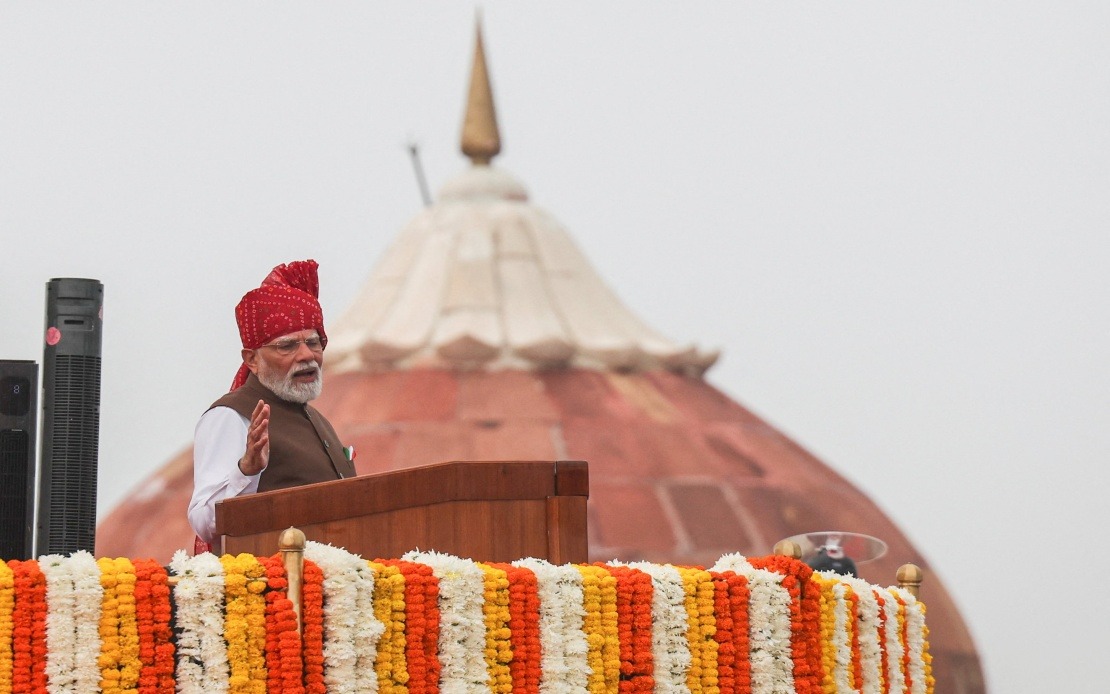
Indian Prime Minister Narendra Modi has laid out a comprehensive blueprint for transforming India into a self-sufficient economic powerhouse by 2047, framing domestic capability-building as the cornerstone of the nation's aspirations to join the ranks of developed economies. Speaking during Independence Day celebrations from the Red Fort in Delhi, Modi emphasised that reducing dependence on foreign imports across critical sectors would simultaneously strengthen India's economic resilience and test the mettle of its indigenous industries. The vision represents a significant policy direction with consequences extending across South and Southeast Asia, where India's manufacturing trajectory influences regional trade patterns and supply chain dynamics.
At the heart of Modi's self-reliance agenda sits the semiconductor industry, a sector that has assumed strategic importance globally following supply chain disruptions in recent years. India has already established three semiconductor fabrication plants, with between five and eight additional facilities expected to commence operations within the next seven to eight years. This expansion marks a deliberate attempt to reduce India's vulnerability to external chip shortages while building competitive domestic expertise. For Malaysia, which has established itself as a regional semiconductor hub, India's manufacturing ambitions represent both competitive pressure and potential opportunities for supply chain diversification and technological partnerships across the region.
Energy security forms another pillar of Modi's development roadmap, with nuclear power positioned as a foundational element of India's long-term energy strategy. The government has set an ambitious target of achieving 100 gigawatts of nuclear capacity by 2047, a substantial increase from current levels that would make India a significant nuclear energy producer. To achieve this milestone, Modi announced plans to commission five new nuclear reactors within the current decade. A particularly notable achievement highlighted in the speech involves India's recent mastery of fast-breeder nuclear technology, which represents a critical step toward fuel self-sufficiency and reduces reliance on imported nuclear materials. This technological breakthrough carries implications for the entire Asian region, as it demonstrates India's capacity to develop advanced energy infrastructure independently.
Renewable energy capacity has already expanded dramatically under Modi's tenure, with solar power generation increasing more than sevenfold from two gigawatts to 160 gigawatts over a twelve-year period. This transformation underscores India's commitment to diversifying its energy mix beyond fossil fuels while simultaneously pursuing energy independence. The renewable energy expansion reflects global trends but also positions India as a potential exporter of clean energy technology and expertise across the Asian continent, an area where Southeast Asian nations are increasingly seeking partnerships and knowledge transfer.
Beyond energy, Modi emphasised India's determination to develop domestic capabilities in oil and gas exploration, committing 850 billion rupees, equivalent to approximately 8.9 billion US dollars, toward prospecting in regions previously deemed commercially unviable or inaccessible. This injection of capital into exploration represents an attempt to unlock reserves in areas that Modi characterised as previously off-limits to development, potentially reshaping India's hydrocarbon landscape and reducing import dependency for petroleum products. Such efforts reflect broader geopolitical considerations, as energy independence directly influences India's strategic autonomy and regional positioning.
The defence sector constitutes another critical dimension of India's self-reliance strategy, with Modi calling for accelerated development of indigenous military technologies including unmanned aerial systems, counter-drone capabilities, and hypersonic defence systems. This emphasis on domestic defence manufacturing aligns with India's broader strategic pivot toward reducing reliance on foreign military suppliers while building a technologically advanced indigenous defence industrial base. For Southeast Asian nations monitoring regional military developments, India's pursuit of advanced defence capabilities carries significance for regional power balances and strategic calculations.
Underlying Modi's entire self-reliance framework is a philosophical assertion regarding the relationship between purchasing decisions and national capability development. The Prime Minister argued that acquiring inexpensive foreign goods, while economically convenient, fails to cultivate indigenous technical competencies or test the robustness of domestic industries. This reasoning extends beyond simple protectionism, encompassing a worldview that sustained national development requires deliberate cultivation of internal capacities even when external alternatives appear cheaper or more readily available. He urged Indian consumers and businesses to prioritise domestically manufactured products as a patriotic imperative that builds long-term national strength.
The 2047 target date carries symbolic weight, marking the centenary of India's independence and representing a generational timeline for transformation. By framing development goals within this centenary framework, Modi connects contemporary policy decisions to historical narratives and national identity. This temporal framing resonates with Indian political discourse and public sentiment, tying economic policy to cultural and historical significance rather than presenting it as purely technocratic planning.
From a regional perspective, India's self-reliance drive carries complex implications for Southeast Asia and the broader Asian economic architecture. While India's pursuit of domestic manufacturing capacity might reduce import opportunities for some regional players, it simultaneously creates demand for specialised materials, equipment, and technologies that Southeast Asian suppliers can provide. Moreover, India's development of advanced capabilities in semiconductors, renewable energy, and defence technology could generate spillovers and knowledge-sharing opportunities that benefit the broader region, particularly through technology transfer and collaborative ventures.
The policy framework also reflects broader geopolitical currents, as multiple major economies increasingly emphasise strategic autonomy and reduced dependency on potentially unreliable supply chains. India's self-reliance initiative places it alongside other nations pursuing similar strategies, though India's implementation differs in emphasising consumer participation and nationalist framing alongside technical development. This approach suggests that Modi views the domestic population as stakeholders in India's strategic transformation, not merely beneficiaries of top-down policy implementation.
Looking forward, the success of India's self-reliance agenda will depend on sustained investment, technological development, and regulatory frameworks that nurture emerging industries while maintaining competitive efficiency. The semiconductor and defence manufacturing sectors particularly require long-term commitment and protection from market volatility during nascent stages. International observers and regional partners will monitor how effectively India executes these ambitious plans while managing the tension between fostering emerging industries and maintaining macroeconomic stability.
For Malaysia and other Southeast Asian economies, India's development trajectory merits close attention as it reshapes regional competitive dynamics and supply chain configurations. As India builds indigenous capabilities across critical sectors, Southeast Asian nations may find opportunities to specialise in complementary areas, develop joint ventures, or position themselves as suppliers to India's expanding manufacturing base. The regional dimension of India's self-reliance strategy therefore extends beyond Delhi's policy calculations to influence economic relationships across Asia's diverse nations.

