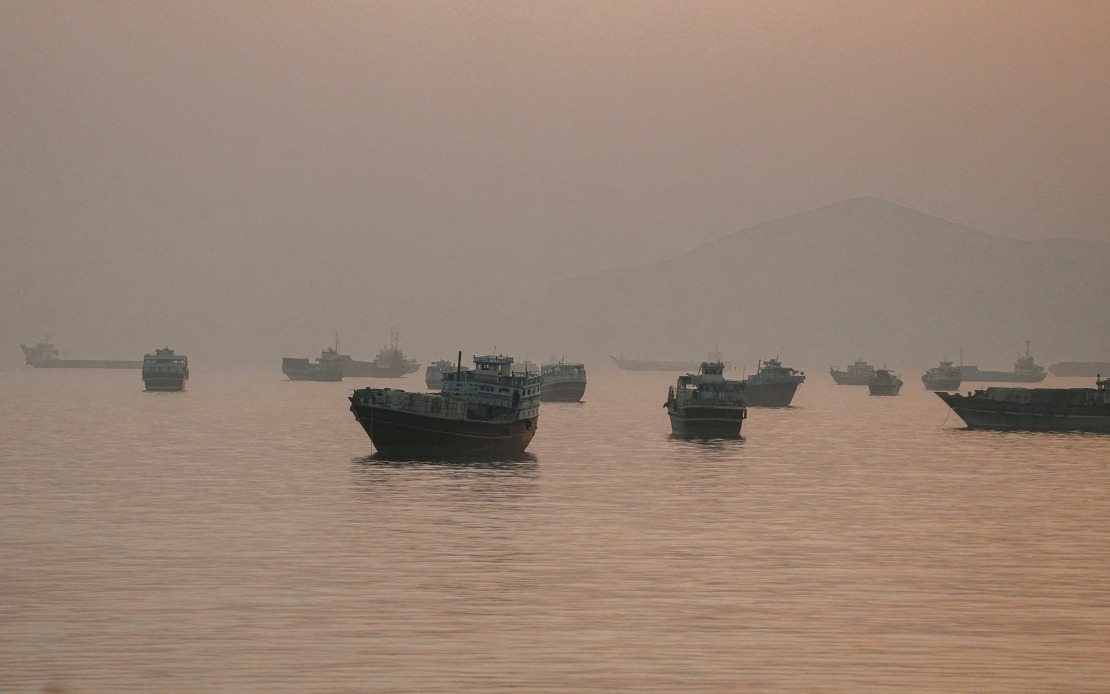
India has moved to protect its maritime workforce by imposing a sweeping ban on the deployment of Indian seafarers aboard vessels transiting the Strait of Hormuz, one of the world's most critical shipping chokepoints. The decision, issued Wednesday by the Directorate General of Shipping—India's principal maritime regulator—represents a significant escalation in responses to the deteriorating security situation affecting commercial shipping in the Persian Gulf region.
The directive extends to all shipowners, vessel management companies, and maritime recruitment agencies operating under Indian jurisdiction, requiring them to cease assigning Indian crew members to ships planning routes through the contested waters. The order comes in direct response to a series of armed incidents that have claimed Indian lives and underscored the mounting dangers facing merchant mariners operating in one of the world's most strategically important waterways.
Over a three-day period immediately preceding the government's action, at least two Indian seafarers lost their lives in separate attacks on commercial vessels navigating the region, while several others sustained injuries. These casualties represent tangible consequences of the escalating military posturing between the United States and Iran, which has created an environment of heightened unpredictability for merchant shipping. The Strait of Hormuz, through which approximately one-fifth of global petroleum traffic flows annually, has become increasingly volatile as geopolitical tensions reshape regional security dynamics.
For Malaysia and other Southeast Asian shipping nations, India's intervention carries considerable significance. The region's seafaring workforce is substantially composed of international crew members, with Indian mariners representing a significant proportion across regional fleets. India's protective measure reflects broader anxieties among maritime nations regarding the vulnerability of their personnel in conflict zones and establishes precedent for comparable governmental intervention.
The escalation between Washington and Tehran has fundamentally altered the calculus of commercial navigation through the Strait of Hormuz. Previous incidents involving drone strikes and missile attacks on vessels have created legitimate concerns about the safety of crews transiting these waters, regardless of their nationality. The concentration of global oil supplies passing through this narrow passage means disruptions reverberate across international energy markets and supply chains extending well into Southeast Asia.
India's action underscores the practical limitations of international maritime law when confronted with state-level military competition. While the International Maritime Organization maintains frameworks intended to protect commercial shipping, enforcement remains problematic in regions experiencing active geopolitical confrontation. By restricting its own seafarers' participation, India essentially acknowledges that available international mechanisms offer insufficient protection against contemporary threat environments.
The maritime industry faces immediate operational challenges from this prohibition. Shipping companies must restructure crew deployment strategies, potentially increasing operational costs by accessing alternative labor markets. For vessels operating under Indian registry or management, compliance becomes compulsory, though vessels flagged to other nations may circumvent such restrictions. This fragmented approach to maritime safety highlights how individual nations' protective measures cannot fully address systemic vulnerabilities in global shipping infrastructure.
Regional implications extend beyond immediate crew safety considerations. Southeast Asian nations, including Malaysia, maintain substantial maritime interests in the Middle East region. Many regional shipping companies and port operators depend on reliable transit through the Strait of Hormuz for commercial viability. Disruptions stemming from geopolitical tensions affect freight rates, insurance premiums, and vessel scheduling across Asian shipping networks.
The broader context involves wider patterns of regional militarization affecting maritime commerce. Beyond the United States-Iran dynamic, competition among regional powers has created overlapping security concerns affecting freedom of navigation. For Malaysia and fellow ASEAN members, these developments reinforce arguments for strengthening regional maritime cooperation mechanisms and reducing dependence on inherently unstable chokepoints for essential trade flows.
India's decision likely prompts similar evaluations among other maritime labor-exporting nations. Bangladesh, Sri Lanka, and the Philippines—all significant contributors of seafarers to international fleets—may face pressure to implement comparable restrictions. Coordinated action among labor-exporting nations could substantially impact shipping industry operations, potentially accelerating efforts toward conflict de-escalation or alternative maritime routing solutions.
Longer-term consequences may include structural changes in global shipping patterns. While the Strait of Hormuz remains economically advantageous despite security risks, sustained uncertainty might encourage investment in alternative routes and infrastructure. The Strait of Malacca, already fundamental to Asian maritime commerce, could assume even greater strategic importance if Persian Gulf routes remain destabilized.
For Malaysian policymakers and maritime stakeholders, India's protective measure serves as a cautionary indicator regarding regional security trajectories. The incident demonstrates how distant geopolitical conflicts impose tangible costs on maritime-dependent economies throughout Asia. Concurrently, it illustrates the vulnerability of individual national responses to transnational challenges requiring coordinated international solutions.

